서론
Elephant Plush Toy Wholesale for Cute Gift Collections is an excellent business opportunity for retailers, gift shops, online sellers, toy distributors, and promotional product companies looking to expand their product selections with adorable, versatile, and commercially appealing plush toys. Elephant plush toys have a distinctive appearance, recognizable shapes, soft textures, and a friendly image that appeals to children and adults alike. Their long trunks, oversized ears, rounded bodies, and gentle expressions make them popular choices for birthday gifts, baby showers, holiday presents, nursery decorations, and collectible toy collections.
For businesses planning to purchase plush toys in bulk, choosing Elephant Plush Toy Wholesale for Cute Gift Collections can provide a practical way to create coordinated product lines while maintaining consistent product quality and purchasing efficiency. Wholesale purchasing allows buyers to explore different sizes, colors, fabrics, filling materials, and customized designs without sourcing every product individually. With a carefully selected collection, retailers can serve different customer groups and establish a recognizable product identity.
The demand for cute, comforting, and giftable products continues to create opportunities for businesses that understand customer preferences. Elephant plush toys fit into several retail categories, including traditional toys, nursery accessories, personalized gifts, seasonal merchandise, and decorative collectibles. Their gentle appearance also makes them suitable for themed gift sets and branded merchandise.
However, successful wholesale purchasing involves more than selecting an attractive design. Buyers need to consider manufacturing capabilities, material safety, production capacity, minimum order quantities, customization options, packaging, shipping costs, and long-term supplier reliability. These factors influence both the customer experience and the profitability of a wholesale order.
This guide explores how Elephant Plush Toy Wholesale for Cute Gift Collections can support a successful gift business, how to choose suitable products, which customization opportunities deserve attention, and how to evaluate suppliers before placing bulk orders. Whether you are launching a new plush toy collection or expanding an established retail business, understanding these details can help you make more informed purchasing decisions.
Why Elephant Plush Toys Are Popular in Gift Collections

Elephants are recognizable animals with distinctive features that translate naturally into appealing plush toy designs. Their large ears, curved trunks, short legs, and rounded bodies give designers plenty of opportunities to create products with different personalities. Some designs look realistic, while others feature oversized heads, embroidered smiles, pastel colors, or cartoon-inspired proportions.
These design possibilities make elephant plush toys suitable for a wide variety of gift collections. A retailer can offer miniature elephant keychains, medium-sized cuddly toys, large decorative plush animals, and premium gift-boxed products within the same product category.
A Friendly Appearance That Appeals to Different Customers
One major advantage of elephant plush toys is their approachable appearance. Soft fabrics and rounded shapes create a comforting visual effect, while embroidered eyes and simple facial expressions can give each toy a warm personality.
For children’s gift collections, elephant plush toys can become companions for imaginative play, bedtime routines, and everyday activities. For adults, they may serve as decorative accessories, collectible items, or sentimental gifts.
Elephant Plush Toy Wholesale for Cute Gift Collections allows retailers to offer products that appeal to multiple age groups instead of focusing exclusively on one narrow audience.
Suitable for Many Gift-Giving Occasions
Elephant plush toys can be incorporated into a variety of gift occasions throughout the year. Their adaptable appearance means that manufacturers can change colors, accessories, packaging, and embroidery to match specific themes.
Common applications include:
- Birthday gifts for children and plush toy collectors.
- Baby shower presents and nursery gift baskets.
- Valentine’s Day gifts featuring heart-shaped accessories.
- Christmas gift collections with scarves, hats, and festive packaging.
- Graduation gifts featuring customized clothing or messages.
- Anniversary presents with personalized embroidery.
- Corporate promotional gifts featuring company logos.
- Souvenir collections for zoos, wildlife attractions, and tourism businesses.
The ability to serve several occasions helps retailers maintain a more flexible inventory strategy. Rather than relying on a single seasonal product, businesses can offer classic elephant plush toys throughout the year and introduce themed variations when appropriate.
Opportunities for Emotional and Personalized Gifts
Many consumers choose plush toys because they communicate affection, encouragement, and comfort. An elephant plush toy can become more meaningful when paired with a personalized message, embroidered name, special date, or themed accessory.
For example, a baby gift collection might include a gray elephant plush toy, a matching blanket, and a personalized greeting card. A birthday collection might feature a colorful elephant wearing a miniature party hat.
These combinations can help retailers create a more complete gift experience and differentiate their products from standard mass-market toys.
Understanding Elephant Plush Toy Wholesale for Cute Gift Collections
Before purchasing products in bulk, buyers should understand what wholesale suppliers typically offer and how their product ranges are organized.
Elephant Plush Toy Wholesale for Cute Gift Collections generally refers to sourcing elephant-themed stuffed toys in larger quantities for resale, distribution, promotional use, or customized gift production. Depending on the supplier, buyers may select existing designs, request private-label products, or commission new plush toy styles.
Standard Wholesale Products
Standard wholesale products are existing designs that manufacturers produce regularly. They may be available in several sizes and colors, with established patterns, fabric choices, and packaging options.
This purchasing method can be suitable for businesses that want to launch products quickly or test customer demand before investing in original designs.
Typical standard products include:
- Small elephant plush toys for party favors.
- Medium elephant stuffed animals for everyday gifts.
- Large elephant plush toys for decorative displays.
- Pastel elephant toys for baby gift collections.
- Cartoon elephant plush toys for character-themed merchandise.
- Elephant plush pillows for bedrooms and living spaces.
Standard products often offer a simpler purchasing process because their specifications have already been developed. However, buyers should still request samples and confirm current availability before committing to a large order.
Customized Wholesale Products
Customized wholesale products allow businesses to create a more distinctive collection. Depending on the factory’s capabilities, customization may include fabric selection, toy dimensions, color combinations, embroidery, accessories, labels, and packaging.
For example, a retailer developing a premium baby gift collection might request a cream-colored elephant with embroidered stars, a soft cotton-style fabric exterior, and a matching gift box.
A zoo gift shop might prefer a more realistic elephant design with natural gray coloring and an embroidered institution logo.
Elephant Plush Toy Wholesale for Cute Gift Collections becomes especially valuable when buyers use customization to connect their products with a specific audience or brand identity.
Private Label and OEM/ODM Opportunities
Some manufacturers support private-label production, OEM projects, or ODM services.
OEM arrangements generally involve manufacturing products according to the buyer’s specifications or supplied designs. ODM arrangements typically involve adapting or selecting designs developed by the manufacturer, although the exact scope depends on the supplier.
Private-label services may include custom woven labels, branded tags, packaging inserts, and logo printing where appropriate.
These options can help a retailer develop a consistent product identity across multiple elephant plush toy styles.
| Wholesale model | Main characteristics | Suitable buyers | Main consideration |
|---|---|---|---|
| Standard wholesale | Existing designs and specifications | Small retailers and new sellers | Limited uniqueness |
| Customized wholesale | Modified colors, sizes, or details | Established gift businesses | Additional development time |
| OEM production | Buyer-directed specifications | Brands with original concepts | Requires clear technical documentation |
| ODM production | Supplier-developed designs or adaptations | Businesses seeking faster development | Confirm design ownership and exclusivity |
| Private label | Branding added to selected products | Retail chains and online brands | Packaging and branding costs |
Understanding these purchasing models helps buyers select a suitable balance between product uniqueness, budget, production time, and operational complexity.
Choosing the Best Elephant Plush Toy Designs for Retail
A successful gift collection should not depend on appearance alone. Buyers need to consider the intended customer, product function, retail price, and available shelf space.
Elephant Plush Toy Wholesale for Cute Gift Collections can support several complementary product categories, allowing retailers to build collections that serve different budgets and shopping occasions.
Classic Gray Elephant Plush Toys
Classic gray elephant plush toys remain a versatile option because their neutral coloring works with many gift themes.
Manufacturers can produce these toys in light gray, charcoal gray, silver gray, or warm gray. White or cream-colored ears, pink inner-ear details, and embroidered facial expressions can create subtle differences between designs.
Classic elephant plush toys are suitable for traditional toy stores, online marketplaces, nursery gift collections, and souvenir shops.
Their neutral appearance can also simplify product photography because gray products work well against white, pastel, and natural backgrounds.
Pastel Elephant Plush Toys
Pastel elephant plush toys are popular design options for soft, coordinated gift collections. Common colors include light pink, baby blue, lavender, mint green, beige, and cream.
These colors can complement nursery decorations, baby shower gifts, and themed gift baskets.
A coordinated range may include several pastel colors in the same design, allowing customers to choose a preferred color without requiring the retailer to introduce entirely different products.
When sourcing pastel plush toys, buyers should inspect color consistency between production batches. Fabric dye lots can vary, and noticeable differences may affect the appearance of coordinated collections.
Cartoon Elephant Plush Toys
Cartoon elephant plush toys often feature oversized heads, short legs, large ears, and expressive faces. These design elements create a playful appearance that works well in children’s gift collections and character-based merchandise.
Some designs include miniature clothing, bows, scarves, or decorative accessories. Others use contrasting fabrics or embroidered patterns to establish a distinctive personality.
When developing cartoon designs, buyers should ensure that decorative details are securely attached and appropriate for the intended age group. Small detachable components may be unsuitable for products intended for young children.
Mini Elephant Plush Toys
Mini elephant plush toys are useful for retailers seeking affordable gift add-ons and compact merchandise.
They may be sold individually, included in party favor bags, attached to gift baskets, or packaged as collectible items.
Small products can also help buyers test new colors and designs without allocating substantial shelf space.
However, compact dimensions do not automatically mean lower manufacturing complexity. Tiny trunks, ears, and embroidered features may require careful construction to maintain the intended appearance.
Large Elephant Plush Toys
Large elephant plush toys can serve as statement gifts, room decorations, or premium merchandise.
Their larger size creates opportunities for distinctive product photography and higher retail price points. They may also appeal to customers searching for oversized cuddly companions.
Buyers should pay particular attention to shipping dimensions, storage requirements, and compression recovery when sourcing large plush toys. A product that looks economical at the factory may become expensive to distribute if its shipping volume is substantial.
Materials and Construction Quality for Elephant Plush Toys
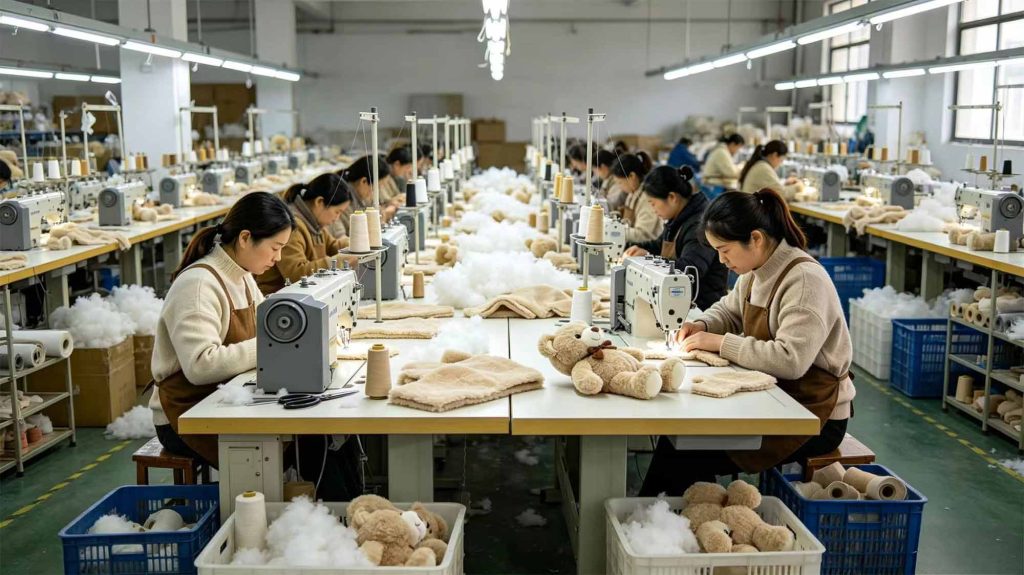
Material quality affects softness, durability, appearance, and customer satisfaction. For wholesale buyers, consistent construction is particularly important because customers expect products within the same collection to feel and look similar.
Selecting Suitable Exterior Fabrics
Different fabrics create different tactile and visual effects. The best option depends on the intended product style, price point, cleaning instructions, and manufacturing capabilities.
| Fabric type | Typical characteristics | Potential application | Quality checks |
|---|---|---|---|
| Short-pile plush | Smooth and easy to shape | Everyday elephant stuffed toys | Check pile consistency and shedding |
| Minky-style fabric | Soft surface with a smooth hand feel | Premium gift collections | Inspect texture and color consistency |
| Long-pile plush | Fluffy and visually prominent | Decorative oversized toys | Check tangling and seam coverage |
| Velour-style fabric | Soft appearance with a relatively sleek surface | Premium or decorative designs | Check pile direction and surface marks |
| Cotton-blend fabric | Can create a more textile-like appearance | Selected decorative products | Confirm composition and care requirements |
The names used for fabrics are not always standardized across suppliers. Buyers should request fabric composition information and physical samples instead of relying exclusively on marketing descriptions.
Choosing the Right Filling Material
Polyester fiberfill is commonly used in plush toys because it can create a lightweight, soft, and resilient structure.
However, the amount and distribution of filling influence how a toy feels. Overfilled bodies may feel stiff, while insufficient filling can make the product appear uneven or lose its intended shape.
Elephant plush toys require particular attention to the trunk, ears, legs, and head. These features must maintain their intended proportions without creating awkward folds or weak areas.
During sample inspection, buyers should check whether the head remains upright, the ears sit evenly, and the trunk maintains its intended shape. They should also evaluate whether the body feels balanced when the toy is placed on a flat surface.
Seams, Embroidery, and Facial Details
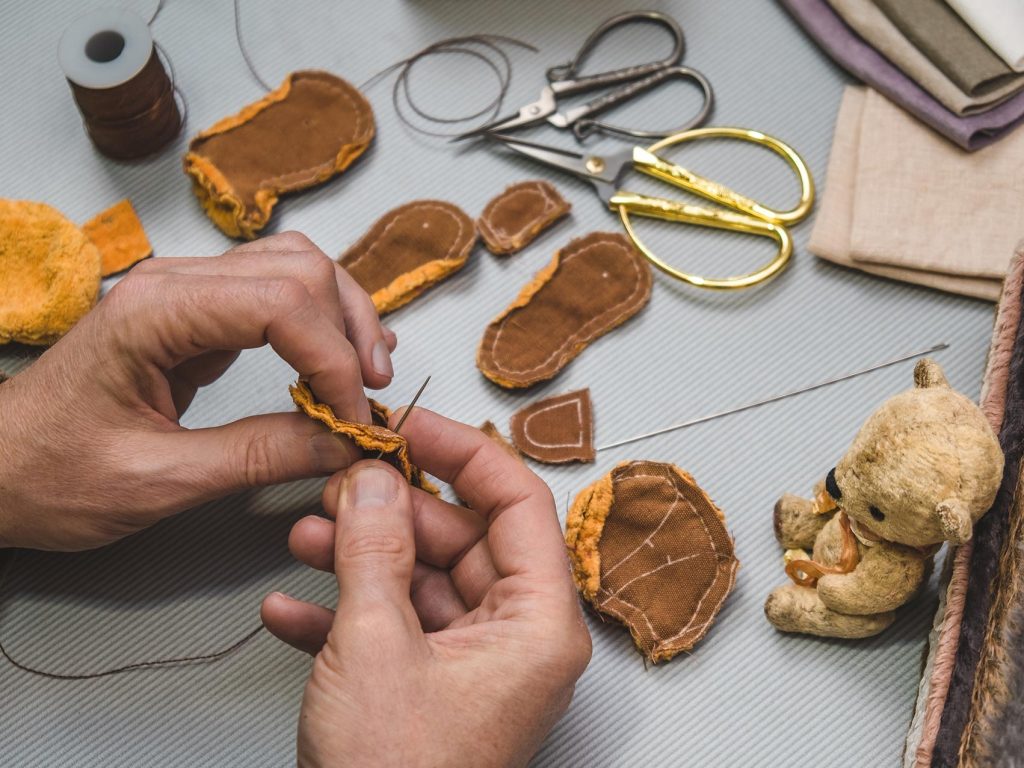
Construction quality is one of the most important factors in wholesale plush toy sourcing.
A visually attractive elephant plush toy can still disappoint customers if seams open, stuffing escapes, or embroidery becomes loose.
Important inspection points include:
- Straight and secure stitching.
- Evenly attached ears and limbs.
- Consistent trunk shape and placement.
- Smoothly finished seam allowances.
- Securely embroidered eyes and facial expressions.
- No exposed sharp components.
- Consistent filling distribution.
- No obvious fabric stains or strong unwanted odors.
For products intended for infants or toddlers, embroidered facial features may be preferable to plastic eyes because they avoid certain detachable-part risks. Nevertheless, the complete product must still meet applicable safety requirements.
Durability and Care Requirements
Plush toys may be handled frequently, carried during travel, or placed on beds and sofas. Durable materials and reliable stitching help products maintain their appearance over time.
Buyers should ask whether the product is surface-cleanable, hand-washable, or suitable for machine washing. These instructions should be based on the actual materials and construction rather than assumed from the fabric type.
If a product is intended for frequent washing, the factory should test how the exterior fabric, embroidery, filling, and accessories respond to the recommended cleaning method.
Clear care instructions can reduce customer confusion and help retailers provide more reliable product information.
Product Safety and Compliance for Wholesale Buyers
Product safety should be a central part of every purchasing decision, especially when elephant plush toys are marketed for babies and young children.
Elephant Plush Toy Wholesale for Cute Gift Collections should involve clear communication about the destination market, intended age group, applicable regulations, and required documentation.
Identify the Destination Market
Safety requirements differ between countries and regions. A toy sold in the United States may be subject to different requirements from one sold in the European Union or another market.
For example, U.S. children’s toys may be subject to applicable Consumer Product Safety Commission requirements, including relevant provisions of ASTM F963 and testing or certification obligations. Toys placed on the European Union market must comply with applicable EU toy safety rules and conformity requirements.
Buyers should verify the current requirements for the specific product, its intended users, and its destination market before production begins.
Request Appropriate Documentation
Depending on the market and product, relevant documentation may include:
- Material composition records.
- Applicable laboratory test reports.
- Product safety certificates or declarations where required.
- Chemical safety testing results where applicable.
- Traceability and production batch information.
- Labeling and age-grading information.
- Packaging and warning information.
A supplier’s general statement that its factory produces safe toys is not a substitute for product-specific evidence.
Buyers should confirm that the documentation matches the actual product design, materials, manufacturing site, and destination market.
Pay Attention to Small Parts and Accessories
Elephant plush toys may include buttons, plastic eyes, decorative beads, ribbons, bells, or removable clothing.
These components can introduce additional hazards if they detach or are unsuitable for the intended age group.
For infant-oriented products, buyers should carefully evaluate whether all decorations are appropriate. If a design includes accessories, the factory should explain how they are attached and whether the finished product has undergone the relevant assessments.
A cute design should never take priority over product safety.
Establish Quality Inspection Procedures
A reliable quality process should cover incoming materials, production, and finished products.
Incoming material checks can help identify incorrect fabric colors, unsuitable components, or inconsistent filling materials. During production, inspectors can examine seam quality and assembly accuracy. Final inspections can assess appearance, dimensions, labeling, packaging, and applicable safety-related characteristics.
For larger orders, buyers may consider using an agreed sampling and inspection plan with documented acceptance criteria.
Customization Ideas for Elephant Plush Toy Wholesale for Cute Gift Collections
Customization can help retailers create a more memorable product range. The goal is not to add as many features as possible, but to choose details that support a clear customer need.
Custom Colors and Exclusive Designs
A retailer may request a unique color palette that matches its existing brand identity or seasonal collection.
For example, a nature-inspired gift brand might choose sage green, beige, and cream. A children’s boutique might select soft pink, lavender, and light blue.
Custom colors are particularly useful when several products are displayed together. A consistent palette can make a collection look coordinated even when the toys have different sizes or accessories.
Before approving bulk production, buyers should review physical fabric swatches under suitable lighting. Screen colors are not always reliable representations of actual materials.
Personalized Embroidery
Embroidery can turn an ordinary plush toy into a personalized gift.
Possible options include:
- A child’s name.
- A short greeting.
- A special date.
- A company logo.
- A school or organization name.
- A simple decorative symbol.
Buyers should confirm the available embroidery area, thread colors, character limits, and expected production tolerances.
Small or curved areas can limit readability, particularly on an elephant’s trunk or ear. A sample should be approved before bulk production begins.
Seasonal Accessories
Seasonal accessories help retailers refresh an existing product without developing a completely new toy.
A classic elephant plush toy can be adapted with a festive scarf, miniature graduation cap, birthday accessory, or holiday-themed packaging.
However, any accessory must be suitable for the intended audience and securely constructed. If the accessory is removable, age suitability and relevant safety implications should be reviewed.
Branded Packaging
Packaging can influence how customers perceive the value of a gift.
Common options include printed gift boxes, recyclable paper sleeves, branded hangtags, fabric bags, and coordinated greeting cards.
| Customization option | Business benefit | Important consideration |
|---|---|---|
| 사용자 지정 색상 | Creates a recognizable collection | Confirm fabric color consistency |
| Embroidered names | Supports personalized gifting | Check spelling and embroidery quality |
| Brand logo | Strengthens brand recognition | Confirm artwork and usage permissions |
| Seasonal accessories | Supports holiday promotions | Review safety and attachment quality |
| Gift boxes | Creates a more complete gift experience | Consider volume and shipping costs |
| 맞춤형 라벨 | Improves product presentation and traceability | Verify required information |
| Coordinated gift sets | Encourages complementary purchases | Check packaging dimensions and assembly costs |
Customization is most effective when it reinforces a coherent product strategy. Too many variations can increase production complexity and make inventory management more difficult.
How to Choose a Reliable Elephant Plush Toy Wholesale Supplier
Supplier selection affects quality, pricing, communication, production scheduling, and long-term business performance.
When evaluating Elephant Plush Toy Wholesale for Cute Gift Collections, buyers should compare suppliers using objective criteria instead of choosing exclusively by the lowest quotation.
Evaluate Manufacturing Experience
A supplier with relevant plush toy manufacturing experience may be better prepared to manage pattern development, fabric selection, embroidery, stuffing, and production consistency.
Ask whether the company manufactures products directly or coordinates production through other facilities. If manufacturing is outsourced, clarify who is responsible for quality control and corrective action.
Buyers should also ask for examples of similar products the supplier has produced, especially elephant plush toys or designs with comparable construction details.
Review Sampling Capabilities
A sample provides an opportunity to evaluate the product before committing to bulk production.
A good sample review should cover dimensions, color, fabric softness, filling, stitching, proportions, embroidery, labels, and packaging.
If the buyer supplies a design file, the approved sample should be checked against the original specifications. Any modifications should be recorded before mass production begins.
For custom products, it is useful to distinguish between an initial development sample and a final production approval sample. The exact sampling process depends on the project’s complexity.
Confirm Minimum Order Quantities
Minimum order quantity, commonly called MOQ, varies according to the supplier, design, materials, and customization requirements.
Standard products may be available in smaller quantities than completely customized products. Special fabric colors, custom packaging, and new pattern development can increase minimum requirements.
A supplier should explain whether the MOQ applies per design, per color, per size, or across the entire order.
Understanding this distinction helps buyers avoid placing an order that creates excessive inventory or unnecessary costs.
Assess Communication and Documentation
Reliable suppliers should communicate clearly about product specifications, pricing, sampling, production schedules, inspection procedures, and shipping arrangements.
They should also provide written confirmation of key requirements.
Useful documents may include product specification sheets, approved sample records, purchase orders, packaging artwork, inspection reports, and shipping documents.
Good documentation reduces the risk of misunderstandings when multiple designs or customized products are included in the same order.
Compare Supplier Evaluation Criteria
| Evaluation factor | Questions to ask | Why it matters |
|---|---|---|
| Product experience | Has the supplier produced similar plush toys? | Indicates relevant manufacturing familiarity |
| Sample quality | Can a sample be provided for approval? | Reduces design and quality uncertainty |
| MOQ | Is the minimum quantity per style or color? | Helps control inventory risk |
| Safety compliance | Which applicable test reports are available? | Supports market-specific compliance |
| 생산 능력 | What is the realistic lead time? | Helps coordinate sales and launches |
| 사용자 지정 | Which details can be modified? | Determines design flexibility |
| 품질 관리 | What inspection process is used? | Supports batch consistency |
| 의사소통 | Are specifications and changes documented? | Reduces misunderstandings |
| Shipping support | Which shipping terms and methods are available? | Helps estimate total landed cost |
A supplier should be assessed as a complete business partner rather than simply a source of low-priced products.
Understanding Wholesale Pricing and Total Purchasing Costs
Wholesale pricing influences profit margins, but the unit quotation is only one part of the total purchasing cost.
Elephant Plush Toy Wholesale for Cute Gift Collections may involve product costs, sampling charges, customization fees, packaging expenses, transportation, insurance where applicable, duties, taxes, and inspection costs.
Factors That Influence Unit Pricing
Several variables can affect the price of an elephant plush toy.
Product size: Larger products generally require more fabric, filling, and packaging space.
Material selection: Specialty fabrics, custom-dyed materials, and premium finishing can increase costs.
Design complexity: Detailed embroidery, multiple fabric panels, and special accessories may require more labor.
Order quantity: Larger production runs may reduce unit costs by spreading setup expenses across more products, although actual savings depend on the supplier and production arrangement.
Customization: New patterns, personalized labels, special colors, and custom packaging may require additional development or setup charges.
Compliance and testing: Applicable testing and documentation can add costs, especially for new designs or destination markets.
Calculate the Total Landed Cost
The total landed cost represents the overall cost of getting products to the intended destination, subject to the buyer’s accounting method and agreed shipping terms.
A simplified calculation is:
Total landed cost = product cost + customization + packaging + inspection + freight + applicable duties and taxes + other import-related expenses.
For example, a product quoted at a low unit price may become less economical if it requires expensive packaging, special transport, or significant import charges.
Buyers should compare suppliers using consistent assumptions about order quantity, specifications, shipping terms, and destination.
Illustrative Wholesale Cost Comparison
The following figures are hypothetical examples for planning purposes, not current supplier quotations.
| Cost component | Supplier A | Supplier B |
|---|---|---|
| Product cost per unit | $3.20 | $3.45 |
| Custom packaging per unit | $0.35 | $0.20 |
| Inspection allocation per unit | $0.10 | $0.08 |
| Freight allocation per unit | $0.65 | $0.50 |
| Estimated total per unit before duties and taxes | $4.30 | $4.23 |
In this example, Supplier A offers a lower product price, but Supplier B produces a slightly lower estimated total cost because of packaging and freight differences.
This illustrates why wholesale buyers should avoid comparing unit quotations without examining the complete cost structure.
Set a Sustainable Retail Price
Retail pricing should account for landed cost, marketplace commissions, payment processing, storage, fulfillment, marketing, expected returns, and the desired profit margin.
A simple starting point is to calculate the difference between the selling price and all relevant per-unit costs.
For example, if a plush toy sells for $15 and its fully allocated variable costs total $7, the contribution before other fixed operating expenses is $8.
The actual pricing strategy will depend on competition, customer expectations, positioning, and the retailer’s overall business model.
Managing Minimum Orders, Inventory, and Product Variety

An attractive wholesale collection can still create financial problems if purchasing decisions are disconnected from demand.
Retailers should plan inventory carefully, particularly when ordering multiple sizes, colors, and customized variations.
Start with a Focused Collection
New buyers may benefit from starting with a small number of complementary products rather than purchasing every available design.
A basic collection could include a classic gray elephant, a pastel elephant, a mini elephant, and a premium gift-boxed elephant.
This approach provides some variety without making stock management unnecessarily complicated.
After observing sales patterns, the retailer can expand the best-performing styles and reduce purchases of products with slower demand.
Balance Core Products and Seasonal Products
Core products are intended to sell throughout the year. Seasonal products are designed for specific holidays, events, or promotional periods.
A balanced collection can combine standard elephant plush toys with a limited number of seasonal variations.
This strategy helps businesses avoid relying entirely on short-term demand while still benefiting from gift-giving occasions.
Calculate Inventory Requirements
Buyers can estimate an initial order using expected sales, replenishment lead time, and a reasonable safety-stock allowance.
A simplified planning formula is:
Reorder point = average daily sales × replenishment lead time + safety stock.
Suppose a retailer sells four elephant plush toys per day and the replenishment lead time is 20 days. If the business chooses a safety stock of 30 units, the reorder point would be 110 units.
This is only a planning example. Actual inventory decisions should account for seasonal demand, sales volatility, supplier reliability, and the cost of holding unsold stock.
Monitor Product Performance
Useful indicators include sell-through rate, gross margin, return rate, customer reviews, and inventory turnover.
If pastel elephant plush toys sell faster than oversized decorative models, the retailer can adjust future purchasing quantities accordingly.
Elephant Plush Toy Wholesale for Cute Gift Collections becomes more effective when buying decisions are based on actual customer behavior rather than assumptions about which designs look most attractive.
Packaging and Presentation for Cute Gift Collections
Packaging is an important part of the retail experience because elephant plush toys are frequently purchased as gifts.
A well-designed package can communicate quality, protect the toy during transportation, and make the product easier to display.
Gift Boxes and Coordinated Sets
Gift boxes are useful for premium products, baby shower collections, and personalized presents.
A coordinated set might contain an elephant plush toy, a greeting card, and a small matching accessory. Retailers can also combine several mini elephant plush toys into a collectible gift pack.
When developing gift sets, buyers should check that every item fits securely without compressing the plush toy excessively.
Packaging should also protect embroidered features and prevent unnecessary deformation during shipping.
Retail Tags and Product Information
Hangtags and labels can communicate product dimensions, material information, care instructions, manufacturer details, and other information required by the destination market.
For children’s products, any applicable age grading, warnings, and traceability information should be reviewed carefully.
Gift-focused packaging should balance visual appeal with practical information. Attractive artwork is useful, but it should not obscure mandatory labeling or create unsupported safety claims.
Sustainable Packaging Options
Some businesses prefer recyclable paperboard boxes, paper sleeves, or packaging that reduces unnecessary plastic.
The most appropriate choice depends on product protection, shipping conditions, local disposal systems, cost, and customer expectations.
Buyers should verify environmental claims instead of assuming that a package is recyclable, compostable, or made from recycled materials simply because it has a natural appearance.
Shipping and Logistics for Elephant Plush Toy Wholesale
Shipping is an essential part of wholesale purchasing because plush toys can occupy substantial space even when they are relatively lightweight.
The shipping method, carton dimensions, packaging design, order size, and destination all influence delivery costs.
Sea Freight, Air Freight, and Express Shipping
Sea freight may be suitable for larger orders when transit time is flexible. Air freight can offer faster transportation but generally carries higher charges. Express courier services may be practical for samples, small shipments, or urgent replenishment.
The best option depends on order volume, delivery deadlines, total shipping cost, and the product’s value.
For seasonal collections, buyers should allow enough time for sampling, production, inspection, transportation, and customs clearance.
Understand Carton Dimensions
Large plush toys can have a high volume-to-weight ratio. As a result, freight charges may depend on dimensional weight or container space rather than actual product weight alone.
Ask suppliers to provide estimated carton dimensions, gross weight, net weight, and units per carton before finalizing the order.
If products are shipped in compressed packaging, test how well they recover their original shape after unpacking. Compression should not damage the fabric, distort the trunk, or permanently flatten the ears.
Confirm Shipping Terms
International wholesale orders should clearly specify the agreed shipping terms, named destination, responsibilities for transportation, insurance where applicable, customs formalities, and import-related charges.
Incoterms can help define the responsibilities of buyers and sellers, but the exact agreement should match the transaction.
Buyers should also confirm who will prepare export documentation and who will coordinate import clearance.
Clear logistics planning helps reduce unexpected expenses and delivery delays.
Marketing Elephant Plush Toy Wholesale for Cute Gift Collections
Even high-quality products require effective marketing to reach the right customers.
Retailers should communicate the distinctive qualities of their elephant plush toys while providing accurate product information and appealing presentation.
Create Useful Product Listings
Online listings should include clear product titles, descriptive product information, accurate dimensions, material details, care instructions, and high-quality photographs.
Instead of relying on generic descriptions, explain what makes each product suitable for its intended use.
For example, a listing for a mini elephant plush toy could emphasize its compact size and suitability as a gift add-on. A large elephant plush toy listing could focus on its decorative presence and oversized design.
Product claims should be specific and supported. Do not describe a product as hypoallergenic, completely safe, or suitable for all ages unless the relevant evidence supports that statement.
Use Search-Friendly Content Naturally
Elephant Plush Toy Wholesale for Cute Gift Collections can serve as a target phrase for an SEO-focused landing page or wholesale article.
However, search visibility depends on more than repeating an exact keyword. Useful content, relevant headings, descriptive image alt text, clear product specifications, internal links, and a good page experience also matter.
A wholesale website can create supporting pages about elephant plush toy sizes, custom embroidery, gift packaging, product safety, and bulk ordering.
These pages can answer buyers’ practical questions and help search engines understand the website’s product expertise.
Keyword usage should remain natural. Excessive repetition can make an article difficult to read and may be interpreted as keyword stuffing.
Promote Products Through Visual Merchandising
Plush toys are highly visual products, making photography and presentation particularly important.
Useful product images may include:
- Front, side, and back views.
- Close-ups of embroidery and fabric texture.
- Size comparisons using clearly labeled dimensions.
- Examples of customized packaging.
- Coordinated gift sets.
- Lifestyle photographs showing appropriate display settings.
For wholesale buyers, a product catalog should also make it easy to identify item codes, available colors, dimensions, packaging specifications, and order requirements.
This information supports purchasing decisions more effectively than attractive photographs alone.
Build Wholesale Customer Relationships
Retailers, distributors, and gift businesses often value suppliers that communicate consistently and provide dependable product specifications.
Manufacturers can support these relationships by offering clear catalogs, responsive sample services, documented quality procedures, and realistic production schedules.
Buyers should maintain records of approved designs, quotations, purchase orders, and previous inspection results. These records can simplify repeat orders and reduce the likelihood of specification changes.
Long-term relationships are most valuable when they combine competitive pricing with dependable quality and transparent communication.
Common Mistakes to Avoid When Buying Elephant Plush Toys in Bulk
Wholesale buyers can reduce purchasing risks by identifying common mistakes before placing an order.
Choosing a Supplier Based Only on Price
A low quotation may reflect different materials, simplified construction, less detailed packaging, or a different interpretation of the requested specifications.
Buyers should compare equivalent products and request clarification when quotations differ significantly.
The cheapest product is not necessarily the most profitable choice if quality problems lead to returns, negative reviews, or replacement expenses.
Skipping Sample Approval
Photographs and digital mockups cannot fully communicate fabric texture, filling density, construction quality, or the actual appearance of embroidery.
Skipping physical sample approval can lead to costly discrepancies between expectations and delivered products.
For custom Elephant Plush Toy Wholesale for Cute Gift Collections, sample approval should be documented before bulk production starts.
Ordering Too Many Variations
Offering many designs can make a collection look attractive, but every additional variation creates inventory and forecasting challenges.
Too many colors or sizes may leave the business with slow-moving stock and insufficient budget for successful products.
A focused launch followed by data-driven expansion can provide better inventory control.
Ignoring Compliance Requirements
Safety documentation should be reviewed before production and shipment, not after the products arrive.
Buyers should communicate the destination market, age group, and product specifications to the supplier early enough to arrange any necessary testing or labeling changes.
A certificate or test report for one product should not automatically be assumed to cover every variation in a collection.
Underestimating Packaging and Freight
Packaging can increase both material expenses and shipment volume. Large products may be especially expensive to transport.
Buyers should calculate the expected landed cost before approving a purchase order and confirm the shipping method well before the planned delivery date.
Failing to Define Quality Standards
Terms such as premium, soft, durable, and high quality are subjective unless they are supported by clear specifications.
A purchase agreement should define measurable requirements wherever practical, including dimensions, acceptable color variation, fabric composition, embroidery placement, packaging, and inspection criteria.
Documented standards make it easier to resolve quality disputes and maintain consistency across repeat orders.
봉제 인형이나 기타 서비스가 필요하시면 언제든지 문의해 주세요!
Email: meng@wanroutoy.com
WhatsApp: +86 15227096178
Phone:+86 15127203823
Facebook: https://www.facebook.com/profile.php?id=61592234474894
Conclusion
Elephant Plush Toy Wholesale for Cute Gift Collections offers retailers, distributors, online sellers, and gift businesses an adaptable way to develop attractive products for different customer groups and purchasing occasions. From classic gray elephants and pastel nursery toys to customized premium gifts and seasonal collections, these products provide numerous opportunities for creative merchandising and brand development.
Successful wholesale purchasing starts with a clear understanding of the target market. Buyers should select suitable designs, evaluate fabric and filling quality, inspect construction details, and confirm that products meet the safety requirements of their intended destination. These steps help establish a reliable foundation for a profitable plush toy collection.
Supplier selection is equally important. A dependable manufacturing partner should provide transparent pricing, realistic production schedules, appropriate customization services, clear documentation, and consistent quality control. Physical sample approval and written product specifications can reduce misunderstandings and help ensure that bulk orders match the buyer’s expectations.
Cost management also plays a major role. Minimum order quantities, packaging, freight, applicable duties, and inventory requirements all influence the overall profitability of Elephant Plush Toy Wholesale for Cute Gift Collections. By calculating the total landed cost and monitoring sales performance, businesses can make more informed purchasing decisions and adjust their product ranges according to customer demand.
Finally, thoughtful customization, attractive packaging, accurate product listings, and useful SEO content can help elephant plush toys stand out in competitive gift markets. Businesses that combine appealing designs with responsible sourcing, practical inventory planning, and reliable customer service are better positioned to build long-term wholesale relationships.
Whether you are introducing your first elephant plush toy collection or expanding an established gift business, a structured approach to product selection, supplier evaluation, quality assurance, and marketing can help transform wholesale purchasing into a sustainable business opportunity.
FAQ
What is Elephant Plush Toy Wholesale for Cute Gift Collections?
Elephant Plush Toy Wholesale for Cute Gift Collections refers to purchasing elephant-themed stuffed toys in bulk for resale, distribution, promotional activities, or customized gift products. Buyers may choose standard designs or request customized sizes, colors, embroidery, labels, and packaging. The appropriate purchasing method depends on the target audience, budget, order quantity, and supplier capabilities.
What is the usual minimum order quantity for elephant plush toys?
The minimum order quantity varies by manufacturer and product type. Existing designs may have lower minimums than products requiring new patterns, custom colors, or specialized packaging. Buyers should ask whether the MOQ applies to each design, size, or color and request a written quotation based on the intended order.
How can buyers ensure the quality of wholesale elephant plush toys?
Buyers should request physical samples, review fabric and filling specifications, inspect stitching and embroidery, and establish written quality standards. For children’s products, they should also verify applicable safety requirements and request relevant documentation. A defined inspection process helps confirm that bulk production matches the approved sample.
Can elephant plush toys be customized with logos and personalized details?
Many manufacturers offer customization options such as embroidered names, brand logos, special colors, clothing accessories, woven labels, and printed gift boxes. Available options depend on the factory’s capabilities, minimum order quantities, and design complexity. Buyers should approve the final sample and artwork before mass production.
How can businesses calculate the cost of importing elephant plush toys?
Businesses should consider product prices, customization fees, packaging, inspection, freight, insurance where applicable, duties, taxes, and other import-related expenses. The total landed cost provides a more useful basis for comparing suppliers than the unit price alone. Buyers should also account for storage, fulfillment, marketing, and expected returns when calculating retail profitability.