はじめに
Creating a cozy and stylish home is about more than choosing attractive furniture or matching wall colors. The small decorative details that bring softness, personality, and warmth into a room are equally important. Among the many home accessories available today, a flower plush cushion stands out because it combines the comfort of a soft cushion with the charming appearance of a flower. With its petal-shaped edges, fluffy texture, and colorful design, this decorative accessory can transform an ordinary living space into a more inviting and visually appealing environment.
A Flower Plush Cushion for a Cozy and Stylish Home is an excellent choice for homeowners, renters, interior designers, gift shoppers, and retailers looking for decorative products that balance comfort and style. Unlike traditional square or rectangular cushions, flower-shaped cushions introduce a playful and organic shape that can soften the appearance of furniture. They can be placed on sofas, beds, reading chairs, window seats, and even children’s play areas to create a welcoming atmosphere.
Another reason flower plush cushions are becoming attractive decorative options is their versatility. They are available in various colors, sizes, fabrics, petal shapes, and filling materials. Some designs feature simple pastel petals and a contrasting center, while others use vibrant colors, smiling faces, embroidered details, or layered petals to create a distinctive appearance. This variety makes it easy to find a suitable design for modern apartments, romantic bedrooms, children’s rooms, cozy reading corners, and creative commercial spaces.
For businesses, a Flower Plush Cushion for a Cozy and Stylish Home also offers opportunities in the home decoration, gift, and plush product markets. Retailers can offer these cushions as individual decorative accessories, while wholesalers can develop coordinated collections featuring different flower varieties and color combinations. Manufacturers can further customize products through fabric selection, dimensions, embroidery, labels, and packaging.
However, choosing the right flower plush cushion involves more than selecting a beautiful design. Fabric quality, filling density, stitching, color consistency, durability, maintenance requirements, and intended use all influence the product’s overall value. Understanding these factors helps consumers make better purchasing decisions and enables businesses to create attractive product collections.
This article explores the design possibilities, materials, home styling applications, purchasing considerations, customization opportunities, and commercial benefits of a Flower Plush Cushion for a Cozy and Stylish Home.
What Makes a Flower Plush Cushion Special?
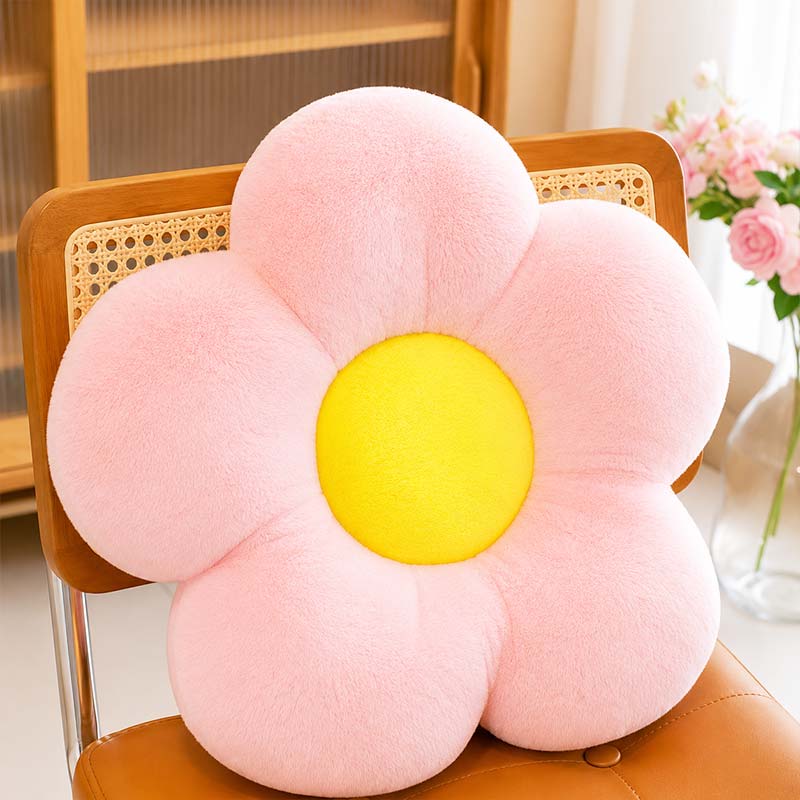
A flower plush cushion combines the practical function of a cushion with the decorative appeal of a flower. Its distinctive silhouette creates visual interest, while its soft construction adds a comfortable element to everyday living spaces.
Traditional cushions usually feature square, rectangular, cylindrical, or round shapes. Although these designs remain useful, flower-shaped cushions provide a different visual experience. Their rounded petals create a softer outline, making them particularly suitable for spaces that benefit from playful details and gentle decorative accents.
A Unique Flower-Inspired Design
The most recognizable feature of a flower plush cushion is its petal-shaped outline. Depending on the design, the cushion may resemble a daisy, sunflower, tulip-inspired bloom, cherry blossom, or a completely imaginative flower.
Some cushions have a simple circular center surrounded by evenly arranged petals. Others feature overlapping petals that create a layered, three-dimensional appearance.
A Flower Plush Cushion for a Cozy and Stylish Home can therefore serve as more than a functional accessory. It can become a small decorative focal point that draws attention without overwhelming the surrounding furniture.
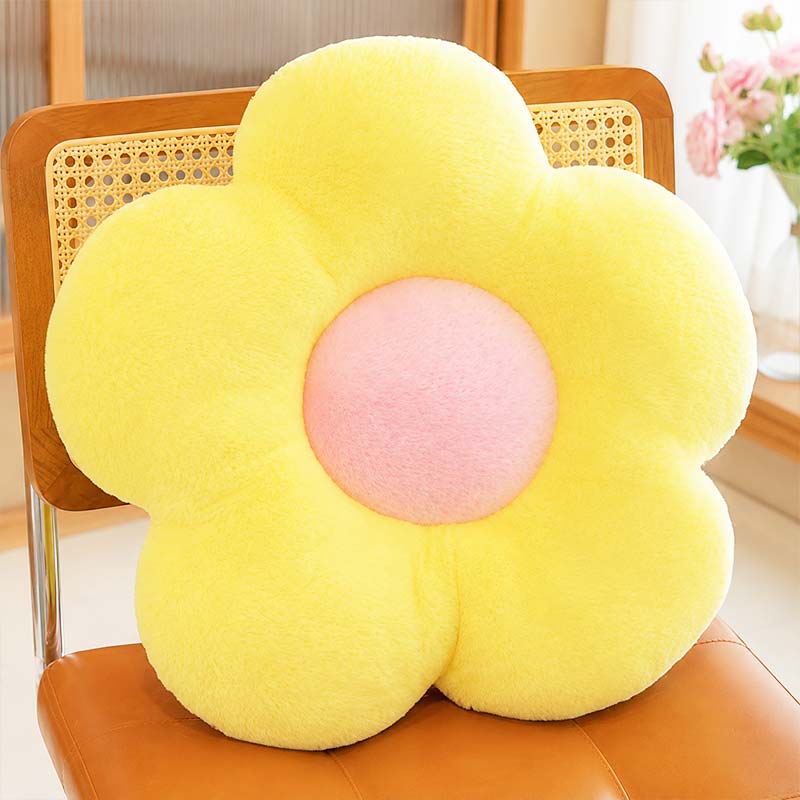
For example, a yellow flower cushion on a neutral gray sofa can introduce a cheerful accent. A pale pink cushion on a white bed can reinforce a soft and romantic atmosphere. A green flower cushion in a reading corner can complement natural materials and indoor plants.
The shape itself also makes these cushions appealing for themed interiors. Floral cushions can work well in cottage-inspired rooms, playful contemporary homes, pastel-themed bedrooms, and spaces designed around nature-inspired decorations.
Soft Texture for Everyday Comfort
Plush fabric is another important feature of flower cushions. Depending on the material, the surface may feel smooth, velvety, fluffy, or slightly textured.
A soft cushion can make a chair or sofa feel more inviting, particularly when paired with blankets, rugs, and other comfortable accessories.
However, softness depends on several factors, including the outer fabric, pile length, filling material, and construction. A cushion may look fluffy in photographs but feel relatively firm when used. Buyers should therefore consider both appearance and physical comfort.
A Flower Plush Cushion for a Cozy and Stylish Home should provide an appropriate balance between softness and shape retention. The filling needs to support the cushion’s structure while allowing the petals to maintain their intended appearance.
A Decorative Accessory for Different Ages
Flower plush cushions can appeal to a broad range of customers.
Adults may appreciate their decorative appearance, while teenagers may use them to personalize bedrooms or study corners. Children may enjoy their friendly shapes and colorful designs, and gift shoppers may select them for birthdays, holidays, or special occasions.
The product’s versatility also creates opportunities for different design directions. Minimalist versions can feature neutral colors and simple shapes, while playful versions may include embroidered eyes, smiling faces, or contrasting petals.
For products marketed to children, buyers should consider age-appropriate construction, secure components, applicable toy safety requirements, and suitable labeling. A decorative cushion is not automatically suitable for every age group simply because it is soft.
Popular Flower Plush Cushion Designs for Modern Homes
Choosing the right design is essential when selecting a Flower Plush Cushion for a Cozy and Stylish Home. The most suitable option depends on the room’s existing colors, the desired decorative style, and the cushion’s intended function.
Daisy Plush Cushions
Daisy-inspired cushions are popular choices for bright and cheerful interiors. Their rounded white petals and yellow centers create a recognizable floral appearance that works well in many casual decorating styles.
A white-and-yellow daisy cushion can add contrast to a beige sofa or complement a light-colored bedroom. It can also be combined with green textiles, botanical prints, and natural wood furniture.
For manufacturers, the daisy design offers opportunities to experiment with petal thickness, center dimensions, and different fabric textures.
A simple daisy cushion may suit minimalist or Scandinavian-inspired spaces, while a larger fluffy version can create a more playful decorative effect.
Sunflower Plush Cushions
Sunflower cushions often use bright yellow or golden petals with a brown center. Their strong color contrast makes them suitable for spaces that need a cheerful focal point.
A sunflower cushion can work particularly well in a neutral living room, a sunny window seat, or a room decorated with warm earth tones.
For a coordinated look, homeowners can combine sunflower cushions with cream throws, natural woven baskets, and wooden furniture. The combination introduces warmth without requiring extensive changes to the room.
A Flower Plush Cushion for a Cozy and Stylish Home featuring a sunflower design may also appeal to gift shoppers seeking a colorful and distinctive present.
Pastel Flower Cushions
Pastel flower cushions feature shades such as blush pink, lavender, mint green, baby blue, and pale yellow.
These colors are especially suitable for bedrooms, nurseries, study spaces, and interiors designed around soft visual contrasts.
Pastel cushions can complement white furniture, pale wood, neutral bedding, and lightweight curtains. They can also be combined in groups, allowing several colors to create a coordinated display.
When selecting multiple pastel cushions, it is useful to keep one or two colors dominant rather than mixing too many unrelated shades.
Smiling Flower Plush Cushions
Some flower cushions feature embroidered eyes, smiling mouths, or other friendly facial details. These designs have a playful personality that distinguishes them from conventional decorative pillows.
They can be used in children’s rooms, creative bedrooms, casual lounges, and themed retail displays.
Smiling flower cushions also have strong gifting potential because their expressive appearance communicates friendliness and cheerfulness.
For commercial buyers, facial details should be carefully evaluated during sampling. Embroidery needs to be clean and consistent, and any additional components should be appropriate for the intended user and applicable safety requirements.
Layered and Three-Dimensional Flower Cushions
Layered flower cushions use overlapping petals or multiple fabric sections to create a fuller appearance.
These designs can look especially attractive on beds, large sofas, and decorative chairs. Their dimensional construction adds texture and depth to a room.
However, more elaborate designs may require additional fabric, sewing operations, and filling. Buyers should compare the visual benefit with the additional manufacturing cost.
The petal construction should also be durable enough to maintain its shape during ordinary handling.
Minimalist Flower Cushions
Not every flower cushion needs bright colors or a cartoon-like appearance.
Minimalist designs may use muted tones, simplified petals, subtle stitching, and restrained proportions. These products can suit contemporary homes where decorative accessories are intended to complement rather than dominate the interior.
Colors such as cream, taupe, dusty rose, sage green, and warm gray can create a sophisticated floral accent.
A Flower Plush Cushion for a Cozy and Stylish Home with a minimalist design can be particularly useful for customers who want a distinctive shape without introducing excessive visual complexity.
Choosing the Right Materials for a Flower Plush Cushion
Material selection influences comfort, durability, appearance, maintenance, and cost. When evaluating a Flower Plush Cushion for a Cozy and Stylish Home, buyers should understand how different fabrics and filling materials affect the finished product.
Plush Fabric Options
Different plush fabrics create different visual and tactile effects.
| Material | Main characteristics | Suitable applications |
|---|---|---|
| Short-pile plush | Smooth surface and relatively clear shape definition | Minimalist flower cushions |
| Long-pile plush | Fluffy appearance and pronounced texture | Oversized decorative cushions |
| Velboa | Short, soft pile and a neat surface | Detailed flower shapes |
| Minky-style fabric | Soft hand feel and smooth texture | Comfort-focused decorative cushions |
| Velvet-style fabric | Rich appearance and a more refined surface | Premium interior accessories |
| Cotton fabric | Breathable woven surface with a less fluffy feel | Mixed-material or natural-style designs |
| Felt accents | Holds defined shapes and decorative details | Petal centers and selected embellishments |
These materials are not interchangeable in every application. Their performance depends on the specific fabric construction, fiber composition, finishing process, and quality.
For instance, long-pile plush can make a flower cushion look fuller, but it may partially obscure the shape of small petals. Short-pile plush may provide clearer outlines, particularly for designs with many individual petal sections.
Buyers should evaluate fabric samples in person where possible. They should check softness, surface consistency, color, shedding, seam compatibility, and how the material responds to ordinary handling.
Filling Materials and Cushion Firmness
The filling determines how a cushion feels when pressed and how well it maintains its shape.
Polyester fiber filling is widely used in soft cushions because it is lightweight and can produce a fluffy appearance. Other constructions may use different fillings depending on the product’s intended purpose and price range.
A flower cushion generally needs enough filling to give the petals volume without making the product excessively firm.
The center and petals may require slightly different construction methods. For example, the center may need a more stable shape, while the petals may benefit from a softer, more flexible filling arrangement.
The best specification depends on the cushion’s size, fabric, and intended use.
A manufacturer should be able to explain the filling material and demonstrate how the selected density affects the finished sample.
Fabric Color and Texture Coordination
Color is particularly important for flower-shaped products because the design often includes several visually distinct sections.
A cushion might have pink petals, a yellow center, and green decorative leaves. Another might use a single cream fabric throughout, relying on the shape and texture to create visual interest.
When developing a Flower Plush Cushion for a Cozy and Stylish Home, buyers should establish clear color references before production.
Different fabrics can display the same color differently because of variations in pile direction, surface texture, and lighting. A physical sample or approved fabric swatch can help reduce discrepancies between expectations and the finished product.
How to Style a Flower Plush Cushion in Your Living Room
The living room is one of the easiest places to incorporate decorative cushions. Sofas, armchairs, window seats, and floor seating areas can all benefit from a floral accent.
A Flower Plush Cushion for a Cozy and Stylish Home can introduce color, soften straight furniture lines, and help connect different decorative elements.
Create a Focal Point on the Sofa
A flower cushion can act as the main decorative accent on a sofa.
For example, a large yellow cushion can stand out against a gray or cream sofa. A blush pink cushion may complement beige upholstery, while a lavender design can introduce a gentle contrast to darker furniture.
The cushion does not need to match every other accessory exactly. Instead, it should connect visually with one or two existing elements, such as a throw blanket, artwork, rug, or decorative vase.
This approach creates coordination without making the room feel overly uniform.
Combine Flower Cushions With Traditional Cushions
Flower cushions can be paired with square, rectangular, or round cushions to create a more varied arrangement.
The traditional cushions provide structure, while the flower cushion introduces a softer and more playful shape.
For example, a sofa arrangement could include two neutral square cushions, one textured rectangular cushion, and one colorful flower cushion.
When combining different shapes, consider scale. A very large flower cushion may overwhelm a small sofa, while a tiny flower cushion may become visually insignificant on a deep sectional.
Use Color to Change the Mood
Color influences the atmosphere of a living room.
Yellow and orange can create a bright, energetic appearance. Pink and lavender often support a softer aesthetic, while cream and sage green can create a more understated look.
The following table provides general styling suggestions.
| Cushion color | Suggested furniture colors | Decorative effect |
|---|---|---|
| Yellow | Gray, cream, white, natural wood | Cheerful and energetic |
| Pink | White, beige, light gray | Soft and romantic |
| Lavender | Cream, pale blue, white | Calm and playful |
| Sage green | Beige, brown, cream | Natural and relaxed |
| Orange | Charcoal, cream, warm wood | Warm and expressive |
| Cream | Brown, gray, muted green | Subtle and elegant |
| Blue | White, gray, pale wood | Fresh and balanced |
These are general suggestions rather than strict rules. Personal preferences, lighting conditions, and the colors already present in the room should guide the final choice.
Decorate Reading Corners and Window Seats
A reading corner is another excellent location for a Flower Plush Cushion for a Cozy and Stylish Home.
Placed on a comfortable armchair or window seat, a flower cushion can add a decorative accent while making the space feel more inviting.
Pairing the cushion with a soft blanket, a small side table, and warm lighting can create a pleasant area for reading or relaxing.
For narrow window seats, buyers should choose a cushion size that leaves sufficient room for comfortable seating.
Using Flower Plush Cushions to Create a Cozy Bedroom
Bedrooms are ideal spaces for decorative cushions because they allow homeowners to experiment with color, texture, and soft accessories.
A Flower Plush Cushion for a Cozy and Stylish Home can make a bed look more inviting while introducing a distinctive decorative feature.
Add a Decorative Accent to Bedding
A flower cushion can be positioned near the headboard, in front of larger pillows, or at the center of a carefully arranged bedding display.
Neutral bedding provides a useful background for colorful flower cushions. For example, a pastel pink flower can brighten white bedding, while a yellow flower can create contrast against beige or light gray fabrics.
If the bedding already contains a strong floral print, a simpler cushion design may produce a more balanced result.
Create a Coordinated Color Palette
A bedroom feels more cohesive when decorative accessories share a consistent color direction.
The cushion does not need to match the bedding exactly. It can repeat a color found in curtains, rugs, wall art, or other accessories.
For example, a sage green flower cushion can complement green details in a botanical print. A pale lavender cushion can connect with a small accent in the bedding or curtains.
A Flower Plush Cushion for a Cozy and Stylish Home can therefore help bring together different decorative elements without requiring a complete bedroom redesign.
Select the Right Cushion Size
The size of a flower cushion affects both its appearance and practical use.
A large cushion may work well as a decorative feature on a spacious bed, while a smaller version may suit a compact bedroom or a narrow reading chair.
Before purchasing, measure the available space and consider the cushion’s full petal-to-petal dimensions rather than only the size of its center.
The following table offers general guidance.
| Approximate diameter | Typical use | Styling consideration |
|---|---|---|
| 20–30 cm | Small accent or decorative display | Works well in compact spaces |
| 30–40 cm | Bed or chair decoration | Offers a visible floral shape |
| 40–50 cm | Sofa or larger bed accent | Creates a stronger focal point |
| Above 50 cm | Oversized decorative feature | Requires adequate display space |
These ranges are illustrative. Actual comfort and suitability depend on the cushion’s thickness, petal design, and construction.
Flower Plush Cushions for Children’s Rooms and Creative Spaces
Flower plush cushions are often selected for rooms where colorful and imaginative decoration is welcome.
Their distinctive shapes can complement playful interiors, themed bedrooms, and creative spaces. However, product selection should reflect the user’s age, intended use, and relevant safety considerations.
Brighten a Children’s Bedroom
A Flower Plush Cushion for a Cozy and Stylish Home can add a cheerful accent to a child’s bedroom.
Bright yellow, pink, blue, and green cushions can complement colorful bedding, wall decals, and playful furniture.
For a coordinated appearance, parents can choose one main flower cushion and combine it with simpler accessories rather than filling the entire room with competing patterns.
The cushion’s size should be appropriate for the available space, and its materials should be suitable for the intended use.
Support a Creative Study Area
Older children, teenagers, and students may use flower cushions to personalize study corners or reading areas.
A pastel cushion can soften a desk chair or bench, while a more colorful design can add personality to a neutral room.
For chairs used during long study sessions, however, a decorative plush cushion may not provide the same ergonomic support as a purpose-designed seat cushion. It should be selected for its actual comfort and intended function.
Consider Construction and Maintenance
Products used in children’s spaces may require more frequent cleaning and handling.
Buyers should review the care instructions, seam construction, and durability of decorative details. If the product is intended for young children, applicable toy safety requirements and age-related risks should be assessed.
Decorative cushions should not be assumed to be suitable for infants or for use in infant sleep environments. Parents should follow relevant safe-sleep guidance and product instructions.
Flower Plush Cushion for a Cozy and Stylish Home as a Gift
Decorative gifts are appealing when they combine attractive design with practical or emotional value. A flower plush cushion offers a distinctive alternative to conventional flowers, standard pillows, and generic home accessories.
A Thoughtful Birthday Gift
A flower plush cushion can be a suitable birthday gift for someone who enjoys cozy interiors, soft accessories, or floral designs.
A bright daisy cushion may appeal to someone who likes cheerful decoration, while a pastel flower may suit someone with a softer interior style.
Gift buyers can select a design according to the recipient’s favorite colors and the room where the cushion is likely to be used.
A Decorative Gift for Special Occasions
Flower cushions can also be considered for occasions such as Valentine’s Day, Mother’s Day, housewarmings, graduations, and seasonal celebrations.
Unlike fresh flowers, a plush cushion does not wilt. It can remain part of the recipient’s home decoration long after the occasion has passed, provided that it is maintained appropriately.
This makes a Flower Plush Cushion for a Cozy and Stylish Home an appealing option for customers who want a floral-themed gift with lasting decorative use.
Improve the Presentation With Gift Packaging
Packaging can make a cushion feel more suitable for gifting.
Options include transparent protective bags, printed sleeves, gift boxes, ribbon, hangtags, and greeting cards.
The packaging should be selected according to the product’s size and intended price range. Oversized packaging can increase shipping costs, while packaging that is too tight may compress the cushion or distort its petals.
Businesses should test the packaging with the finished product to confirm that it protects the cushion and presents it attractively.
How to Choose a High-Quality Flower Plush Cushion
A beautiful appearance is important, but quality determines whether the product remains attractive after regular use.
When selecting a Flower Plush Cushion for a Cozy and Stylish Home, consumers and commercial buyers should consider the fabric, stitching, filling, dimensions, and maintenance requirements.
Inspect the Outer Fabric
The fabric should feel appropriate for the product’s intended purpose.
Look for an even surface, consistent color, and a texture that matches the product description. Excessive shedding, visible fabric defects, and uneven pile can affect the cushion’s appearance.
If purchasing online, review the product dimensions and material information carefully. Close-up photographs can help reveal surface details, but they cannot fully replace physical inspection.
Check Stitching and Petal Construction
The petals are central to the product’s design, so their attachment and shape should be consistent.
Inspect the seams for gaps, loose threads, uneven stitching, and areas where the fabric may be under tension.
For layered flower cushions, check whether the petals are securely attached and whether the overall shape matches the approved design.
A well-constructed cushion should maintain its intended appearance during ordinary handling.
Evaluate Filling and Shape Retention
Press the cushion gently to assess its firmness and recovery.
The filling should feel reasonably even, without obvious hard lumps or large empty areas. The cushion should also retain its general outline after being handled.
For flower-shaped products, particular attention should be given to the edges of the petals and the shape of the center.
Review Cleaning Instructions
Maintenance requirements influence long-term convenience.
Some cushions may be surface-cleaned, while others may allow machine washing under specified conditions. Cleaning suitability depends on the fabric, filling, seams, decorations, and manufacturer’s instructions.
Do not assume that every plush cushion is machine washable.
Before purchasing, review the care label and check whether the recommended cleaning method fits the household’s needs.
Customization Opportunities for Flower Plush Cushion Manufacturers
Customization allows manufacturers and retailers to create products that match a particular brand, customer group, or interior design trend.
A Flower Plush Cushion for a Cozy and Stylish Home can be adapted through color selection, petal shape, dimensions, fabric, embroidery, labeling, and packaging.
Custom Colors and Flower Shapes
Color customization is one of the simplest ways to differentiate a product.
A manufacturer may develop a collection using pastel pink, lavender, cream, and mint green, or produce brighter combinations featuring yellow, orange, and blue.
The petal shape can also be adjusted. Rounded petals create a soft, friendly appearance, while narrower petals may produce a more stylized flower.
Buyers should confirm the design through drawings or samples before placing a bulk order.
Custom Logos and Embroidery
Businesses may request embroidered logos, small brand labels, or decorative lettering.
Embroidery can add branding without changing the basic flower shape, making it useful for promotional gifts and private-label home accessories.
However, the logo should be suitable for the fabric surface and cushion dimensions. Very small lettering may be difficult to read on thick or long-pile plush.
The buyer should approve the embroidery size, thread colors, and placement during sampling.
Custom Dimensions and Product Collections
A manufacturer may develop several sizes within the same product family.
For example, a collection could include small flower cushions for gift sets, medium cushions for bedrooms, and larger versions for sofas or decorative displays.
Consistent colors and design details help the collection appear unified across different sizes.
When developing multiple versions, buyers should confirm that each size has appropriate proportions, filling, and petal construction. Simply enlarging a small pattern may not produce the best result.
Custom Packaging and Private Labels
Retailers may request branded hangtags, printed bags, product labels, or gift packaging.
These details help establish a consistent brand identity and can make products more suitable for online retail, gift shops, and wholesale distribution.
Packaging requirements should be confirmed early because custom printing may require separate artwork approval and additional production time.
Understanding Manufacturing Costs and Wholesale Purchasing
For wholesalers, retailers, and distributors, cost planning is essential when sourcing flower plush cushions.
The unit price depends on the design, materials, dimensions, order quantity, production complexity, and packaging requirements.
A Flower Plush Cushion for a Cozy and Stylish Home with layered petals and custom embroidery may cost more to produce than a simple design made from standard fabric.
Main Factors Affecting Product Costs
| Cost factor | Potential effect |
|---|---|
| Cushion size | Larger products generally require more material and filling |
| Fabric quality | Specialty fabrics may increase material costs |
| Petal complexity | Additional fabric sections may require more labor |
| Filling density | Different filling quantities affect material usage |
| 刺繍 | Custom artwork may involve setup and production costs |
| Order quantity | Setup costs may be distributed across more units |
| パッケージ | Custom printing and gift boxes can raise the total cost |
| Quality inspection | Additional inspection arrangements may add expenses |
| Transportation | Shipment size, weight, and destination affect freight costs |
The actual effect of each factor varies by manufacturer and product specification.
Buyers should request a detailed quotation rather than relying on a single headline price.
Understand Minimum Order Quantities
Minimum order quantity, or MOQ, refers to the smallest order a supplier will accept under specified conditions.
The MOQ may differ for standard products, custom colors, special fabrics, and branded packaging.
Existing designs may be available in smaller quantities than fully customized products because new designs can require additional sampling and production setup.
Buyers should confirm whether the MOQ applies per design, per color, per size, or to the complete order.
Compare the Total Landed Cost
The factory price is only one part of the final purchasing cost.
Buyers may also need to account for packaging, samples, inspection, freight, insurance, import duties, taxes, and other applicable charges.
A basic landed-cost calculation is:
Total landed cost per unit = Total applicable purchasing and delivery costs ÷ Number of units received.
For example, a cushion with a lower factory price may become more expensive after transportation and packaging costs are included. Comparing total landed costs provides a more realistic basis for purchasing decisions.
Businesses should also consider storage expenses, expected retail margins, possible discounts, and the risk of unsold inventory.
Quality Control and Product Safety Considerations
Quality control helps ensure that flower plush cushions meet the agreed specifications and arrive in suitable condition.
The required checks depend on the product’s intended use. A decorative cushion intended for adults may have different compliance requirements from a plush product marketed as a toy for children.
Establish a Clear Product Specification
Before production, buyers should document the cushion’s dimensions, fabric, filling, colors, petal construction, stitching, logo placement, and packaging.
For customized products, the approved sample should be retained as a reference.
The specification should also identify any requirements for labeling, cleaning instructions, and intended use.
Inspect Finished Products
A quality inspection may include checks for:
- Incorrect dimensions or shape.
- Uneven or inconsistent fabric colors.
- Loose threads and open seams.
- Uneven filling or distorted petals.
- Fabric defects or excessive shedding.
- Incorrect embroidery or labels.
- Packaging damage and quantity discrepancies.
For larger orders, buyers may establish a sampling plan and defect classification before production.
Critical defects, major appearance problems, and minor cosmetic issues should be defined clearly so that the supplier and buyer understand the acceptance criteria.
Consider Applicable Safety Requirements
The appropriate safety requirements depend on the product category and destination market.
If a Flower Plush Cushion for a Cozy and Stylish Home is marketed only as a decorative household accessory, the applicable requirements may differ from those for a children’s toy. Marketing claims, product construction, and intended users can affect the assessment.
Where relevant, buyers should verify material restrictions, labeling requirements, and applicable mechanical or physical safety standards. Products intended for children may require additional testing and documentation.
Suppliers should provide accurate information about materials and construction, but buyers and importers should independently verify the requirements that apply to their market.
Flower Plush Cushion Trends in Home Decoration
Home decoration preferences change over time, but several broad design directions provide useful inspiration for developing flower cushion collections.
Nature-Inspired Interiors
Nature-inspired decoration uses organic shapes, botanical patterns, natural colors, and materials that create a connection with the outdoors.
Flower plush cushions fit naturally into this approach because their shapes are based on familiar floral forms.
Designs in sage green, cream, dusty pink, and warm yellow can complement wooden furniture, indoor plants, and woven accessories.
Soft Pastel Color Collections
Pastel colors remain useful for creating gentle and coordinated interiors.
A collection featuring pale pink, lavender, mint green, and soft yellow can appeal to customers who prefer light and playful decoration.
Retailers can offer these colors individually or as coordinated sets, depending on customer preferences and purchasing behavior.
Oversized Decorative Cushions
Larger flower cushions can create a stronger visual impact on beds, sofas, and floor seating areas.
Their size makes the flower shape easier to recognize and can turn the cushion into a prominent decorative feature.
However, oversized products require more material and storage space. Retailers should evaluate shipping dimensions and the target customer’s available living space before adding them to a collection.
Personalized Decorative Gifts
Personalization offers another opportunity for differentiation.
Custom colors, embroidered initials, special packaging, and coordinated product sets can help businesses create gift products that feel more distinctive.
The level of customization should be balanced against the additional cost, production time, and minimum order requirements.
A Flower Plush Cushion for a Cozy and Stylish Home can be positioned as a practical decorative gift while retaining the softness and floral appeal that make the design recognizable.
How to Maintain a Flower Plush Cushion
Regular maintenance helps preserve the cushion’s appearance and comfort.
The correct cleaning method depends on the materials and construction, so the manufacturer’s care instructions should always take priority.
Keep the Surface Clean
Dust and loose particles can accumulate on plush fabric over time.
Gentle surface cleaning or light vacuuming with an appropriate attachment may help remove dust from some cushions. Avoid excessive suction or rough brushing if the fabric has a long pile or delicate decorative details.
For small stains, spot cleaning may be appropriate if permitted by the care instructions.
Avoid Unnecessary Moisture
Some plush fabrics and fillings can retain moisture if they are not dried properly.
If washing is permitted, follow the recommended temperature, detergent, and drying method. Ensure that the cushion dries thoroughly before returning it to regular use.
Do not use bleach or aggressive cleaning products unless the manufacturer specifically confirms their suitability.
Help the Cushion Retain Its Shape
Regular gentle fluffing may help redistribute loose filling and restore the cushion’s appearance.
Avoid pulling individual petals aggressively, particularly if they are attached with narrow seams.
When storing a Flower Plush Cushion for a Cozy and Stylish Home, keep it in a clean, dry place away from prolonged moisture and direct sunlight that could cause fading.
Proper care can help preserve the cushion’s color, softness, and shape for longer.
ぬいぐるみやその他のサービスをご希望の方は、ぜひお問い合わせください!
Email: meng@wanroutoy.com
WhatsApp: +86 15227096178
Phone:+86 15127203823
Facebook: https://www.facebook.com/profile.php?id=61592234474894
Conclusion
A Flower Plush Cushion for a Cozy and Stylish Home is a versatile decorative accessory that combines a distinctive floral shape with the inviting texture of plush fabric. Whether used on a living room sofa, a bedroom bed, a reading chair, or a decorative bench, it can introduce color, softness, and personality without requiring major changes to the interior.
The wide range of available designs makes flower plush cushions suitable for different decorating preferences. Daisy cushions create a cheerful atmosphere, sunflower designs add warmth, pastel flowers support softer interiors, and minimalist cushions provide a more understated decorative accent. Oversized and layered designs can also create strong visual focal points in larger spaces.
Choosing the right product requires attention to materials, filling, dimensions, stitching, cleaning requirements, and intended use. Consumers should select cushions that complement their rooms and meet their comfort expectations. Wholesale buyers and retailers should additionally evaluate manufacturing costs, minimum order quantities, customization options, quality control procedures, and applicable safety requirements.
Customization provides further opportunities to develop distinctive products. Fabric colors, petal shapes, embroidery, labels, and packaging can all be adjusted to suit particular customer groups or brand identities. For businesses, these options can support coordinated collections, personalized gifts, and differentiated retail offerings.
A Flower Plush Cushion for a Cozy and Stylish Home is ultimately more than a decorative shape. It offers a simple way to make everyday spaces feel more welcoming while providing manufacturers and retailers with opportunities to serve customers who appreciate creative, soft, and attractive home accessories.
By choosing suitable materials, maintaining consistent product quality, and paying attention to both appearance and practical use, consumers and businesses can make flower plush cushions a valuable addition to modern home decoration.
FAQ
What Is a Flower Plush Cushion Used For?
A flower plush cushion is primarily used as a decorative home accessory, but it can also provide soft support when placed on a sofa, bed, armchair, or window seat. Its floral shape introduces color and texture while creating a playful or elegant accent. The exact function depends on its dimensions, filling, construction, and intended use.
How Do I Choose the Best Flower Plush Cushion for My Home?
Choose a cushion that complements your room’s colors, furniture dimensions, and decorative style. Consider the fabric, filling, petal shape, size, and maintenance requirements before purchasing. A bright flower cushion can create a focal point in a neutral room, while a pastel or cream design may suit a softer interior. Checking the product’s actual dimensions helps ensure that it fits the intended space.
Which Materials Are Commonly Used in Flower Plush Cushions?
Common materials include short-pile plush, long-pile plush, velboa, minky-style fabrics, and polyester fiber filling. Some designs also use felt or other fabrics for decorative details. The best combination depends on the desired softness, appearance, durability, and price. Buyers should review the manufacturer’s material specifications and care instructions before selecting a product.
Can Flower Plush Cushions Be Customized for Wholesale Orders?
Yes, many manufacturers offer customization options such as different colors, sizes, petal shapes, fabrics, embroidery, labels, and packaging. Available options depend on the supplier’s capabilities and the order quantity. Buyers should provide clear specifications, request a quotation, and approve a sample before bulk production. They should also confirm the MOQ, production schedule, and applicable product requirements.
How Can I Keep a Flower Plush Cushion Soft and Attractive?
Follow the manufacturer’s care instructions for cleaning, drying, and storage. Depending on the material, gentle surface cleaning, appropriate spot treatment, and occasional fluffing may help maintain the cushion’s appearance. Avoid excessive heat, aggressive brushing, or washing methods that are not approved for the product. Keeping the cushion dry and away from prolonged direct sunlight can also help preserve its materials and colors.