はじめに
Cartoon Plush Toy Factories for Global Brands play an important role in the international plush toy market. As more companies develop original characters, licensed products, promotional gifts, entertainment merchandise, and branded soft toys, the need for reliable manufacturing partners continues to grow. Choosing the right Cartoon Plush Toy Factories for Global Brands can influence product quality, production efficiency, customization options, packaging, delivery schedules, and long-term brand development.
For companies selling plush toys in different countries, manufacturing is not simply about producing a soft toy. A successful plush toy project needs careful attention to character appearance, fabric selection, filling materials, stitching, embroidery, accessories, safety standards, packaging, and quality control. Experienced Cartoon Plush Toy Factories for Global Brands understand these requirements and can turn a character concept into a finished product suitable for international markets.
Cartoon Plush Toy Factories for Global Brands also provide valuable customization capabilities. Global brands may need plush toys in different sizes, colors, shapes, materials, and designs. Some brands require a small prototype for approval, while others need thousands of units for retail distribution. A professional factory should be able to support different production stages while maintaining consistent quality.
The growing popularity of character-based products has made Cartoon Plush Toy Factories for Global Brands increasingly important for businesses in entertainment, education, fashion, retail, promotional marketing, and e-commerce. A well-designed plush toy can strengthen brand recognition and create an emotional connection between customers and a character.
This article explains how Cartoon Plush Toy Factories for Global Brands support international businesses, what services they typically provide, how customization works, what quality factors buyers should consider, and how brands can build successful long-term manufacturing relationships.
Why Cartoon Plush Toy Factories for Global Brands Matter
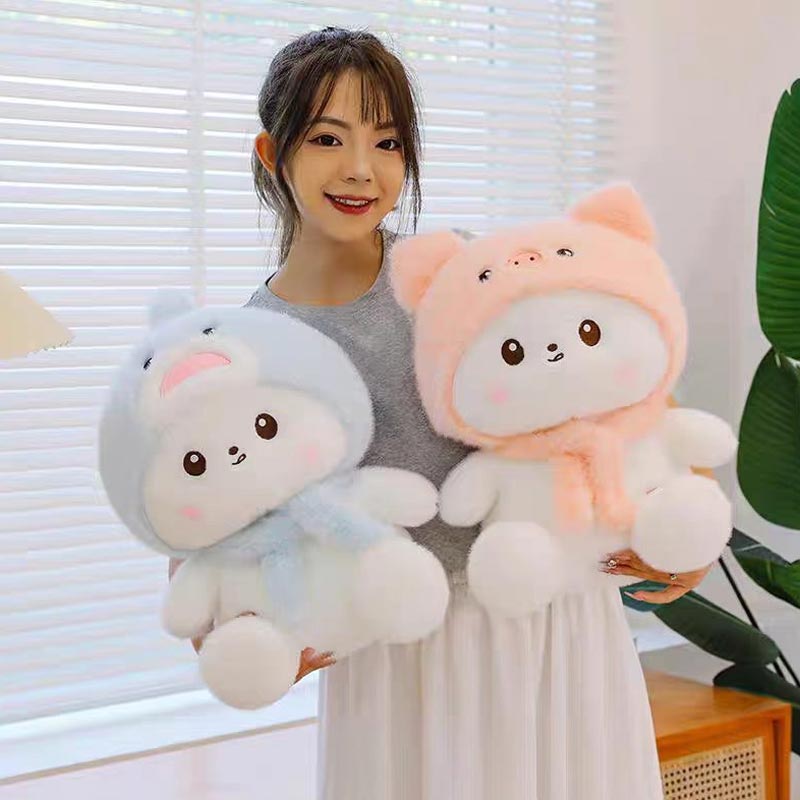
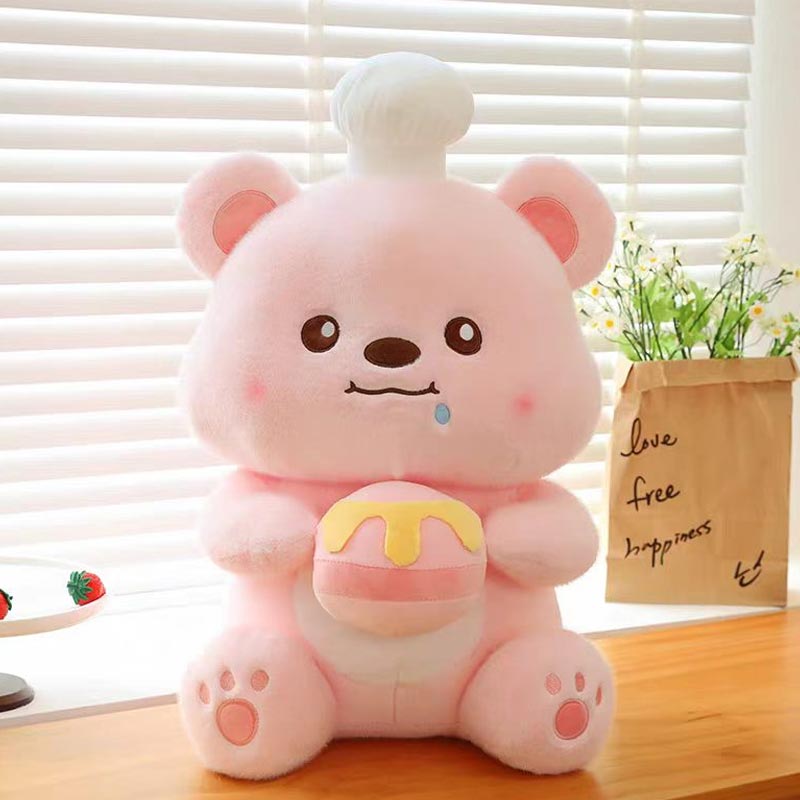
Cartoon characters are powerful branding tools. A memorable character can become a mascot, collectible, gift item, promotional product, or long-term merchandise line. However, turning a digital character into a physical plush toy requires specialized manufacturing knowledge.
Cartoon Plush Toy Factories for Global Brands have experience converting illustrations and character concepts into three-dimensional products. A cartoon character may look simple on a screen, but manufacturing it as a plush toy can involve many technical decisions.
For example, the factory may need to determine how to create the character’s head shape, body proportions, facial features, ears, arms, legs, tail, clothing, and accessories. Small changes in proportions can significantly affect the final appearance.
Professional Cartoon Plush Toy Factories for Global Brands usually work with designers, pattern makers, sample developers, sewing workers, embroidery technicians, and quality control teams. These different production stages work together to create a consistent finished product.
For international brands, consistency is particularly important. If a company orders 5,000 plush toys, customers expect every unit to look substantially the same. Differences in facial embroidery, fabric color, filling volume, or stitching can negatively affect the customer experience.
Benefits of Working With Experienced Factories
| Benefit | Importance for Global Brands |
|---|---|
| Custom design | Supports original characters and brand identity |
| Prototype development | Allows product approval before mass production |
| Material selection | Helps achieve the desired softness and appearance |
| 品質管理 | Reduces defects and inconsistent products |
| 生産能力 | Supports small and large orders |
| Packaging support | Creates professional retail presentation |
| OEM/ODM services | Provides flexible manufacturing solutions |
| International experience | Helps support overseas customers |
The value of Cartoon Plush Toy Factories for Global Brands therefore extends beyond manufacturing. These factories can become important partners in product development and brand expansion.
Custom Design Services From Cartoon Plush Toy Factories for Global Brands
One of the main reasons companies work with Cartoon Plush Toy Factories for Global Brands is customization. Many global brands do not want generic plush toys. They want products based on original characters, mascots, logos, animals, fantasy creatures, or licensed designs.
Customization can begin with a simple sketch. A factory’s design team may then analyze the drawing and determine how it can be converted into a practical plush structure.
The process commonly includes:
- Reviewing the original artwork.
- Confirming product size and proportions.
- Selecting suitable fabrics.
- Creating a pattern.
- Producing a prototype.
- Adjusting the prototype.
- Confirming colors and details.
- Approving the final sample.
- Starting mass production.
- Performing quality inspections.
Cartoon Plush Toy Factories for Global Brands can also help identify manufacturing challenges during the development stage. For example, an extremely thin character arm may be difficult to sew and fill properly. A complicated accessory may increase production time. Very small embroidered details may also require special production techniques.
Experienced Cartoon Plush Toy Factories for Global Brands can suggest practical modifications while keeping the character recognizable.
Common Customization Options
| Custom Feature | Available Options |
|---|---|
| Size | Small, medium, large, oversized |
| Fabric | Plush, velboa, minky, fleece, cotton, polyester |
| Filling | Polyester fiber, recycled filling, other suitable materials |
| Face | Embroidery, printed details, appliqué |
| Clothing | Custom uniforms, costumes, dresses, shirts |
| アクセサリー | Hats, bags, scarves, shoes, props |
| パッケージ | Bags, boxes, hang tags, custom cartons |
| Branding | Labels, logos, woven tags, printed tags |
The ability to customize these details helps Cartoon Plush Toy Factories for Global Brands create products that are closely aligned with the visual identity of a company.
Turning Cartoon Artwork Into Plush Products
A cartoon drawing is usually two-dimensional, while a plush toy is three-dimensional. This difference makes product development one of the most important stages when working with Cartoon Plush Toy Factories for Global Brands.
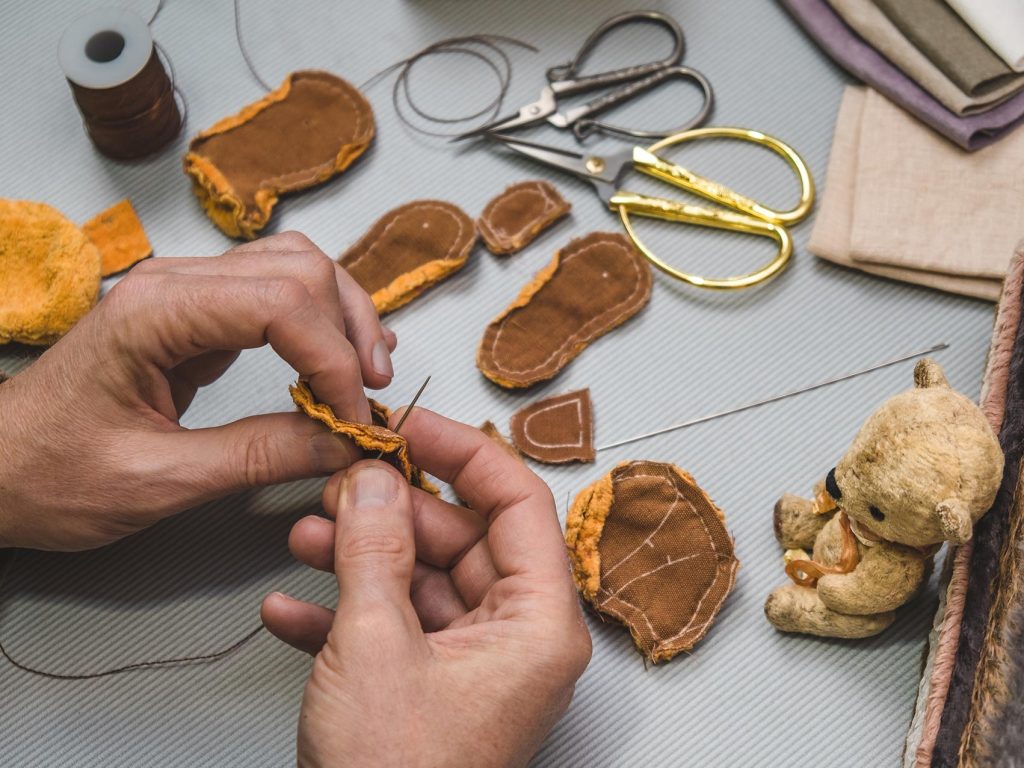
A skilled pattern maker studies the original illustration and determines how different parts should be constructed. The head may require several fabric panels. The body may need separate sections for the front, back, arms, and legs. Curved areas may require special stitching to maintain the desired shape.
The factory may also need to consider how the plush toy will sit or stand. If a character has a large head and a small body, the filling structure must provide enough support.
Facial features require particular attention. Eyes, mouths, eyebrows, noses, and other details can strongly influence the character’s personality.
Cartoon Plush Toy Factories for Global Brands often use embroidery for facial details because embroidery can create a clean and durable appearance. For certain designs, appliqué or printing may be more appropriate.
Important Design Factors
A successful plush design should consider:
- Character proportions
- Fabric thickness
- Fabric stretch
- Stitching structure
- Filling density
- Facial details
- Color accuracy
- Accessory placement
- Product safety
- Packaging requirements
Cartoon Plush Toy Factories for Global Brands can review these factors before production begins. This helps reduce the risk of costly changes after mass production has started.
Material Selection for Cartoon Plush Toy Factories for Global Brands
Materials have a major influence on the quality, appearance, softness, durability, and cost of plush toys. Cartoon Plush Toy Factories for Global Brands typically offer multiple fabric options to accommodate different product requirements.
Plush fabric is popular because it creates a soft and comfortable surface. Velboa is also commonly used for character toys because it can provide a smooth appearance and consistent texture. Minky-style fabrics can create an especially soft premium feeling.
The best material depends on the design and target market.
For example, a premium collectible plush may require a particularly soft fabric with a refined finish. A promotional plush produced in large quantities may prioritize cost efficiency and durability.
Material Comparison
| Material | Main Characteristic | Suitable Application |
|---|---|---|
| Plush fabric | Soft and traditional | General plush toys |
| Velboa | Smooth and versatile | Cartoon characters |
| Minky fabric | Very soft | Premium plush toys |
| Fleece | Lightweight and soft | Casual character toys |
| Cotton fabric | Natural appearance | Special collections |
| Polyester fabric | Durable and versatile | Mass-market products |
Cartoon Plush Toy Factories for Global Brands should also help customers understand how material choices affect production costs. Selecting a suitable material at the beginning can prevent unnecessary changes later.
Quality Control in Cartoon Plush Toy Factories for Global Brands
Quality control is essential for international plush toy production. Global brands often sell products through major retailers, online stores, distributors, and marketplaces. Product defects can result in customer complaints, returns, negative reviews, and additional costs.
Cartoon Plush Toy Factories for Global Brands should establish quality checks throughout the manufacturing process rather than inspecting only the finished products.
Raw materials should be checked before production. Fabric colors should match approved samples. Embroidery should be reviewed for accuracy. Sewing should be inspected for loose threads and weak seams.
During production, workers and quality inspectors can check the shape and filling of the plush toy. Finished products can then undergo final inspections before packaging.
Typical Quality Control Stages
| Stage | Quality Check |
|---|---|
| Material inspection | Fabric, color, filling, accessories |
| Pattern inspection | Dimensions and construction |
| Sample inspection | Appearance and character accuracy |
| Sewing inspection | Seams, stitching, loose threads |
| Embroidery inspection | Eyes, mouth, logos, details |
| Filling inspection | Shape and softness |
| Finished product inspection | Overall appearance and function |
| Packaging inspection | Labels, cartons, presentation |
For global brands, quality consistency is particularly important because customers in different markets should receive products with the same basic appearance and quality.
Reliable Cartoon Plush Toy Factories for Global Brands understand that quality control is not just a final inspection. It is an ongoing manufacturing process.
Safety Considerations for Global Plush Toy Production
Safety is another important factor when selecting Cartoon Plush Toy Factories for Global Brands. Plush toys may be purchased for children, families, collectors, promotional campaigns, or general consumers. The intended market and age group can affect the applicable safety requirements.
Factories working with international customers should understand that different markets may have different regulatory expectations. Buyers should communicate the target countries, intended age range, materials, accessories, and product use clearly.
Potential safety considerations can include:
- しっかりとした縫い目
- Appropriate filling materials
- Safe embroidery
- Securely attached accessories
- Suitable fabric materials
- Proper labeling
- Packaging requirements
- 年齢別評価
- Applicable market testing
Cartoon Plush Toy Factories for Global Brands can help buyers identify which product information should be reviewed before production. However, brands should also independently confirm the exact legal and testing requirements for their target markets.
A clear safety plan from the beginning can reduce production delays and help ensure that the finished product is appropriate for its intended market.
OEM and ODM Services From Cartoon Plush Toy Factories for Global Brands
OEM and ODM manufacturing gives brands additional flexibility.
OEM production usually involves manufacturing products according to a customer’s specifications, design, branding, and requirements. ODM production may involve using a factory’s existing manufacturing capabilities or design resources to develop a product with customization.
Cartoon Plush Toy Factories for Global Brands may support either approach depending on their capabilities.
For a company with an established cartoon character, OEM production can be useful because the brand already has its artwork and specifications. The factory focuses on transforming those specifications into physical products.
For a company that has a general product concept but needs help developing the final design, ODM services can provide additional support.
OEM and ODM Comparison
| Feature | OEM | ODM |
|---|---|---|
| Customer design | Usually provided by customer | May be developed with factory |
| カスタマイズ | High | High, depending on factory |
| Product development | Customer-led | Shared or factory-assisted |
| Branding | Customer branding | Customer branding |
| Design support | May be limited | Often more involved |
| Suitable for | Established brands | New product development |
Both approaches can be useful for global businesses. The right choice depends on the brand’s internal design resources, product requirements, budget, and development timeline.
Production Capacity and Order Flexibility
Different brands have different purchasing requirements. A small startup may need a limited initial quantity, while an established international company may require large-scale production.
Cartoon Plush Toy Factories for Global Brands should ideally offer production capabilities that can grow with a customer’s business.
Production capacity should not be judged only by the maximum number of products a factory can manufacture. Buyers should also consider whether the factory can maintain consistent quality when order volumes increase.
For example, a factory may produce a few hundred samples successfully but struggle to maintain the same quality across a large production run. Experienced Cartoon Plush Toy Factories for Global Brands use standardized procedures to reduce these differences.
Production Factors to Discuss
Before placing an order, brands can ask about:
- Minimum order quantity
- Sample development time
- Production lead time
- Monthly capacity
- Material availability
- Quality inspection procedures
- パッケージの選択肢
- Shipping support
- Reorder procedures
Clear communication about these factors helps both the factory and the buyer establish realistic expectations.
Packaging Solutions for Global Brands
Packaging can significantly affect the presentation of a plush product. For retail products, the packaging is often the first physical interaction a customer has with the product.
Cartoon Plush Toy Factories for Global Brands can provide different packaging solutions depending on the product’s sales channel.
A simple polybag may be suitable for promotional products or wholesale orders. A printed box may be more appropriate for premium collectibles. Hang tags can communicate the character story, brand information, care instructions, or product details.
Packaging Options
| Packaging Type | Suitable For |
|---|---|
| Polybag | Wholesale and promotional products |
| Printed bag | Branded retail products |
| Hang tag | Character and brand information |
| Paper box | Premium products |
| Window box | Retail display |
| Custom carton | Large-scale shipping |
Packaging should be designed with transportation in mind as well. Plush toys can be compressed during shipping, so the packaging method should help protect the product while controlling shipping volume.
Cartoon Plush Toy Factories for Global Brands can help brands balance appearance, protection, cost, and logistics.
How Cartoon Plush Toy Factories for Global Brands Support Brand Identity
A plush toy can become more than merchandise. For many brands, a character becomes an important part of the company’s visual identity.
A mascot plush can appear at exhibitions, stores, social media events, promotional campaigns, product launches, and customer appreciation activities.
When customers physically interact with a plush version of a familiar character, the brand can create a stronger emotional connection.
Cartoon Plush Toy Factories for Global Brands help make this possible by reproducing important character details accurately.
Consistency matters because the physical plush should look like the original digital character. If the eyes, colors, proportions, or clothing are noticeably different, customers may not recognize the character immediately.
A professional production process can therefore support brand consistency across physical merchandise.
Cartoon Plush Toy Factories for Global Brands and E-Commerce
E-commerce has created significant opportunities for customized plush toys. Brands can sell character products directly to customers through their own websites, online marketplaces, social media stores, and crowdfunding campaigns.
Cartoon Plush Toy Factories for Global Brands can support e-commerce businesses by producing products according to specific size, packaging, and order requirements.
Online customers cannot physically touch a plush toy before purchasing. Product photography and customer reviews therefore become important. A plush toy that looks attractive in photographs but feels poorly made in person can create dissatisfaction.
High-quality fabric, accurate character reproduction, secure stitching, and consistent filling can help ensure that the physical product meets customer expectations.
For e-commerce brands, packaging is also important because customers often share their unboxing experiences online. Attractive packaging can make a product more suitable for social media content and gift purchases.
Choosing the Right Cartoon Plush Toy Factories for Global Brands
Selecting a manufacturing partner requires careful evaluation. Not every factory has the same capabilities.
Brands should examine the factory’s experience with custom cartoon plush toys, production processes, sample quality, communication, quality control, and ability to handle international orders.
A factory may offer low prices but provide limited customization. Another factory may offer excellent product development but have a higher minimum order quantity. The right manufacturing relationship depends on the brand’s specific requirements.
Factory Evaluation Checklist
| Evaluation Area | Questions to Ask |
|---|---|
| Experience | Has the factory produced similar plush toys? |
| カスタマイズ | Can it manufacture original character designs? |
| Samples | Can it create prototypes before bulk production? |
| Materials | What fabric and filling options are available? |
| Quality | What inspection procedures are used? |
| Capacity | Can the factory support expected order volumes? |
| コミュニケーション | Is communication clear and responsive? |
| パッケージ | Can custom packaging be provided? |
| Production | What is the typical production timeline? |
| Reorders | Can repeat orders maintain the same specifications? |
Brands should also request samples before placing large orders whenever possible. A sample allows the buyer to evaluate the actual fabric, shape, stitching, embroidery, filling, and overall appearance.
Sample Development With Cartoon Plush Toy Factories for Global Brands
Sampling is one of the most important steps in custom plush manufacturing. A drawing cannot always communicate every physical detail.
Cartoon Plush Toy Factories for Global Brands typically create a prototype based on the customer’s specifications. The buyer can then review the sample and provide feedback.
Common sample revisions may include:
- Changing the head size
- Adjusting body proportions
- Modifying fabric colors
- Increasing or reducing filling
- Changing facial embroidery
- Adjusting accessories
- Improving the sitting or standing position
- Modifying packaging
Several sample rounds may be necessary for complex designs.
Brands should provide clear feedback to avoid unnecessary delays. Reference images, marked drawings, color information, measurements, and written instructions can make communication more efficient.
Once the final sample is approved, the production team should use it as an important reference during mass production.
Cost Factors for Cartoon Plush Toy Factories for Global Brands
Cost is an important consideration, but plush toy pricing depends on many factors. Cartoon Plush Toy Factories for Global Brands generally calculate costs based on product size, materials, complexity, order quantity, accessories, packaging, and production requirements.
A larger plush toy normally requires more fabric and filling. Complex shapes require more sewing operations. Detailed embroidery and accessories can increase labor and material costs.
Packaging can also affect the final price.
Main Cost Factors
| Cost Factor | Possible Impact |
|---|---|
| Product size | Larger toys require more materials |
| Fabric | Premium materials may increase cost |
| Filling | Different filling materials have different costs |
| Design complexity | Complex shapes require more labor |
| 刺繍 | Detailed embroidery can increase production time |
| アクセサリー | Extra components increase material and labor costs |
| Quantity | Larger orders may reduce unit cost |
| パッケージ | Custom packaging increases development costs |
| Shipping | Size and weight influence logistics costs |
The lowest quoted unit price does not necessarily represent the lowest overall cost. If poor quality leads to returns, replacements, or customer complaints, the total business cost may become higher.
Brands should therefore evaluate price together with quality, reliability, communication, and production capabilities.
Sustainability and Material Choices
Sustainability has become an increasingly important consideration for global brands. Companies may want to reduce material waste, improve packaging efficiency, and explore recycled or more environmentally conscious materials.
Cartoon Plush Toy Factories for Global Brands can discuss material alternatives with customers depending on the product requirements.
Potential approaches include recycled polyester filling, recycled fabric options, reduced packaging, paper-based tags, and optimized carton sizes.
However, sustainability claims should be supported by accurate material information and appropriate documentation. Brands should confirm the actual composition and certification status of materials before making specific environmental claims.
Sustainable manufacturing is not only about choosing one material. It can also involve reducing production waste, improving cutting efficiency, optimizing packaging, and designing products for longer use.
International Shipping and Logistics
After production is completed, products need to reach warehouses, distributors, retailers, or customers. Logistics planning should therefore be considered early in the manufacturing process.
Cartoon Plush Toy Factories for Global Brands may support customers with export packaging and shipping coordination. Depending on the supplier, the factory may work with freight forwarders or logistics providers.
Shipping requirements depend on the destination country, order size, transportation method, and delivery schedule.
Common Logistics Considerations
| Factor | Consideration |
|---|---|
| Destination | Country and delivery location |
| Shipping method | Sea, air, rail, or express |
| Volume | Carton quantity and dimensions |
| Weight | Influences freight costs |
| パッケージ | Protects products during transit |
| Delivery schedule | Must match sales plans |
| Documentation | Depends on shipment and destination |
Planning logistics before production is completed can reduce delays and help brands coordinate product launches.
Long-Term Cooperation With Cartoon Plush Toy Factories for Global Brands
A strong relationship with a manufacturing partner can provide benefits beyond a single order.
Global brands often release multiple characters or product series. Once a factory understands a company’s preferred materials, measurements, packaging styles, quality standards, and communication process, future projects may become more efficient.
Cartoon Plush Toy Factories for Global Brands can also support repeat orders. Consistency between the first production run and later reorders is important for brands that maintain products in their stores for extended periods.
A long-term partnership can also improve communication. Both sides become familiar with expectations, approval procedures, quality requirements, and production schedules.
For brands planning multiple plush products, developing a stable factory relationship can be an important part of the overall supply chain strategy.
Common Mistakes When Working With Plush Toy Factories
Businesses new to plush manufacturing sometimes focus heavily on price and overlook other factors.
One common mistake is providing insufficient design information. A simple image may not explain the desired size, fabric, filling, colors, accessories, or packaging.
Another mistake is skipping the prototype stage. Approving mass production without reviewing a physical sample can create significant risks.
A third mistake is failing to communicate the target market. Safety and labeling requirements can vary depending on where the product will be sold.
Mistakes to Avoid
| Mistake | Potential Problem |
|---|---|
| Choosing only by price | Quality may not meet expectations |
| Skipping samples | Design problems may appear in bulk production |
| Poor specifications | Factory may misunderstand requirements |
| No quality standard | Difficult to judge production consistency |
| Unclear delivery schedule | Product launch may be delayed |
| Weak communication | Revisions may take longer |
| Ignoring packaging | Retail presentation may be weaker |
Working with experienced Cartoon Plush Toy Factories for Global Brands and providing detailed requirements can help reduce these risks.
Questions to Ask Cartoon Plush Toy Factories for Global Brands
Before starting a project, brands should prepare a clear list of questions.
Ask whether the factory supports custom cartoon plush designs. Ask about minimum order quantities and sample development. Ask what fabrics and filling materials are available. Ask how quality inspections are performed.
Brands should also ask about production lead times, packaging, shipping support, and repeat orders.
The more information both sides exchange at the beginning, the easier it becomes to establish realistic expectations.
A clear specification document can include product dimensions, artwork, colors, materials, accessories, embroidery details, packaging requirements, quantity, delivery location, and quality expectations.
This document becomes an important reference throughout the production process.
Future Opportunities for Cartoon Plush Toy Factories for Global Brands
The global character merchandise market continues to create opportunities for plush products. Brands can use plush toys in entertainment, education, retail, promotions, social media campaigns, events, and direct-to-consumer businesses.
New digital characters can be developed into physical merchandise. Online communities can also create demand for collectible characters and limited-edition plush products.
Cartoon Plush Toy Factories for Global Brands are positioned to support these opportunities because they can transform creative concepts into physical products.
Customization is likely to remain important. Instead of selling only standardized products, brands increasingly want merchandise that reflects their own identity.
The ability to produce different sizes, materials, accessories, packaging styles, and limited editions can help brands develop diverse product collections.
ぬいぐるみやその他のサービスをご希望の方は、ぜひお問い合わせください!
Email: meng@wanroutoy.com
WhatsApp: +86 15227096178
Phone:+86 15127203823
Facebook: https://www.facebook.com/profile.php?id=61592234474894
Conclusion
Cartoon Plush Toy Factories for Global Brands provide essential manufacturing support for companies that want to transform cartoon characters into high-quality physical products. From custom design and sample development to material selection, production, quality control, packaging, and logistics, these factories can support many stages of the plush toy development process.
Choosing suitable Cartoon Plush Toy Factories for Global Brands requires more than comparing unit prices. Brands should consider manufacturing experience, customization capabilities, sample quality, material options, production capacity, quality control, communication, packaging, and international order experience.
A successful plush toy project begins with a clear design and continues through careful product development and quality management. When brands communicate their requirements clearly and work closely with Cartoon Plush Toy Factories for Global Brands, they can develop products that accurately represent their characters and meet customer expectations.
For global businesses, plush toys can become valuable brand merchandise, promotional products, collectibles, gifts, and e-commerce products. With the right manufacturing partner, a cartoon character can move from a digital drawing to a physical product that customers can see, touch, collect, and enjoy.
FAQ
What are Cartoon Plush Toy Factories for Global Brands?
Cartoon Plush Toy Factories for Global Brands are manufacturers that specialize in producing customized plush toys for international companies. They can manufacture products based on original cartoon characters, mascots, illustrations, licensed designs, or brand concepts. Their services may include product development, pattern making, sample production, sewing, embroidery, filling, quality inspection, packaging, and production support.
Can Cartoon Plush Toy Factories for Global Brands make custom character plush toys?
Yes, Cartoon Plush Toy Factories for Global Brands can typically produce custom character plush toys based on customer artwork and specifications. The process may include reviewing the artwork, creating patterns, selecting materials, producing prototypes, adjusting the sample, and starting mass production after approval. Brands can usually customize the size, fabric, colors, facial details, accessories, filling, labels, and packaging.
How do brands choose Cartoon Plush Toy Factories for Global Brands?
Brands can evaluate Cartoon Plush Toy Factories for Global Brands based on custom manufacturing experience, sample quality, production capacity, material choices, quality control procedures, communication, packaging options, and international order experience. Requesting samples before placing a large order is also useful because a physical sample allows the brand to evaluate the actual product.
What materials can Cartoon Plush Toy Factories for Global Brands use?
Cartoon Plush Toy Factories for Global Brands can work with different materials depending on the product design and customer requirements. Common choices include plush fabric, velboa, minky-style fabric, fleece, cotton, and polyester-based fabrics. Filling can also vary according to the desired softness, structure, and product requirements. Brands should discuss material specifications before approving production.
Can Cartoon Plush Toy Factories for Global Brands handle large international orders?
Many Cartoon Plush Toy Factories for Global Brands are equipped to handle large production orders for international customers. However, capacity varies between factories. Brands should confirm minimum order quantities, monthly production capacity, production lead times, quality control procedures, packaging capabilities, and logistics arrangements before placing a large order. Clear planning can help ensure that production and delivery schedules match the brand’s sales plans.