Introduzione
The global plush toy industry has experienced significant growth as consumers increasingly seek products that combine attractive designs, comfortable textures, excellent craftsmanship, and reliable quality. Plush toys are no longer simply traditional children’s playthings. They have become popular gifts, collectibles, decorative accessories, promotional products, and branded merchandise for businesses across different industries.
For wholesalers, retailers, gift companies, and private-label brands, finding a dependable manufacturing partner is essential. A Cute Plush Toy Factory with Premium Soft Materials can help businesses transform creative concepts into high-quality finished products while maintaining consistent production standards.
The quality of a plush toy depends on several important factors, including fabric selection, filling materials, sewing techniques, pattern design, and finishing details. Among these factors, fabric quality has a particularly strong influence on the customer’s experience. A soft, smooth, and comfortable surface can make a plush toy more appealing and increase its perceived value.
A professional Cute Plush Toy Factory with Premium Soft Materials understands how to select suitable fabrics for different product designs. Whether customers need adorable animal toys, cartoon characters, customized teddy bears, promotional plush products, or decorative cushions, the right manufacturer can provide suitable materials and production solutions.
Premium soft materials also help businesses differentiate their products in competitive markets. Customers often compare plush toys based on appearance, texture, durability, and price. Products with carefully selected fabrics and excellent craftsmanship can create a stronger impression and encourage repeat purchases.
This article explores the advantages of working with a Cute Plush Toy Factory with Premium Soft Materials, covering material selection, production processes, customization services, quality control, manufacturing costs, and practical sourcing strategies.
Why Choose a Cute Plush Toy Factory with Premium Soft Materials?
Choosing a professional plush toy manufacturer is an important decision for any business entering the stuffed toy market. A reliable factory should offer more than basic sewing and assembly services. It should understand customer expectations, material characteristics, product development, and manufacturing standards.
A Cute Plush Toy Factory with Premium Soft Materials can provide several benefits that support long-term business growth.
Superior Softness and Comfort
Softness is one of the most recognizable qualities of a plush toy. Customers expect stuffed animals to feel comfortable when they touch, hold, or hug them.
Premium fabrics can create a smoother and more pleasant surface. Materials such as polyester plush, velboa, minky, and microfiber are commonly used because they offer different textures and appearance options.
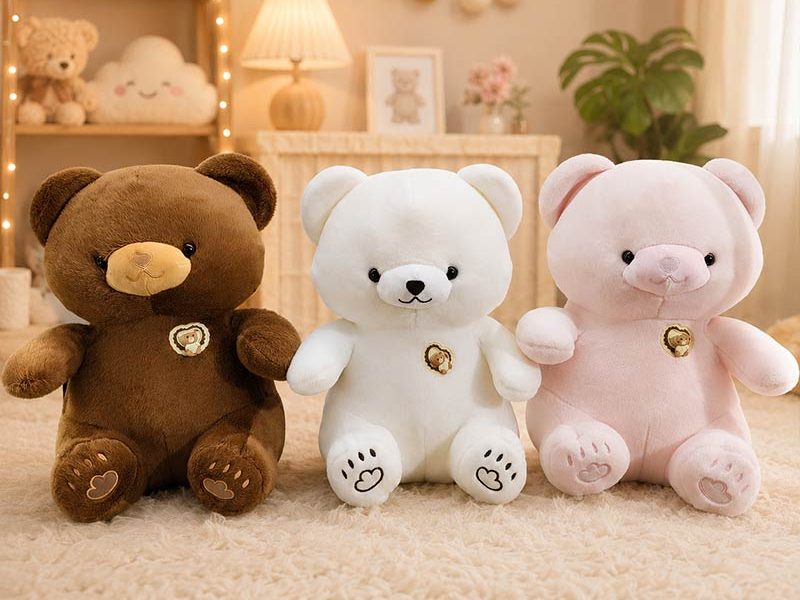
For example, a teddy bear made with high-quality plush fabric can provide a comfortable tactile experience. A rabbit made with long-pile fabric can achieve a fluffy appearance that makes it especially attractive to gift buyers.
A professional Cute Plush Toy Factory with Premium Soft Materials understands that different products require different fabric characteristics. Manufacturers should recommend materials according to the product’s intended purpose rather than selecting fabrics based only on price.
Attractive Product Appearance
Appearance plays an important role in purchasing decisions. Customers are naturally attracted to plush toys with appealing colors, cute facial expressions, balanced proportions, and carefully finished details.
Premium soft materials can improve the visual quality of a finished product. Smooth fabrics create a clean appearance, while fluffy materials can make animal toys look more realistic and cuddly.
Different textures can also help manufacturers create unique product collections.
For example, a collection of rabbits, bears, cats, and dogs can use different fabric combinations while maintaining a consistent design style.
Better Durability
A high-quality plush toy should maintain its shape and appearance after regular handling.
Fabric strength, seam construction, filling quality, and finishing techniques all influence product durability.
A professional manufacturer evaluates these factors during the development process. Strong stitching can reduce the risk of fabric separation, while suitable filling materials help the toy maintain its original shape.
A Cute Plush Toy Factory with Premium Soft Materials should also inspect finished products to identify loose threads, uneven seams, inconsistent filling, and other potential defects.
More Customization Opportunities
Modern consumers appreciate products that reflect their interests and personalities. Businesses therefore need manufacturers capable of producing customized plush toys.
Le opzioni di personalizzazione possono includere:
- Custom animal shapes
- Cartoon character designs
- Personalized teddy bears
- Brand mascot plush toys
- Promotional stuffed animals
- Holiday-themed plush products
- Decorative plush cushions
- Customized colors and fabrics
- Embroidered logos and labels
Working with an experienced factory allows businesses to develop products that better match their brand identity and target customers.
Premium Soft Materials Used in Plush Toy Manufacturing
Material selection is one of the most important stages of plush toy production. Different fabrics have different textures, thicknesses, durability characteristics, and visual effects.
A Cute Plush Toy Factory with Premium Soft Materials should understand these differences and help customers choose appropriate materials.
Polyester Plush Fabric
Polyester plush is one of the most commonly used materials in the stuffed toy industry.
It is popular because of its versatility, soft texture, and suitability for different product designs. Manufacturers can produce polyester plush fabrics in various colors, densities, and pile lengths.
This material is suitable for:
- Teddy bears
- Conigli
- Dogs and cats
- Cartoon characters
- Animal dolls
- Decorative plush products
Polyester plush can also be combined with other fabrics to create different visual effects.
For businesses purchasing plush toys wholesale, polyester plush offers flexibility when developing large product collections.
Velboa Fabric
Velboa is a short-pile fabric frequently used in plush toy manufacturing.
Its smooth surface makes it suitable for small stuffed animals and cartoon characters that require clean shapes and visible details.
Velboa is commonly selected for plush keychains, character dolls, promotional toys, and miniature animal products.
Because the pile is relatively short, facial embroidery and decorative stitching can appear neat and clear.
A Cute Plush Toy Factory with Premium Soft Materials may recommend velboa when a product requires a smooth surface rather than a fluffy appearance.
Minky Fabric
Minky fabric is well known for its soft and smooth texture.
It is commonly used in comfort-oriented products, baby blankets, plush toys, and decorative accessories.
The material can provide a luxurious tactile experience, making it suitable for selected premium product collections.
However, manufacturers should consider its thickness, stretch characteristics, and sewing requirements before using it in a complicated design.
Long-Pile Plush Fabric
Long-pile plush is especially suitable for products that require a fluffy appearance.
It is frequently used for teddy bears, rabbits, sheep, dogs, and other animal characters.
The longer fibers create a soft visual effect and make products look fuller.
This material is particularly attractive for winter-themed gifts, oversized stuffed animals, and decorative plush collections.
However, cutting and sewing require careful handling to prevent uneven surfaces and visible seams.
Microfiber Fabric
Microfiber fabrics are known for their fine fibers and smooth surfaces.
They can provide a delicate texture and are suitable for certain premium plush products.
Their characteristics depend on the specific fabric construction, so buyers should evaluate physical samples before approving production.
Comparison of Common Plush Materials
| Materiale | Main Characteristics | Applicazioni comuni |
|---|---|---|
| Pelluche in poliestere | Soft, versatile, and flexible | Teddy bears and animal toys |
| Velboa | Smooth surface and short pile | Cartoon dolls and mini toys |
| Minky | Liscio e molto morbido | Comfort toys and accessories |
| Long-pile plush | Fluffy and furry appearance | Rabbits and teddy bears |
| Microfiber | Fine and smooth texture | Premium plush products |
| Pile | Lightweight and comfortable | Plush accessories |
The best fabric depends on the product design, target audience, intended market, and manufacturing budget.
A professional Cute Plush Toy Factory with Premium Soft Materials should provide fabric samples so customers can compare texture, color, thickness, and overall quality before placing bulk orders.
How a Professional Plush Toy Factory Manufactures High-Quality Products
Manufacturing a plush toy involves several interconnected production stages. Each stage affects the appearance, comfort, and durability of the finished product.
Understanding the production process helps buyers communicate their requirements more effectively.
Product Design and Concept Development
Every custom plush toy begins with an idea.
Customers may provide hand-drawn sketches, photographs, digital illustrations, brand mascots, or reference products.
The factory evaluates the design and determines how it can be converted into a manufacturable product.
Important design considerations include:
- Overall dimensions
- Body proportions
- Fabric selection
- Color combinations
- Facial expressions
- Decorative accessories
- Embroidery requirements
- Materiali di riempimento
- Manufacturing difficulty
For example, a customer may want to develop a pink rabbit plush toy with long ears, embroidered eyes, a small nose, and a decorative ribbon.
The manufacturer needs to understand these details before creating a production pattern.
A Cute Plush Toy Factory with Premium Soft Materials should be able to recommend practical design adjustments without losing the original character’s appearance.
Pattern Making
Pattern making is essential for achieving accurate product shapes.
A plush toy usually consists of multiple fabric pieces that must fit together correctly.
The pattern determines the product’s proportions, shape, and overall structure.
Poor pattern design may result in uneven bodies, incorrectly positioned facial features, or inconsistent dimensions.
Experienced pattern makers understand how different materials behave during cutting and sewing. They can adjust patterns according to fabric thickness, pile direction, and stretch characteristics.
Accurate patterns also help improve consistency during bulk production.
Fabric Selection and Cutting
After the design is approved, the factory selects the required fabrics.
The materials should match the approved specifications in terms of color, texture, thickness, and appearance.
Cutting accuracy is important because incorrectly cut fabric pieces can affect the final product shape.
Professional manufacturers use appropriate cutting tools and organized production procedures to improve consistency.
When a product includes several colors or different fabric types, each component should be identified carefully to avoid incorrect combinations.
Sewing and Assembly
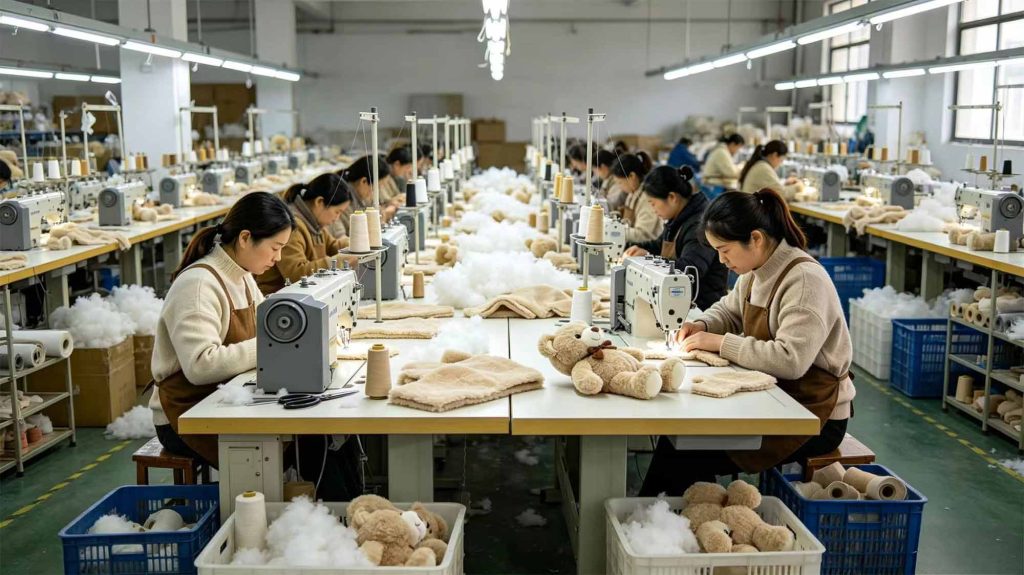
After cutting, fabric pieces move to the sewing department.
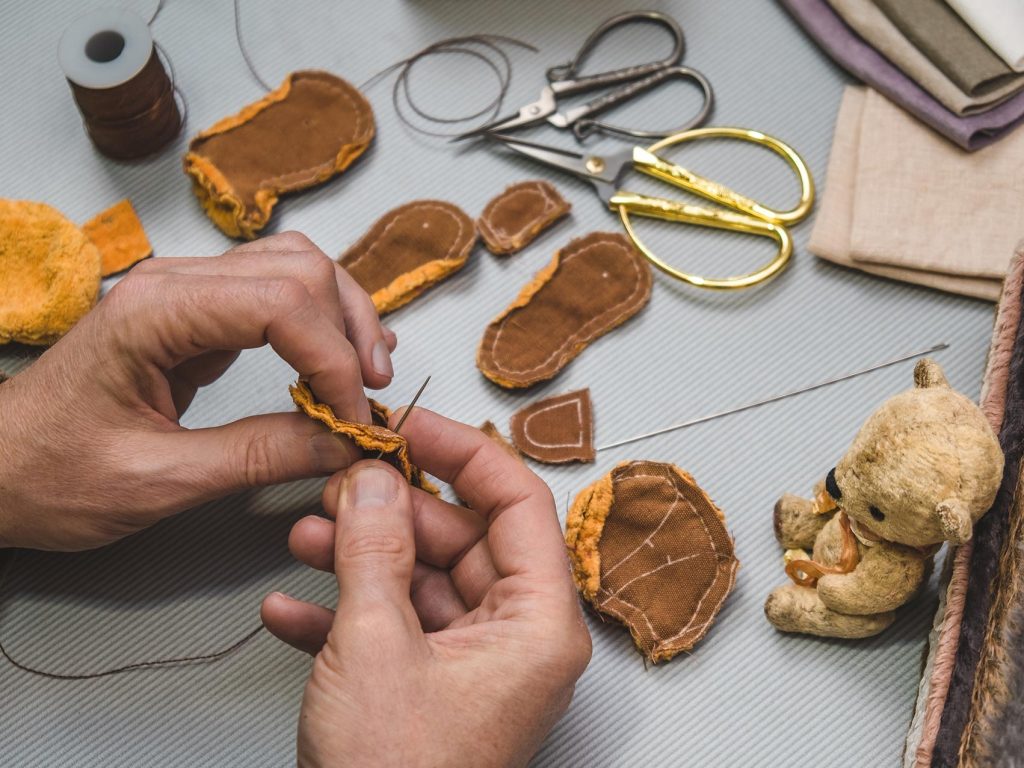
Workers sew the individual components together to create the toy’s body, head, arms, legs, ears, and other parts.
The sewing process may include body assembly, limb attachment, decorative fabric installation, and preparation for filling.
Stitching quality is particularly important because it affects both appearance and durability.
A Cute Plush Toy Factory with Premium Soft Materials should use suitable sewing methods for different fabrics and product structures.
Filling and Shaping
After the fabric components are assembled, the toy is filled with suitable stuffing materials.
Polyester fiberfill is commonly used because it is lightweight and can provide a soft, resilient structure.
The amount of filling influences the product’s firmness and shape.
Too much filling can make the plush toy feel excessively hard, while insufficient filling may cause the product to look flat.
Experienced workers distribute the stuffing evenly to create balanced proportions.
Facial Features and Decorative Details
Facial features are among the most important elements of cute plush toys.
The eyes, nose, mouth, and other decorative details give a character its personality.
Common manufacturing techniques include:
- Ricamo
- Fabric appliqué
- Decorative stitching
- Printed fabric details
- Securely attached accessories
For products intended for young children, manufacturers must pay particular attention to small components and applicable safety requirements.
Embroidery is often selected for certain facial features because it avoids the need for separately attached hard components.
Finishing and Quality Inspection
Before packaging, completed plush toys undergo finishing procedures.
These may include trimming excess threads, checking seams, adjusting filling, brushing fabric, and inspecting decorative elements.
Quality inspectors compare finished products with approved samples and written specifications.
This helps identify manufacturing defects before shipment.
Customization Services Offered by a Cute Plush Toy Factory with Premium Soft Materials
Customization is one of the biggest advantages of working directly with a professional plush toy manufacturer.
Instead of purchasing standard products, businesses can develop unique plush toys that match their brand identity and customer preferences.
Custom Shapes and Characters
A professional factory can develop plush toys based on different animals, characters, and creative concepts.
Popular options include teddy bears, rabbits, dogs, cats, elephants, pandas, dinosaurs, cartoon characters, fantasy animals, and brand mascots.
Custom shapes allow businesses to build distinctive product collections.
For example, a gift company may create a collection of forest animals, while a children’s entertainment brand may develop plush versions of its original characters.
Custom Product Sizes
Different sales channels require different product sizes.
Small plush toys are suitable for keychains, promotional giveaways, and collectible products.
Medium-sized stuffed animals are popular for everyday gifts and retail collections.
Large plush toys are often used as decorative products, oversized gifts, and display items.
| Product Size | Typical Applications | Main Considerations |
|---|---|---|
| 5–10 cm | Mini gifts and keychains | Lightweight construction |
| 10–20 cm | Small collectibles | Detailed facial features |
| 20–35 cm | Retail plush toys | Balanced proportions |
| 35–50 cm | Gift products | Comfortable filling |
| 50–80 cm | Decorative plush toys | Shape retention |
| Above 80 cm | Large display toys | Packaging and shipping |
These dimensions are general examples. Buyers should confirm exact product measurements with the manufacturer.
Custom Colors and Fabric Combinations
Color plays an important role in product identity.
Businesses may request standard colors, special shades, or combinations that match their branding.
A Cute Plush Toy Factory with Premium Soft Materials should be able to discuss fabric color options and provide samples for approval.
Different fabric textures can also be combined to create distinctive appearances.
For example, a teddy bear may use short-pile plush for its body and a contrasting fabric for its nose, paws, and inner ears.
Custom Logos and Branding
Branding helps businesses create recognizable products and improve customer loyalty.
Common branding options include embroidered logos, woven labels, printed labels, custom hangtags, branded packaging, and customized clothing.
A retailer may request a plush animal with an embroidered company logo and a personalized fabric label.
The manufacturer should confirm the logo’s dimensions, positioning, colors, and production methods before manufacturing begins.
Custom Packaging
Packaging influences how customers perceive a product.
Attractive packaging can improve the presentation of plush toys and create a more memorable gifting experience.
Tra le opzioni di imballaggio più comuni figurano:
| Packaging Type | Prodotti adatti | Advantages |
|---|---|---|
| Polybag | Standard wholesale toys | Simple and economical |
| Color box | Gift collections | Attractive presentation |
| Display box | Retail products | Better product visibility |
| Custom gift bag | Omaggi promozionali | Personalized appearance |
| Branded carton | Wholesale orders | Consistent brand identity |
Packaging requirements should account for transportation, storage, labeling, and applicable product regulations.
Quality Control Standards in Plush Toy Manufacturing
Quality control is essential for businesses purchasing plush toys in bulk.
Even attractive designs and premium fabrics cannot guarantee customer satisfaction if finished products contain manufacturing defects.
A reliable Cute Plush Toy Factory with Premium Soft Materials should establish inspection procedures throughout production.
Raw Material Inspection
The first quality checkpoint should take place before manufacturing begins.
The factory should inspect incoming materials for fabric color consistency, surface texture, thickness, visible defects, and material specifications.
Filling materials and decorative accessories should also be checked.
Buyers should confirm that the materials used for mass production match the approved samples.
If a manufacturer changes the fabric without approval, the finished products may look or feel different from the original design.
Sewing Quality Inspection
Sewing quality influences the toy’s structure and appearance.
Inspectors should check whether seams are straight, secure, and consistent.
Areas that experience greater stress, such as the connections between the arms, legs, and body, deserve particular attention.
Poor stitching can cause fabric separation or stuffing leakage.
Filling Consistency
Filling should be distributed evenly throughout the plush toy.
Inspectors should check whether the head, body, and limbs have the correct firmness and shape.
Products within the same order should maintain consistent dimensions and overall appearance.
Product Safety Testing
Toy safety requirements vary depending on the destination market, product design, and intended age group.
Businesses selling plush toys internationally should identify the relevant regulations before production.
For example, the United States has applicable Consumer Product Safety Commission requirements, including relevant toy safety standards. The European Union also has toy safety requirements and conformity assessment procedures.
Depending on the product, testing may evaluate mechanical and physical properties, flammability, chemical restrictions, and small-parts hazards.
A supplier’s general quality statement should not replace independent testing or required compliance documentation.
Final Product Inspection
Before shipment, the factory should conduct a final inspection.
| Inspection Item | What to Check | Finalità |
|---|---|---|
| Tessuto | Texture and color | Maintain material consistency |
| Stitching | Seam strength and neatness | Improve durability |
| Ripieno | Distribution and firmness | Maintain product shape |
| Appearance | Shape and proportions | Match approved samples |
| Decoration | Embroidery and accessories | Improve presentation |
| Dimensions | Length, width, and height | Meet specifications |
| Confezione | Labels and carton condition | Protect products during shipping |
Businesses should agree on inspection criteria before production begins rather than relying on subjective quality judgments after the order is completed.
How to Choose the Right Cute Plush Toy Factory with Premium Soft Materials
Finding a suitable supplier requires careful research.
The cheapest factory is not necessarily the best choice. Buyers should evaluate the manufacturer’s production capabilities, communication, material quality, and experience.
Evaluate Manufacturing Experience
A factory with relevant experience is more likely to understand the technical requirements of different plush toy designs.
Ask potential suppliers about their experience producing custom animal plush toys, cartoon character toys, promotional products, large stuffed animals, miniature plush keychains, and private-label products.
Reviewing previous projects can help buyers understand the factory’s design capabilities and manufacturing standards.
Request Physical Material Samples
Never select a plush toy manufacturer based only on product photographs.
Pictures cannot fully communicate fabric softness, thickness, density, or actual color.
Request physical material samples whenever possible.
Compare the samples based on surface softness, fabric density, color accuracy, stretch characteristics, durability, and suitability for the intended design.
A Cute Plush Toy Factory with Premium Soft Materials should be willing to explain the differences between available fabric options.
Check Customization Capabilities
Not every factory can produce every type of customized plush toy.
Some manufacturers specialize in simple animal designs, while others have more experience with complicated character shapes and detailed embroidery.
Ask whether the supplier can support your specific requirements.
Confirm whether the manufacturer provides design assistance, sample development, packaging customization, and logo application.
Understand Production Capacity
Production capacity is important when placing wholesale orders.
A supplier should explain its estimated manufacturing lead time and whether it can handle the required order quantity.
However, capacity should not be evaluated through production volume alone.
Buyers should also consider whether the factory can maintain consistent quality during larger production runs.
Evaluate Communication and Customer Service
Good communication helps prevent misunderstandings.
A professional manufacturer should respond clearly to questions about materials, samples, specifications, production schedules, and packaging.
Before placing an order, make sure all important requirements are documented.
This is especially important when a product includes complicated design details or several different fabric types.
Compare Pricing Transparently
A low quotation may exclude important services or materials.
Ask suppliers to explain the main components of their pricing.
A typical quotation may include fabric costs, filling materials, cutting and sewing labor, embroidery, accessories, sample development, packaging, quality inspection, and shipping arrangements.
Comparing quotations based on identical specifications makes it easier to identify the best overall value.
Why Premium Soft Materials Matter for Different Market Segments
Different customers purchase plush toys for different reasons.
Some prioritize affordability, while others are more interested in appearance, collectibility, softness, or customization.
A Cute Plush Toy Factory with Premium Soft Materials should understand these differences and recommend appropriate products.
Children’s Toy Market
Children’s plush toys are often designed around familiar animals, bright colors, and friendly characters.
Comfortable textures and attractive appearances are important, but safety must remain a priority.
Manufacturers should select suitable fabrics, filling materials, and decorative components based on the intended age group and destination market.
Parents are also likely to pay attention to product construction, labeling, and safety information.
Gift and Souvenir Market
Plush toys are popular gifts for birthdays, holidays, anniversaries, and special occasions.
Products with attractive colors, unique shapes, and premium textures can create stronger gift appeal.
A factory can help businesses develop seasonal collections for Christmas, Valentine’s Day, Easter, and other celebrations.
Customized packaging and embroidered messages can make these products more distinctive.
Collectible Plush Toy Market
Collectors often look for products with distinctive designs, recognizable characters, and consistent manufacturing quality.
Limited-edition collections can create additional interest.
In this market, details such as facial expressions, stitching, fabric texture, and character proportions are particularly important.
A manufacturer should follow approved design specifications closely to ensure that different production batches remain consistent.
Promotional Product Market
Companies frequently use plush toys as promotional merchandise.
Custom mascots can help businesses increase brand visibility and create memorable customer experiences.
For example, a hotel may use a customized animal mascot, while a children’s entertainment company may develop plush characters based on its brand identity.
A Cute Plush Toy Factory with Premium Soft Materials can provide different sizes, colors, and branding options to meet promotional requirements.
Home Decoration Market
Plush toys are also used as decorative accessories.
Flower-shaped plush cushions, animal pillows, decorative teddy bears, and character cushions can add a playful atmosphere to bedrooms, living rooms, and children’s spaces.
For these products, appearance, fabric texture, and shape retention are especially important.
Understanding the Cost of Custom Plush Toy Manufacturing
Cost is one of the most important considerations when sourcing from a plush toy factory.
However, the final quotation depends on several variables rather than a single fixed price.
A Cute Plush Toy Factory with Premium Soft Materials may offer different quotations based on product complexity, fabric selection, order quantity, and customization requirements.
Material Costs
Premium fabrics may cost more than basic materials.
The price depends on fabric type, thickness, pile length, density, color, and purchasing quantity.
Special materials or customized fabric colors may also require additional sourcing time.
Product Size
Larger plush toys generally require more fabric and filling materials.
They may also involve more complicated packaging and transportation arrangements.
Therefore, product dimensions can significantly influence manufacturing costs.
Design Complexity
Simple plush animals may require fewer pattern pieces and less sewing time.
Complex cartoon characters may need multiple fabric colors, detailed embroidery, special accessories, and additional production steps.
The more complicated the design, the more important sample development becomes.
Order Quantity
Manufacturers may offer different unit prices according to order quantity.
Larger orders can sometimes reduce average production costs because certain setup and development expenses are distributed across more units.
However, buyers should not order excessive quantities simply to obtain a lower unit price.
Inventory costs, storage space, product demand, and cash flow should also be considered.
Packaging Requirements
Standard packaging is usually more economical than customized packaging.
Branded boxes, special inserts, gift bags, and printed labels can increase the overall order cost.
Businesses should determine whether premium packaging provides sufficient value for their target market.
Example of Manufacturing Cost Factors
| Fattore di costo | Lower-Cost Option | Higher-Cost Option |
|---|---|---|
| Tessuto | Standard polyester plush | Specialized premium fabric |
| Design | Simple animal shape | Detailed custom character |
| Ricamo | Basic facial details | Complex decorative embroidery |
| Dimensioni | Mini plush toy | Oversized plush toy |
| Confezione | Standard polybag | Customized gift box |
| Accessori | Basic construction | Multiple customized components |
These comparisons describe general cost relationships rather than fixed prices. Actual quotations should be requested directly from the manufacturer.
How to Develop a Successful Custom Plush Toy Collection

Creating a successful plush toy collection requires more than producing attractive individual products.
Businesses should consider their target audience, product positioning, design consistency, and sales channels.
Identify Your Target Customers
Start by understanding who will purchase the products.
Different customer groups have different expectations.
Parents may prioritize safety and comfortable textures. Gift buyers may prefer attractive designs and premium packaging. Collectors may value character accuracy and limited-edition designs. Retailers may prioritize pricing, consistency, and reliable supply. Corporate buyers may need customized logos and promotional packaging.
Understanding these requirements helps businesses select the right products.
Develop a Consistent Design Theme
A collection usually performs better when its products share a recognizable style.
For example, a brand could develop a collection featuring rabbits, bears, cats, and dogs with matching colors and facial expressions.
Consistent design elements help create a stronger product identity.
Select Appropriate Fabrics
Different characters may require different materials.
A rabbit may look attractive with long-pile plush, while a small cartoon bear may work better with short-pile velboa.
Using appropriate fabrics can improve both appearance and tactile quality.
A Cute Plush Toy Factory with Premium Soft Materials can help buyers select fabric combinations that match their collection concept.
Approve Samples Before Mass Production
Sampling is an important part of product development.
Before approving a sample, check product dimensions, fabric texture, color accuracy, facial expressions, embroidery quality, filling firmness, overall proportions, and packaging presentation.
Any changes should be communicated clearly.
The approved sample and written specifications should become the reference for mass production.
Plan Inventory and Distribution
Before placing a large order, consider the expected sales volume and delivery schedule.
Different products may have different demand patterns.
Holiday collections, for example, should be planned early enough to allow time for sampling, production, shipping, and retail preparation.
Businesses should also confirm carton dimensions and shipping arrangements to estimate total landed costs.
Sustainable Practices in Modern Plush Toy Manufacturing
Sustainability has become an increasingly important consideration in the global consumer goods industry.
Buyers are paying more attention to material sourcing, manufacturing waste, packaging, and product lifespan.
A modern Cute Plush Toy Factory with Premium Soft Materials can explore different ways to improve resource efficiency.
Recycled Polyester Materials
Some plush fabrics and filling materials are manufactured using recycled polyester.
These materials may provide an alternative to certain conventional polyester options.
However, buyers should request documentation to verify recycled-content claims and confirm that the materials meet the requirements of the intended product.
Reducing Fabric Waste
Efficient pattern layouts can help manufacturers reduce unused fabric during cutting.
Better cutting plans may also improve material utilization and lower production costs.
Factories can review cutting layouts and organize fabric pieces to minimize unnecessary waste.
Responsible Packaging
Businesses can consider packaging materials that use less plastic or contain recycled content.
Options may include appropriately designed paper packaging and recyclable cartons.
The packaging must still protect products during transportation and meet applicable labeling requirements.
Longer Product Lifespan
Durable construction can support more sustainable consumption.
A plush toy that maintains its shape and appearance over time may remain useful longer than a poorly constructed alternative.
This makes fabric quality, stitching, and filling consistency important considerations beyond immediate appearance.
Transparent Material Documentation
Manufacturers should provide accurate information about the materials used in their products.
Businesses should avoid making environmental claims without appropriate evidence.
Clear documentation helps buyers communicate responsibly with retailers and consumers.
Common Mistakes to Avoid When Choosing a Plush Toy Manufacturer
Selecting the wrong supplier can create delays, additional costs, and quality problems.
Understanding common sourcing mistakes can help businesses make better decisions.
Choosing a Factory Only Because of Low Prices
Price is important, but it should not be the only selection criterion.
An unusually low quotation may involve lower-quality materials, limited customization, or insufficient inspection procedures.
Always compare suppliers using identical product specifications.
Skipping the Sampling Process
Ordering mass production without approving a physical sample can create serious problems.
The finished product may differ from expectations in terms of size, color, softness, and proportions.
Always request and approve samples before confirming bulk manufacturing.
Ignoring Safety Requirements
Plush toys may be subject to different safety requirements depending on their destination market and intended users.
Ignoring these requirements can create compliance problems.
Identify the relevant testing, labeling, and documentation requirements before placing an order.
Failing to Confirm Material Specifications
Simply requesting soft fabric is not detailed enough.
Buyers should specify the fabric type, color, texture, pile length, and other relevant characteristics.
Written material specifications reduce the risk of unexpected substitutions.
Overlooking Packaging and Shipping
A product may be manufactured correctly but arrive damaged because of unsuitable packaging.
Confirm packaging methods, carton sizes, shipping arrangements, and delivery responsibilities in advance.
Not Documenting Product Changes
Changes made during sampling should be recorded.
If a factory modifies the fabric, dimensions, embroidery, or accessories, the buyer should review and approve those changes.
This helps prevent disagreements during mass production.
The Future of the Plush Toy Industry
The plush toy industry continues to evolve as consumer preferences, manufacturing technologies, and retail channels change.
Businesses that understand these developments may find new opportunities for product innovation.
Growing Demand for Personalized Products
Personalized gifts and customized merchandise remain attractive to many consumers.
Customers increasingly appreciate products that represent their hobbies, favorite animals, personal memories, or brand preferences.
This creates opportunities for manufacturers offering flexible design and customization services.
Creative Character Development
Original characters can help businesses differentiate their products.
Rather than relying entirely on traditional animal designs, companies may develop unique characters with distinctive personalities and visual identities.
A Cute Plush Toy Factory with Premium Soft Materials can support these projects through pattern development, fabric selection, and customized production.
Online Retail Opportunities
E-commerce allows plush toy brands to reach customers in different markets.
Online stores, social media platforms, and digital marketplaces provide opportunities to introduce new designs and test customer interest.
Product photography and accurate descriptions are particularly important because online buyers cannot physically touch the fabric before purchasing.
Manufacturers can support retailers by providing consistent product specifications and attractive product samples.
Demand for Premium Product Experiences
Some consumers are willing to pay more for products that offer distinctive designs, better materials, and attractive packaging.
This creates opportunities for premium plush collections.
Soft fabrics, detailed embroidery, carefully designed shapes, and customized packaging can contribute to a more valuable product experience.
More Efficient Manufacturing
Modern manufacturing processes can improve pattern accuracy, production planning, and quality consistency.
Digital design tools can help manufacturers develop patterns and evaluate product proportions before physical sampling.
Improved production management can also help factories organize larger orders more efficiently.
Se avete bisogno di peluche o di altri servizi, non esitate a contattarci!
E-mail: meng@wanroutoy.com
WhatsApp: +86 15227096178
Telefono:+86 15127203823
Facebook: https://www.facebook.com/profile.php?id=61592234474894
Conclusione
Choosing the right manufacturer is an important step toward building a successful plush toy business. Product appearance, material quality, durability, customization capabilities, and manufacturing consistency all influence the final result.
A Cute Plush Toy Factory with Premium Soft Materials can provide valuable support to businesses looking to develop attractive and competitive plush products. By offering suitable fabric options, professional pattern making, reliable sewing, careful filling, and structured quality inspections, an experienced factory can help turn creative ideas into finished products.
Premium soft materials are especially important because they influence how customers perceive a plush toy. Polyester plush, velboa, minky, long-pile plush, and microfiber each offer different characteristics. Selecting the right fabric requires an understanding of product design, target customers, budget, and intended market.
Businesses should also pay attention to customization services, product safety, production capacity, pricing transparency, and delivery arrangements when choosing a supplier.
Before starting mass production, buyers should request material samples, review prototypes, confirm written specifications, and agree on quality inspection procedures. These steps can reduce sourcing risks and help ensure that finished products meet expectations.
Whether you are developing a new plush toy brand, purchasing wholesale stuffed animals, creating promotional merchandise, or expanding an existing product collection, working with a reliable Cute Plush Toy Factory with Premium Soft Materials can help improve product development and support long-term business growth.
The best manufacturing partnership is not simply about finding the lowest quotation. It is about finding a factory that understands your requirements, communicates clearly, maintains consistent quality, and can support your business as it grows.
Domande frequenti
What Makes a Cute Plush Toy Factory with Premium Soft Materials Different from Other Factories?
A Cute Plush Toy Factory with Premium Soft Materials focuses on selecting suitable fabrics and maintaining consistent product quality throughout manufacturing.
It may offer different materials, including polyester plush, velboa, minky, long-pile plush, and microfiber.
In addition to material selection, a professional factory should provide pattern making, sewing, filling, embroidery, customization, and quality inspection services.
The combination of material knowledge and manufacturing experience helps businesses develop plush toys with attractive appearances and comfortable textures.
What Materials Are Commonly Used to Make Cute Plush Toys?
Common materials include polyester plush, velboa, minky, microfiber, fleece, and long-pile plush.
Polyester plush is versatile and widely used for different stuffed animals. Velboa is suitable for products requiring a smooth, short-pile surface. Minky offers a particularly soft texture, while long-pile plush creates a fluffy appearance.
The best material depends on the design, target customers, intended use, and budget.
Buyers should request samples before selecting materials for mass production.
Can a Cute Plush Toy Factory with Premium Soft Materials Produce Custom Designs?
Yes. Many professional plush toy manufacturers offer customized production services.
Buyers can provide sketches, photographs, digital illustrations, or reference products.
Customization may include product shapes, sizes, colors, fabrics, embroidery, accessories, logos, labels, and packaging.
The factory generally develops a sample based on the customer’s requirements. After the sample is approved, mass production can begin according to the agreed specifications.
How Can Buyers Ensure the Quality and Safety of Custom Plush Toys?
Buyers should evaluate material quality, stitching, filling consistency, product dimensions, and decorative components.
They should also identify the safety regulations applicable to the destination market and intended age group.
Depending on the product, relevant testing may cover mechanical and physical properties, chemical restrictions, flammability, and small-parts hazards.
Requesting samples, confirming material documentation, and arranging appropriate product testing can help reduce quality and compliance risks.
What Should Businesses Consider Before Ordering from a Cute Plush Toy Factory with Premium Soft Materials?
Businesses should evaluate the factory’s manufacturing experience, material options, customization capabilities, sample quality, production capacity, pricing, quality control procedures, and delivery arrangements.
Buyers should also confirm minimum order quantities, sample charges, production lead times, packaging specifications, and payment terms.
Most importantly, all product requirements should be documented before mass production.
Choosing a reliable Cute Plush Toy Factory with Premium Soft Materials can help businesses maintain product consistency, create attractive collections, and establish a stronger position in the competitive plush toy market.