Introduzione
Christmas is one of the most important seasonal shopping periods for retailers, gift shops, supermarkets, e-commerce businesses, and promotional product distributors. During the holiday season, consumers look for gifts that are attractive, affordable, memorable, and suitable for people of different ages. Among the many seasonal products available, plush toys remain a popular choice because of their soft textures, charming designs, and emotional appeal. From traditional Santa Claus dolls to adorable reindeer, snowmen, Christmas trees, and festive teddy bears, plush toys can bring warmth and happiness to holiday celebrations.
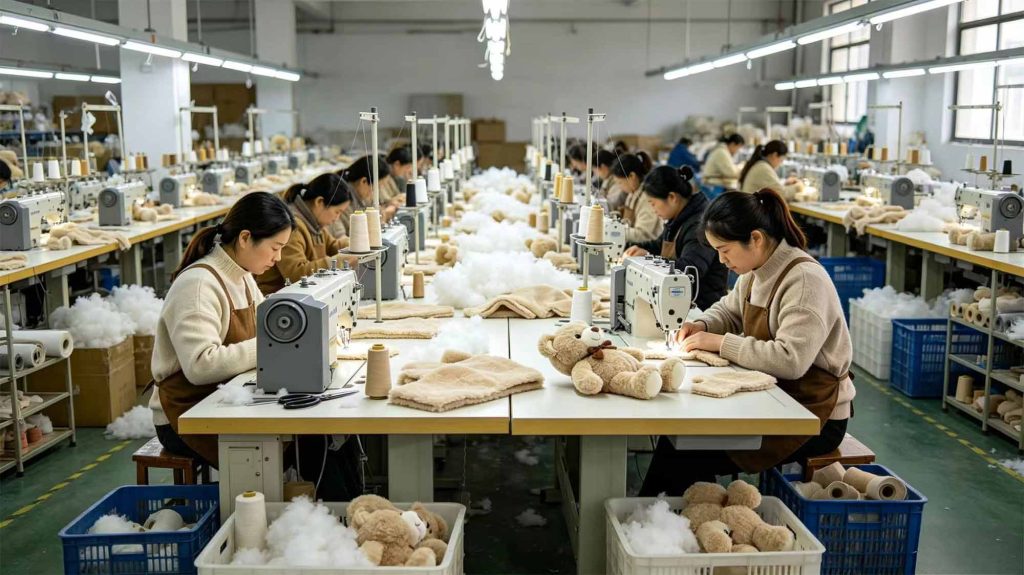
For businesses preparing their seasonal product collections, choosing a reliable China Christmas Plush Toys Factory for Festive Gifts can make a significant difference in product quality, purchasing costs, customization opportunities, and delivery planning. China has an extensive toy manufacturing industry, supported by experienced production teams, material suppliers, sewing facilities, embroidery services, and packaging manufacturers. These resources allow many factories to produce Christmas plush toys in different sizes, shapes, colors, and price ranges.
Working with a China Christmas Plush Toys Factory for Festive Gifts also provides opportunities for businesses to develop distinctive products that match their brand identity and target customers. Buyers can explore ready-made Christmas plush toys, customize existing designs, or develop completely new products according to their seasonal marketing strategies. Whether a company needs small plush ornaments for Christmas trees or large stuffed animals for retail displays, selecting an appropriate manufacturing partner is essential.
However, successful sourcing involves more than finding a supplier with attractive product photographs. Businesses must consider fabric quality, filling materials, stitching strength, safety requirements, production capacity, customization options, minimum order quantities, and shipping schedules. A well-planned purchasing strategy helps reduce unnecessary risks and ensures that seasonal products arrive in time for the holiday shopping period.
This article explains how a China Christmas Plush Toys Factory for Festive Gifts supports seasonal product development, what buyers should consider when selecting a manufacturer, and how wholesalers, importers, retailers, and promotional businesses can build successful Christmas plush toy collections.
Why Choose a China Christmas Plush Toys Factory for Festive Gifts

China is an established manufacturing destination for many types of toys, including stuffed animals, character plushies, decorative cushions, plush keychains, and seasonal ornaments. For international buyers, working with a suitable factory can offer several practical advantages.
Extensive Product Variety
A professional China Christmas Plush Toys Factory for Festive Gifts may offer a broad range of seasonal designs. These products can appeal to different customer groups, from children and families to office workers, collectors, and people shopping for inexpensive holiday presents.
Popular Christmas plush toy designs include:
- Santa Claus plush dolls with traditional red clothing and white beards.
- Reindeer plush toys featuring antlers, red noses, and festive accessories.
- Snowman plush dolls with scarves, hats, and embroidered facial details.
- Christmas teddy bears wearing holiday sweaters or Santa hats.
- Plush Christmas trees decorated with soft ornaments and colorful embroidery.
- Penguin plush toys wearing winter clothing.
- Snowflake-shaped plush cushions and decorative characters.
- Miniature Christmas plush toys designed for gift boxes and tree decorations.
- Plush keychains featuring Christmas characters.
- Large stuffed animals intended for promotional displays and premium gifts.
This product variety allows businesses to create collections at different price points. A discount retailer may prioritize small, affordable plush ornaments, while a gift boutique may prefer detailed teddy bears with premium fabrics and coordinated packaging.
A diverse catalog also helps buyers combine complementary products into themed collections. For example, a retailer could sell a Santa plush doll alongside a reindeer, a snowman, and a miniature Christmas tree. Coordinated products can make displays more attractive and encourage customers to purchase multiple items.
Competitive Manufacturing Options
Cost is an important factor when sourcing seasonal products. Christmas merchandise often has a limited selling window, meaning that buyers need to balance manufacturing expenses with expected retail prices and seasonal demand.
A China Christmas Plush Toys Factory for Festive Gifts may provide different production options according to the buyer’s budget. These options can include alternative fabrics, different filling densities, simplified embroidery, smaller product sizes, and more economical packaging.
However, the lowest quoted price does not always represent the best value. A product with weak stitching, inconsistent filling, poor fabric quality, or inaccurate colors may result in customer complaints and costly returns.
Buyers should evaluate the complete product specification before comparing quotations. When several factories quote for the same design, each supplier should receive identical requirements regarding dimensions, materials, accessories, packaging, and quality standards.
Flexible Customization Services
Customization is another important advantage when working with a China Christmas Plush Toys Factory for Festive Gifts.
Many businesses want seasonal products that look different from standard retail merchandise. Customization allows them to develop recognizable products for their own stores, online shops, promotional campaigns, or corporate gift programs.
Common customization services include:
- Custom character shapes and facial expressions.
- Different fabric colors and textures.
- Embroidered logos and brand names.
- Custom clothing, scarves, hats, and other accessories.
- Personalized labels and hangtags.
- Gift boxes, printed bags, and seasonal packaging.
- Customized product dimensions and filling density.
- Coordinated designs for complete Christmas collections.
For example, a hotel chain might commission a teddy bear wearing a miniature uniform and a Christmas hat. An online gift shop might develop a collection of pastel-colored reindeer and snowmen. A corporate customer might order plush ornaments featuring embroidered company branding.
The more clearly the buyer communicates these requirements, the easier it becomes for the factory to prepare accurate samples and calculate production costs.
Popular Christmas Plush Toys for Festive Gift Collections
A successful seasonal collection usually combines familiar Christmas characters with products designed for different purchasing occasions. A China Christmas Plush Toys Factory for Festive Gifts can help buyers select suitable product categories according to their intended customers and sales channels.
Santa Claus Plush Toys
Santa Claus is one of the most recognizable symbols of Christmas. Santa plush toys can feature traditional red suits, white beards, black boots, and embroidered facial details.
Small Santa dolls are suitable for Christmas stockings, gift baskets, party favors, and decorative displays. Medium-sized dolls can be sold as standalone gifts, while larger designs can become eye-catching seasonal decorations for retail stores and shopping centers.
Buyers should pay attention to the shape and durability of the hat, beard, belt, and other decorative components. These details contribute to the product’s appearance and may affect production complexity.
Christmas Reindeer Plush Toys
Reindeer plush toys are popular because they combine a recognizable Christmas theme with a friendly animal design. Some feature traditional brown fur, while others use white, cream, gray, or pastel fabrics.
A China Christmas Plush Toys Factory for Festive Gifts can develop reindeer products with embroidered noses, soft antlers, holiday scarves, or miniature sweaters.
For products intended for young children, buyers should pay particular attention to the construction of the antlers, eyes, noses, and attached accessories. Embroidered details may be appropriate where loose components could create a safety risk, depending on the product design and applicable requirements.
Reindeer plush toys also work well in coordinated collections with Santa Claus and snowman characters.
Christmas Teddy Bears
Teddy bears are versatile gifts that can be adapted to many occasions. During Christmas, factories can dress them in festive sweaters, Santa costumes, winter scarves, or holiday-themed pajamas.
Unlike products that are useful only for seasonal decoration, a well-designed teddy bear may remain appealing after Christmas. This can extend its perceived value and make it suitable for birthdays, anniversaries, and general gift purchases.
Buyers can differentiate their teddy bears through fabric selection, clothing details, embroidery, and packaging. Premium collections may use softer fabrics, carefully shaped facial features, and more elaborate outfits.
Snowman Plush Toys
Snowman plush toys are suitable for traditional Christmas collections and winter-themed retail displays. Common features include rounded white bodies, orange noses, embroidered smiles, and colorful scarves.
Some designs incorporate hats, mittens, or small decorative buttons. Others feature simplified shapes that are easier to manufacture in large quantities.
When selecting a snowman design, buyers should consider whether the product is intended primarily for play, decoration, or gifting. A decorative snowman may require a stable base, while a toy intended for cuddling should emphasize softness, comfortable proportions, and durable construction.
Mini Christmas Plush Ornaments
Miniature plush ornaments are particularly useful for retailers seeking lower-priced seasonal merchandise.
These products can include tiny reindeer, Santa heads, plush stars, Christmas trees, and miniature teddy bears. Depending on the design, they may be used as gift toppers, decorative accessories, stocking fillers, or tree ornaments.
A China Christmas Plush Toys Factory for Festive Gifts may offer customization for hanging loops, ribbons, small labels, and branded packaging.
Buyers should verify the intended use and age grading of each item. Products marketed as toys for children may be subject to different requirements from purely decorative ornaments, and small components require appropriate risk assessment.
Understanding Materials and Manufacturing Quality
Material selection directly affects the appearance, feel, durability, and cost of Christmas plush toys. Businesses should establish detailed specifications before confirming an order with a China Christmas Plush Toys Factory for Festive Gifts.
Outer Fabric Selection
The outer fabric determines how a plush toy feels and how well it represents the intended design.
Common options include:
| Tipo di tessuto | Main characteristics | Potential applications |
|---|---|---|
| Short-pile plush | Smooth surface and clear shape definition | Santa dolls, reindeer, teddy bears |
| Long-pile plush | Fluffy appearance and soft texture | Snowmen, winter animals, decorative plushies |
| Velboa | Short pile with a relatively smooth finish | Character plush toys and small ornaments |
| Minky-style fabric | Soft hand feel and comfortable surface | Premium teddy bears and cuddly gifts |
| Felt | Holds simple shapes and decorative details | Christmas trees, stars, and ornaments |
| Knitted fabric | Textile appearance and flexible styling | Sweaters, scarves, and character clothing |
These descriptions are general. Actual performance depends on the fabric composition, pile construction, finishing process, and supplier specifications.
For example, a reindeer plush toy may combine brown short-pile fabric for the body with a lighter fabric for the muzzle. The antlers might use felt or shaped plush material, depending on the desired appearance.
When evaluating samples, buyers should inspect the fabric for inconsistent pile direction, visible defects, unwanted odor, color variation, and excessive shedding. They should also confirm that the selected material is appropriate for the product’s intended market and applicable safety standards.
Materiali di riempimento
Filling materials influence the softness, weight, shape retention, and overall feel of a plush toy.
Polyester fiber filling is commonly used because it can create lightweight products with a soft texture. The amount and distribution of filling affect how the finished toy looks and feels.
A China Christmas Plush Toys Factory for Festive Gifts should be able to explain the filling specification and demonstrate how it affects the finished sample.
Overfilled products may feel excessively firm or distort the intended shape. Underfilled products may appear flat or lose their shape during handling. Uneven filling can create lumps and make the toy less attractive.
Buyers should define the expected firmness and appearance in advance rather than relying only on a general description such as “soft filling.”
Stitching and Structural Durability
Stitching quality is especially important for plush toys that will be handled frequently.
Poorly secured seams can open during use, while inconsistent stitching may create visible gaps or uneven shapes. Areas around the neck, arms, legs, ears, and attached accessories deserve particular attention.
Quality checks may include:
- Inspecting seam alignment and stitch consistency.
- Checking for open seams and loose threads.
- Confirming that the eyes, nose, and accessories are securely attached.
- Assessing whether the toy maintains its intended shape.
- Reviewing embroidery quality and placement.
- Checking the stability of decorative clothing.
- Confirming that the product matches the approved sample.
Testing procedures should reflect the product’s intended use, age grading, and applicable market requirements. A product intended for infants or young children may require stricter attention to small parts and structural integrity than a decorative item intended for adults.
Customization Services from a China Christmas Plush Toys Factory for Festive Gifts
Customization can help retailers build a distinctive seasonal collection instead of competing exclusively on price. Before beginning a custom project, buyers should understand the main stages involved.
Concept Development and Design Communication
The first step is to define the product concept.
Buyers can provide reference photographs, hand-drawn sketches, digital illustrations, color references, measurements, or physical samples. The more detailed the information, the easier it is for the factory to understand the desired outcome.
A useful product brief should include the following details:
| Specification | Information to provide |
|---|---|
| Product name | Santa doll, reindeer, teddy bear, or another design |
| Target dimensions | Height, width, depth, and relevant proportions |
| Tessuto | Preferred material, pile length, and texture |
| Main colors | Color references or approved swatches |
| Ripieno | Required material and preferred firmness |
| Facial details | Embroidery, securely attached features, or other methods |
| Accessori | Hats, scarves, clothing, ribbons, and decorative items |
| Branding | Logo position, embroidery size, and label requirements |
| Confezione | Individual bags, gift boxes, hangtags, or retail packaging |
| Target market | Intended customers and applicable safety requirements |
This information gives the China Christmas Plush Toys Factory for Festive Gifts a clearer basis for estimating the project and preparing a sample.
Sample Development
Sampling allows buyers to evaluate the product before committing to mass production.
The factory may first prepare a prototype to establish the overall shape and proportions. After the initial review, the buyer can request revisions to the fabric, facial expression, embroidery, accessories, or dimensions.
Several sample rounds may be necessary for complicated designs. Each round can add time and cost, so buyers should provide consolidated feedback instead of sending unrelated changes one at a time.
The approved sample should become the main reference for bulk production. Important specifications should also be documented in writing, because a physical sample alone may not capture every requirement, such as material composition or packaging details.
Logo and Brand Customization
Branding is especially useful for corporate gifts, promotional campaigns, and private-label retail products.
A China Christmas Plush Toys Factory for Festive Gifts may support embroidered logos, woven labels, printed hangtags, custom clothing, or branded gift packaging.
Embroidery is often appropriate for fabric surfaces because it creates a stitched appearance. However, the logo must be designed for the size and texture of the product. Very small lettering or intricate graphics may not reproduce clearly on soft, uneven fabric.
Before mass production, buyers should approve the logo’s dimensions, color, placement, and overall appearance.
Brand owners should also confirm that they have the legal right to use any supplied artwork, licensed characters, logos, or other protected designs.
Packaging Customization
Packaging helps establish the perceived value of a Christmas plush toy and can improve its suitability as a ready-to-give present.
Common packaging options include clear bags, printed cartons, gift boxes, paper sleeves, hangtags, and decorative ribbons.
The most appropriate choice depends on the retail channel. Products sold in supermarkets may need compact packaging that allows efficient shelf display. Premium gift products may benefit from carefully designed boxes, while e-commerce products may require packaging that protects the plush toy during shipping without unnecessarily increasing parcel size.
Packaging should also account for labeling rules, material requirements, and the product’s intended market.
How to Evaluate a China Christmas Plush Toys Factory for Festive Gifts
Choosing the right supplier requires more than comparing photographs or requesting the lowest price. Buyers should assess whether the factory can consistently deliver the specified product, quantity, quality, and schedule.
Review Manufacturing Experience
Ask the supplier about its experience producing plush toys and seasonal merchandise.
Relevant questions include:
- Does the factory manufacture plush toys directly?
- Which types of Christmas plush toys has it produced?
- Can it develop products from customer-provided designs?
- What customization processes are available?
- How does it control fabric and accessory quality?
- Can it explain its sampling and inspection procedures?
- What production capacity is available during the holiday season?
Requesting relevant product samples, production photographs, or other verifiable evidence can help buyers understand the supplier’s capabilities.
A trading company may also be a suitable sourcing partner, depending on the project. However, buyers should clarify whether they are dealing directly with a manufacturer or with an intermediary, especially when production oversight and customization are important.
Check Quality Control Procedures
Quality control should begin before bulk manufacturing rather than being postponed until the finished goods are ready to ship.
A supplier should be able to explain how it checks incoming materials, sample approval, production consistency, finished products, and packaging.
For larger orders, buyers may arrange independent inspections based on an agreed inspection plan. The plan can identify critical safety concerns, major visual defects, minor cosmetic defects, and the sampling method used for inspection.
The inspection criteria should be agreed upon before production. Vague instructions such as “good quality” are difficult to measure and may lead to disagreements.
Confirm Production Capacity
Christmas merchandise follows a seasonal sales cycle. Demand often rises before the holiday, and many suppliers receive overlapping orders from international customers.
A China Christmas Plush Toys Factory for Festive Gifts should provide a realistic production schedule based on the product design, order quantity, available materials, sample approval, and packaging requirements.
Buyers should ask whether the factory can accommodate the proposed quantity during the intended production period. They should also determine whether custom accessories, special fabrics, or imported components could create delays.
A supplier’s general monthly capacity does not necessarily indicate how quickly it can complete a particular custom order.
Evaluate Communication and Documentation
Clear communication helps prevent avoidable production mistakes.
A reliable supplier should respond to technical questions, confirm important specifications, and document revisions to the approved design.
Buyers should maintain written records of the quotation, sample approval, production schedule, packaging requirements, inspection criteria, and shipping arrangements.
These documents are particularly important when the project involves several designs or different sizes within one order.
Understanding Minimum Order Quantities and Pricing
Minimum order quantity, commonly called MOQ, is the smallest quantity a supplier is willing to accept for a particular order or production setup.
The MOQ offered by a China Christmas Plush Toys Factory for Festive Gifts can vary depending on whether the buyer selects an existing design or commissions a custom product.
Existing designs may require less development work, while custom products may involve pattern development, sampling, embroidery setup, special fabric purchases, and new packaging.
Factors That Influence the Quotation
Several factors affect the unit price of Christmas plush toys.
| Cost factor | How it affects the price |
|---|---|
| Product size | Larger toys generally require more fabric and filling |
| Fabric selection | Specialty fabrics may cost more than standard options |
| Complessità del progetto | Detailed shapes may require additional labor |
| Ricamo | Complex artwork can increase setup and production costs |
| Accessori | Hats, clothing, ribbons, and other components add materials and labor |
| Quantità ordinata | Larger orders may distribute setup costs across more units |
| Confezione | Customized boxes and printed materials can increase total costs |
| Testing requirements | Required laboratory tests and compliance work may add expenses |
| Shipping method | Freight, handling, and delivery arrangements affect landed cost |
The actual quotation depends on the product specification and supplier’s pricing structure. Buyers should avoid assuming that a particular quantity automatically qualifies for a discount.
Comparing Supplier Quotations
When comparing offers, buyers should request quotations based on the same specifications.
For example, one factory may quote for a basic reindeer plush toy using standard fabric and a simple bag. Another may quote for a larger toy with embroidered branding, a custom scarf, and a printed gift box.
The second quotation will naturally be higher, but the difference does not necessarily indicate that the supplier is more expensive for an equivalent product.
A useful quotation comparison should include the unit price, sample fee, tooling or setup charges, MOQ, packaging cost, production lead time, payment terms, inspection arrangements, and shipping terms.
Buyers should also determine whether testing costs, taxes, duties, and international transportation are included.
Calculate the Total Landed Cost
The total landed cost is more useful than the factory unit price alone when planning retail margins.
A simplified calculation is:
Total landed cost per unit = (Product cost + Packaging cost + Sampling and setup allocation + Inspection cost + Freight + Insurance + Import duties and other applicable charges) ÷ Number of units received.
Some expenses may be charged separately, and not every category applies to every order. Buyers should use the actual terms of their purchase and shipping arrangements.
For instance, a low-cost product shipped through an expensive transportation method may have a higher landed cost than a slightly more expensive product shipped efficiently in a consolidated shipment.
A China Christmas Plush Toys Factory for Festive Gifts can support cost planning by providing accurate product dimensions, carton specifications, gross weight, net weight, and packaging details.
Production Lead Times and Christmas Delivery Planning
Timing is one of the most important factors in seasonal sourcing. Christmas products have a defined sales window, so delays can reduce the time available for marketing and selling inventory.
A well-organized purchasing plan should account for design approval, sample development, material sourcing, bulk production, inspection, transportation, customs clearance, and warehouse receiving.
Build a Realistic Production Schedule
The production schedule should be created backward from the date the products need to be available for sale.
A typical planning sequence may look like this:
| Stage | Main activity | Buyer action |
|---|---|---|
| Product planning | Define designs, target customers, and quantities | Prepare a detailed product brief |
| Supplier selection | Compare capabilities and quotations | Confirm specifications and terms |
| Sampling | Develop and revise prototypes | Provide consolidated feedback |
| Sample approval | Finalize the product specification | Approve the reference sample |
| Bulk production | Manufacture the confirmed quantity | Monitor milestones and changes |
| Controllo qualità | Check finished products and packaging | Review inspection results |
| Shipping | Arrange transport and export documentation | Confirm shipping and import requirements |
| Receiving | Deliver goods to the warehouse or distribution center | Check quantities and condition |
The actual duration of each stage depends on the order. Standard products may move more quickly than complex custom designs, and peak-season congestion can affect both production and transportation.
Buyers should obtain a specific schedule from the factory rather than relying on general industry estimates.
Allow Time for Sampling and Revisions
One common sourcing mistake is placing a bulk order before the design has been fully approved.
Custom Christmas plush toys may require adjustments to facial expressions, body proportions, fabric colors, accessories, or embroidery. Each change can affect the sample schedule and production readiness.
A buyer who approves the sample early can give the factory more time to purchase materials and schedule production.
For this reason, businesses should finalize artwork and product specifications as early as practical. They should also avoid unnecessary late-stage design changes once bulk manufacturing has begun.
Choose the Right Shipping Arrangement
The appropriate shipping method depends on order size, delivery deadlines, budget, and destination.
Air freight can be suitable for urgent or relatively small shipments, but it is often more expensive per unit. Sea freight may be more economical for larger shipments, although it generally requires longer transportation and additional planning.
Buyers should consider the full transportation process, including pickup, export handling, port or airport procedures, customs clearance, and final delivery.
A China Christmas Plush Toys Factory for Festive Gifts should provide accurate carton measurements and shipment information so that the buyer or freight forwarder can estimate transportation costs.
No shipping method can eliminate every possible delay. A practical plan includes a buffer for inspection, documentation, and unexpected transportation issues.
Safety Standards and Compliance for Christmas Plush Toys
Product safety is an essential consideration when purchasing plush toys for international markets. Requirements depend on the destination country, the product’s intended use, its age grading, materials, construction, and marketing claims.
Buyers should identify applicable requirements before confirming the production order.
Understand the Intended Market
Different markets may have different toy safety rules, labeling requirements, chemical restrictions, and conformity assessment procedures.
For example, toys sold in the United States may be subject to applicable requirements under the Consumer Product Safety Improvement Act and relevant toy safety rules, including requirements associated with ASTM F963 where applicable.
In the European Union, toys generally need to meet applicable EU toy safety legislation and related chemical, labeling, and conformity requirements.
Other countries may have their own testing and certification frameworks. Buyers should verify the current requirements for the specific destination rather than assuming that a single certificate covers every market.
A China Christmas Plush Toys Factory for Festive Gifts should be informed about the destination market and intended age group so that appropriate materials, construction methods, documentation, and testing can be considered.
Pay Attention to Small Parts
Eyes, noses, buttons, beads, bells, and decorative accessories may present risks if they detach or are accessible to young children.
The risk depends on the component, the product’s intended use, the age grading, and the applicable testing requirements.
For products intended for younger children, embroidered facial features may be worth considering where suitable. However, the complete product still needs to meet the relevant requirements, including applicable mechanical, physical, flammability, and chemical safety criteria.
Buyers should not assume that using embroidered details automatically makes a product compliant.
Check Material and Chemical Requirements
Plush toys may contain several different materials, including fabrics, filling fibers, threads, dyes, adhesives, prints, and accessories.
Buyers should ask suppliers for relevant material information and test documentation. When required, testing should be performed by an appropriately qualified laboratory using methods suitable for the product and destination market.
Documents should correspond to the actual product being purchased. A report for a different design, material, or manufacturing specification may not adequately demonstrate compliance.
Maintain Traceability and Documentation
For commercial orders, buyers should maintain records that connect the finished product with the approved specifications, production batch, supplier, and relevant testing documents.
Depending on the market and product category, required documentation may include labeling information, declarations of conformity, test reports, tracking labels, or other records.
A China Christmas Plush Toys Factory for Festive Gifts should understand the documentation requested for the order and clarify which party is responsible for arranging each requirement.
Buyers remain responsible for verifying their legal obligations as importers, distributors, or brand owners in the destination market.
Sustainable Materials and Responsible Manufacturing
Sustainability is becoming an important consideration for some gift buyers, retailers, and corporate purchasing programs. Businesses may want Christmas plush toys that align with their environmental goals while maintaining suitable product quality and cost.
A China Christmas Plush Toys Factory for Festive Gifts may offer material alternatives or packaging options that support these goals, depending on its suppliers and production capabilities.
Consider Recycled Polyester
Some plush fabrics and filling materials are made using recycled polyester. Such materials may help buyers meet specific recycled-content objectives when their composition and sourcing are appropriately verified.
However, the term “recycled” does not automatically establish the environmental performance of a complete product. Buyers should request relevant documentation and understand which parts of the toy contain recycled material.
They should also evaluate fabric softness, color consistency, durability, and suitability for the intended product.
Reduce Unnecessary Packaging
Packaging decisions can influence both cost and material use.
For some products, a simple protective bag and paper hangtag may be sufficient. Premium gift products may still require a more elaborate presentation, but packaging can often be designed to reduce unnecessary layers or excessive empty space.
Smaller, more efficient packaging may also help improve carton utilization and reduce transportation costs.
The packaging must nevertheless protect the product during handling and shipping and comply with applicable requirements.
Evaluate Responsible Supplier Practices
Responsible sourcing involves more than choosing a particular fabric.
Buyers may wish to understand how a factory manages working conditions, production waste, material sourcing, and quality assurance. Supplier assessments, documented policies, audits, and credible third-party certifications can help support these evaluations when appropriate.
Claims about sustainability or ethical production should be specific and supported by evidence. Buyers should avoid relying solely on general marketing statements.
Sales Channels and Marketing Opportunities for Christmas Plush Toys
A China Christmas Plush Toys Factory for Festive Gifts can support businesses selling through different channels. The best product selection depends on customer expectations, selling prices, merchandising requirements, and order volumes.
E-Commerce Retailers
Online stores can offer a wide variety of plush products without needing every item to occupy physical shelf space.
Product photography and descriptions are especially important for e-commerce. Customers cannot touch the fabric before purchasing, so listings should clearly explain the toy’s dimensions, materials, colors, intended use, and care instructions where applicable.
Buyers may consider several product sizes or complementary characters to create gift bundles. For example, a small Santa plush, a reindeer keychain, and a festive gift bag could be presented as a coordinated holiday gift set.
When developing product listings, businesses should use accurate descriptions rather than unsupported claims about safety, materials, or performance.
Supermarkets and Gift Shops
Physical retailers often need products that are easy to display and understand.
Compact plush ornaments, traditional Santa dolls, and colorful reindeer toys can fit into seasonal displays near checkout counters, gift sections, or Christmas decorations.
A China Christmas Plush Toys Factory for Festive Gifts may provide coordinated hangtags, packaging, and multiple sizes to support different merchandising requirements.
Retailers should consider packaging dimensions and display methods when deciding which products to order. A toy that looks attractive in a factory photograph may require a different presentation to stand out on a crowded retail shelf.
Corporate Gifts and Promotional Campaigns
Businesses, hotels, shopping centers, and event organizers may use Christmas plush toys as seasonal gifts or promotional items.
Custom branding can help these products connect with a company’s marketing message. Examples include teddy bears with branded scarves, reindeer with embroidered logos, and small plush ornaments packaged with holiday greeting cards.
Corporate orders often require specific delivery dates and packaging instructions. Buyers should confirm the artwork, quantity, delivery location, and approval process before production begins.
They should also ensure that branded designs do not infringe third-party intellectual property rights.
Wholesale and Distribution Businesses
Wholesalers often prioritize products that can serve multiple types of retail customers.
A balanced collection may include low-cost ornaments, mid-range stuffed animals, and premium gift products. This approach can help distributors offer options at different price points.
A China Christmas Plush Toys Factory for Festive Gifts can potentially support repeat orders and coordinated product lines, but buyers should verify which designs can be reproduced consistently and how long materials will remain available.
Demand forecasting is important because unsold Christmas inventory may need to be stored until the following season or sold at a discount.
Common Sourcing Mistakes to Avoid

Even experienced importers can encounter problems when purchasing seasonal merchandise. A structured sourcing process can help prevent common issues.
Choosing a Supplier Based Only on Price
A very low quotation may exclude important elements such as custom packaging, testing, inspection, or transportation.
Buyers should compare equivalent specifications and calculate the total landed cost before making a decision.
They should also review samples and confirm whether the factory can maintain the required quality during bulk production.
Skipping the Sample Approval Process
A product photograph or digital drawing cannot fully demonstrate fabric softness, stitching quality, filling density, or the appearance of accessories.
Before approving a bulk order, buyers should review a representative sample and record any necessary revisions.
The approved sample and written specification should be used as references during production and inspection.
Ordering Too Late
Waiting until the peak Christmas buying season to begin sourcing can limit available production slots and transportation options.
Buyers should start with a backward schedule based on the date the products must be available for sale. The schedule should include time for sample approval, production, inspection, shipping, and customs clearance.
Providing Incomplete Product Specifications
Unclear requirements can lead to incorrect dimensions, inconsistent colors, missing accessories, or unsuitable packaging.
A detailed specification sheet reduces ambiguity and gives the factory a consistent reference throughout the project.
Ignoring Import Requirements
A product that can be manufactured does not automatically satisfy every requirement in its destination market.
Buyers should determine applicable safety standards, labeling rules, testing obligations, and import documentation before production.
This is especially important when products are marketed to children or contain small decorative components.
Failing to Plan Inventory Carefully
Christmas merchandise is seasonal, and demand can vary significantly by design, retail channel, and customer preferences.
Ordering too much inventory can lead to markdowns and storage expenses, while ordering too little can cause missed sales opportunities.
Buyers should use historical sales data, customer orders, market research, and conservative demand estimates to determine initial quantities.
For new products, a diversified collection and staged purchasing strategy may help limit inventory risk where production and shipping conditions allow.
How to Build a Profitable Christmas Plush Toy Collection
A successful seasonal collection should balance customer appeal, product quality, manufacturing costs, and sales timing.
The first step is to define the target audience. Children’s toy retailers may focus on recognizable characters and age-appropriate designs. Gift boutiques may prioritize premium fabrics and presentation, while promotional buyers may place greater emphasis on branding and delivery schedules.
Next, choose a product mix that serves the intended market.
| Collection category | Product examples | Commercial objective |
|---|---|---|
| Entry-level gifts | Mini Santa dolls and small plush ornaments | Offer accessible price points |
| Core seasonal products | Reindeer, snowmen, and Christmas teddy bears | Build the main retail collection |
| Premium gifts | Large teddy bears and detailed character plushies | Support higher-value purchases |
| Promotional products | Branded plush keychains and custom dolls | Serve corporate and event orders |
| Coordinated gift sets | Matching Santa, reindeer, and snowman products | Encourage bundle purchases |
The exact mix should depend on the business model and customer demand rather than a fixed formula.
Develop a Clear Pricing Strategy
Retail pricing should reflect the product’s total cost, expected sales volume, operating expenses, and competitive position.
Wholesale buyers should account for import costs, warehousing, marketing, platform fees where relevant, distribution expenses, and expected discounts.
It is also useful to calculate the minimum selling price required to achieve a target gross margin.
Gross margin percentage can be calculated as:
\[ \text{Gross Margin} = \frac{\text{Selling Price} – \text{Cost of Goods Sold}} {\text{Selling Price}}\times 100\% \]
The cost of goods sold should be defined consistently for the business and may include landed product costs and other directly attributable costs.
This calculation helps buyers evaluate whether a product remains commercially attractive after realistic costs are included.
Differentiate Through Design
Competition is common in seasonal gift markets. Businesses can improve differentiation by developing coordinated characters, distinctive color palettes, memorable facial expressions, and carefully selected packaging.
A China Christmas Plush Toys Factory for Festive Gifts can help turn a product concept into a manufacturable design, but successful differentiation begins with a clear understanding of the intended customer.
For example, a boutique may choose a winter woodland theme with reindeer, foxes, and bears. A family-oriented store may prefer traditional Santa Claus and snowman characters. A corporate gift program may require simpler shapes that accommodate a logo without compromising the product’s appearance.
The design should be attractive while remaining practical to manufacture, package, transport, and sell.
Monitor Product Performance
After launching a collection, businesses should track sales by design, size, price, and sales channel.
Useful indicators include sell-through rate, return rate, customer feedback, inventory remaining, and gross margin.
These results can guide future purchasing decisions. Products that sell consistently may justify repeat orders, while weak performers may need a design revision or a smaller initial quantity in the next season.
Working with a China Christmas Plush Toys Factory for Festive Gifts that can maintain specifications across repeat orders may also simplify future product planning.
Questions to Ask Before Placing an Order
Before committing to a supplier, buyers should prepare a checklist covering the most important commercial and technical details.
| Question | Why it matters |
|---|---|
| Are you the manufacturer or a trading company? | Clarifies the supplier relationship and production oversight |
| Can you produce from our design? | Confirms custom development capabilities |
| What is the MOQ for each design? | Helps establish a practical purchasing quantity |
| Is sampling available? | Allows product evaluation before bulk production |
| What materials will be used? | Clarifies fabric, filling, and accessory specifications |
| How is quality controlled? | Establishes inspection expectations |
| What is the confirmed production schedule? | Supports seasonal delivery planning |
| What testing documents can you provide? | Helps assess market compliance requirements |
| Can packaging and labels be customized? | Supports retail and branding needs |
| What are the payment and shipping terms? | Clarifies commercial responsibilities |
Buyers should request written answers and ensure that the final order documents reflect the agreed details.
For complicated projects, it may be useful to begin with a manageable order or a limited selection of designs before expanding the range. This can help the buyer evaluate the supplier’s communication, sample accuracy, and production consistency.
Se avete bisogno di peluche o di altri servizi, non esitate a contattarci!
E-mail: meng@wanroutoy.com
WhatsApp: +86 15227096178
Telefono:+86 15127203823
Facebook: https://www.facebook.com/profile.php?id=61592234474894
Conclusione
Choosing the right China Christmas Plush Toys Factory for Festive Gifts is an important step for wholesalers, retailers, importers, e-commerce sellers, and businesses preparing seasonal promotional campaigns. A suitable manufacturing partner can help develop attractive Christmas plush toys, provide customization options, coordinate production, and support consistent product quality.
However, successful sourcing depends on more than finding a factory with a large catalog or a competitive quotation. Buyers need to evaluate manufacturing experience, material specifications, stitching quality, customization capabilities, minimum order quantities, production schedules, and documentation.
Careful product planning is equally important. Businesses should identify their target customers, select an appropriate mix of Christmas characters, establish realistic budgets, and calculate total landed costs. Sampling and written specifications help ensure that the finished products match the approved design, while quality inspections and suitable compliance checks reduce avoidable risks.
Timing deserves particular attention because Christmas products have a limited selling window. Buyers should allow sufficient time for sample development, bulk production, inspection, transportation, and import procedures. Early planning can provide more flexibility when unexpected changes occur.
A China Christmas Plush Toys Factory for Festive Gifts can be a valuable sourcing partner when its capabilities match the buyer’s requirements and the commercial terms are clearly documented. By combining thoughtful product design, responsible supplier selection, careful cost management, and realistic inventory planning, businesses can develop festive gift collections that appeal to customers and support long-term growth.
Ultimately, the strongest Christmas plush toy collections combine seasonal charm with dependable quality, suitable pricing, and a smooth purchasing experience. A structured approach to sourcing helps businesses prepare for the holiday season with greater confidence and create products that customers will enjoy giving and receiving.
Domande frequenti
What Products Can a China Christmas Plush Toys Factory for Festive Gifts Manufacture?
A China Christmas Plush Toys Factory for Festive Gifts may manufacture Santa Claus dolls, reindeer plush toys, Christmas teddy bears, snowmen, plush Christmas trees, miniature ornaments, seasonal cushions, and custom character toys. Depending on its production capabilities, the factory may also provide plush keychains, branded promotional toys, and coordinated gift sets. Buyers should review the supplier’s catalog and request samples to confirm which designs it can manufacture.
Can I Customize Christmas Plush Toys With My Own Design and Logo?
Yes, many plush toy manufacturers offer customization based on customer-provided artwork, reference photographs, sketches, or product specifications. Customization may include fabric colors, dimensions, embroidery, clothing, accessories, labels, and packaging. Buyers should provide clear design files and confirm the details with a physical sample before bulk production. They should also ensure that any supplied character artwork or logo is authorized for commercial use.
How Do I Choose a Reliable China Christmas Plush Toys Factory for Festive Gifts?
Start by reviewing the supplier’s manufacturing experience, product samples, customization capabilities, quality control procedures, communication, and production schedule. Ask for a detailed quotation based on consistent specifications and clarify the MOQ, payment terms, packaging, inspection arrangements, and shipping responsibilities. For larger orders, buyers may consider an independent inspection and verify relevant safety documentation for the intended destination market.
How Long Does It Take to Manufacture and Deliver Christmas Plush Toys?
The total lead time depends on design complexity, sample revisions, order quantity, material availability, factory workload, and shipping arrangements. Existing designs may require less development than fully customized products. Buyers should obtain a project-specific production schedule that includes sampling, material preparation, manufacturing, inspection, transportation, and customs clearance. Starting early and approving samples promptly can help reduce the risk of missing the Christmas selling season.
What Should Buyers Check Before Importing Christmas Plush Toys From China?
Buyers should verify product dimensions, fabric and filling specifications, stitching quality, accessory attachment, packaging, order quantities, and delivery terms. They should also determine which toy safety, chemical, labeling, and documentation requirements apply in the destination market. Relevant test reports should correspond to the actual product being purchased. Finally, buyers should calculate the total landed cost, confirm the approved sample, and maintain written records of the product specifications and quality expectations.