Einleitung
Stuffed toys have become popular products in the global toy industry because they combine comfort, creativity, emotional value, and commercial appeal. From soft teddy bears and adorable animal plushies to licensed character toys and customized promotional gifts, stuffed toys serve a wide range of customers and markets. As consumer expectations continue to rise, businesses need reliable manufacturing partners that can deliver attractive designs, consistent quality, competitive pricing, and dependable production schedules. Choosing a China Stuffed Toy Manufacturer for Premium Quality Toys can help retailers, wholesalers, importers, and brand owners meet these expectations while developing distinctive products for their target audiences.
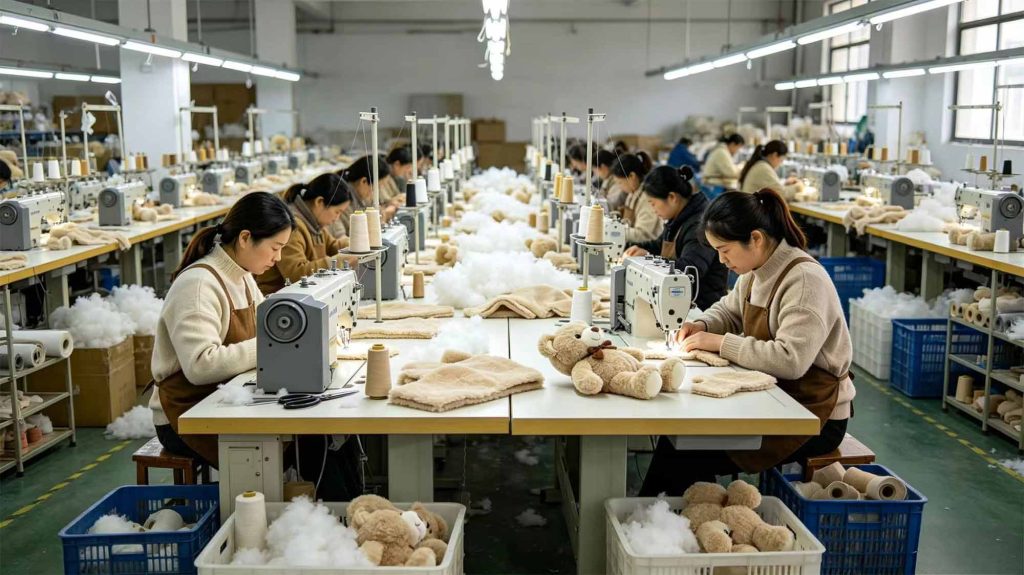
China has established a strong position in the global stuffed toy supply chain through its manufacturing experience, textile sourcing capabilities, skilled production teams, and flexible customization services. Many manufacturers can support different stages of product development, including concept design, sample making, material selection, sewing, stuffing, quality inspection, packaging, and export preparation. These capabilities make China an attractive sourcing destination for businesses looking to launch new plush toy collections or expand their existing product lines.
However, finding the right supplier requires more than comparing prices. Premium stuffed toys must meet specific standards for softness, durability, appearance, construction, and safety. A poorly manufactured plush toy can damage a brand’s reputation, increase return rates, and create unnecessary costs. For this reason, working with a China Stuffed Toy Manufacturer for Premium Quality Toys that understands international buyer expectations is an important part of building a sustainable toy business.
This article explores the benefits of sourcing from Chinese stuffed toy manufacturers, the materials and production processes involved, the available customization options, quality control methods, purchasing considerations, and strategies for establishing a successful long-term supplier relationship. It also explains how businesses can evaluate manufacturers and select products that offer lasting value in competitive markets.
Why Choose a China Stuffed Toy Manufacturer for Premium Quality Toys
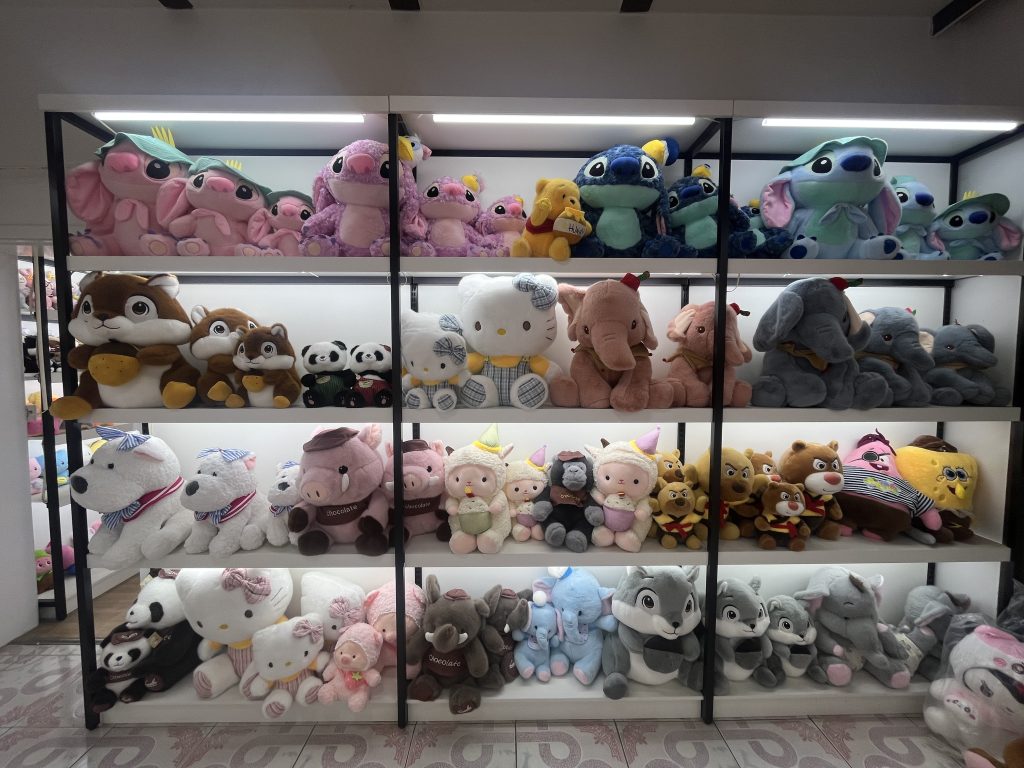
China is an important sourcing destination for stuffed toys because its manufacturing ecosystem supports a broad range of product categories and order requirements. Businesses can find suppliers specializing in traditional plush animals, decorative cushions, character toys, baby-oriented products, collectible plushies, and promotional merchandise.
A China Stuffed Toy Manufacturer for Premium Quality Toys may provide an integrated production service that reduces the need to coordinate with multiple suppliers. Instead of sourcing fabrics from one company, arranging embroidery through another provider, and managing packaging separately, buyers may be able to handle most production steps through a single manufacturing partner.
This integrated approach can simplify communication, improve production coordination, and make it easier to maintain consistency between samples and bulk orders.
Another important advantage is product variety. Manufacturers can work with different sizes, shapes, colors, fabrics, filling materials, and decorative techniques. A buyer developing a premium teddy bear collection may require long-pile fabric and embroidered facial details, while a company producing promotional mascots may prioritize distinctive shapes, brand colors, and custom logos.
The right manufacturer should understand these different requirements and translate them into practical production specifications.
Cost efficiency is also important. Chinese manufacturers may benefit from established material suppliers, experienced production workers, and organized manufacturing processes. These advantages can help businesses manage costs without automatically sacrificing product quality. Actual prices depend on design complexity, material grade, order quantity, customization requirements, and packaging specifications.
The key is to evaluate total value rather than choosing the supplier offering the lowest quotation.
Understanding the Meaning of Premium Quality in Stuffed Toys
Premium quality involves several characteristics that work together to create a satisfying product. A stuffed toy should look appealing, feel comfortable, maintain its shape, and withstand reasonable handling for its intended use.
A professional China Stuffed Toy Manufacturer for Premium Quality Toys should understand that these characteristics depend on more than fabric selection alone. Pattern development, cutting accuracy, stitching quality, stuffing distribution, finishing details, and inspection procedures all influence the final result.
Softness and Fabric Quality
Fabric is one of the first characteristics customers notice when touching a stuffed toy. Soft plush fabrics can create a comfortable tactile experience, while suitable pile length and density help determine the toy’s appearance.
Common fabric options include short-pile plush, velboa, minky-style fabric, fleece, and longer-pile faux fur. Each option offers different visual and functional characteristics.
Short-pile fabrics are often suitable for products requiring clear shapes and relatively smooth surfaces. Longer-pile fabrics can create a fluffy appearance that works well for teddy bears and certain animal designs. Fleece may be useful for simple, soft products, depending on the desired finish and performance requirements.
Premium manufacturers should help buyers understand the differences between materials instead of recommending a fabric solely because it is inexpensive or readily available.
Accurate Shapes and Proportions
A stuffed toy’s shape has a major influence on its attractiveness. Small differences in ear placement, head size, limb length, and facial proportions can change the personality of a character.
For customized products, the manufacturer should follow an approved design and sample. Pattern makers need to translate two-dimensional artwork into three-dimensional forms while accounting for fabric stretch, seam allowances, stuffing volume, and assembly requirements.
This process is particularly important for character plushies, branded mascots, and products that must match an established visual identity.
Durable Stitching and Construction
Strong construction helps stuffed toys maintain their appearance during handling and use. Seams should be appropriate for the fabric, stuffing level, toy design, and intended application.
Quality checks may examine loose threads, uneven seams, open stitching, weak attachment points, and irregular stuffing distribution. Features such as ears, tails, decorative accessories, and limbs require particular attention because they may experience repeated pulling or movement.
For products intended for children, the construction must also satisfy the applicable safety requirements for the destination market and age group.
Consistent Finishing
Finishing details distinguish a well-made product from one that merely looks acceptable in a photograph. These details include symmetrical features, clean embroidery, appropriate trimming, consistent color matching, and neat packaging.
A China Stuffed Toy Manufacturer for Premium Quality Toys should establish clear acceptance criteria for these characteristics before mass production begins.
Popular Types of Stuffed Toys Available from Chinese Manufacturers
The Chinese stuffed toy industry supports a wide range of product styles. Understanding the available categories can help buyers identify suitable products for different sales channels and customer groups.
| Stuffed toy category | Common applications | Important quality considerations |
|---|---|---|
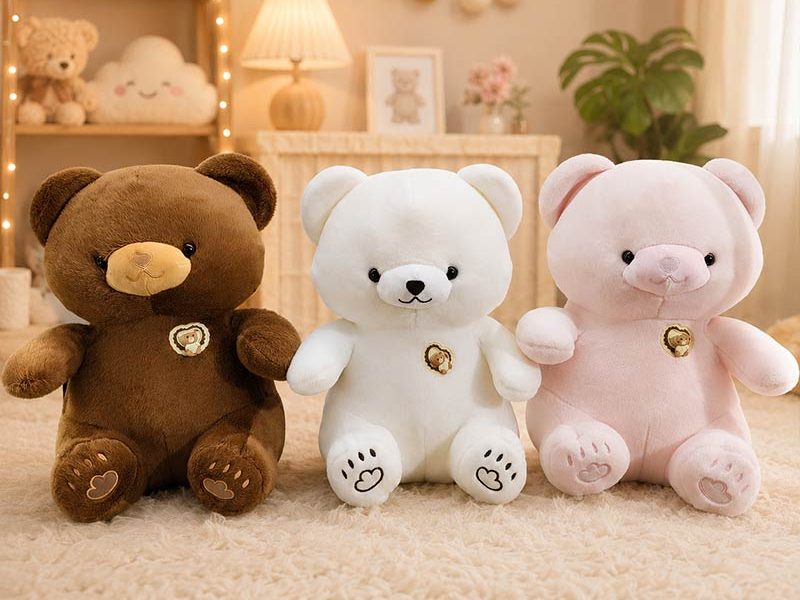
| Teddy bears | Gift shops, holidays, retail collections | Softness, proportions, secure construction |
| Plüschtiere | Toy stores, educational products, gifts | Recognizable shapes, color accuracy, durability |
| Cartoon character plushies | Character merchandise, entertainment brands | Design accuracy, licensing authorization, detailing |
| Custom mascot toys | Corporate promotions, events, branding | Logo placement, color consistency, shape accuracy |
| Baby-oriented plush toys | Baby gift collections, selected nursery products | Age-appropriate design, applicable safety testing |
| Mini plush keychains | Souvenirs, promotional gifts, accessories | Compact construction, attachment strength |
| Decorative plush cushions | Home décor, bedrooms, themed spaces | Comfort, shape retention, fabric durability |
| Seasonal plush toys | Christmas, Valentine’s Day, festivals | Seasonal appearance, timely delivery, packaging |
| Collectible plush figures | Specialty retail, fandom merchandise | Consistent character details, presentation |
| Food-shaped plush toys | Novelty gifts, lifestyle retail | Shape recognition, stitching, fabric selection |
A China Stuffed Toy Manufacturer for Premium Quality Toys may specialize in one or several of these categories. Buyers should determine whether a prospective supplier has relevant experience with the particular product type they intend to order.
For example, a manufacturer experienced in standard teddy bears may not automatically have the pattern-making expertise needed for a complicated three-dimensional mascot. Similarly, a supplier specializing in promotional giveaways may need additional preparation to meet the documentation and testing requirements of a product intended for young children.
Materials Used in Premium Stuffed Toy Manufacturing
Material selection is one of the most important stages of stuffed toy development. The right combination of fabric, filling, thread, embroidery, and accessories contributes to appearance, comfort, durability, and production consistency.
Plush Fabrics
Plush fabric is available in many textures, weights, pile lengths, and colors. Manufacturers may recommend different fabrics according to the product design and target market.
The following table summarizes several common options.
| Material | Main characteristics | Potential applications |
|---|---|---|
| Short-pile plush | Smooth surface and defined details | Character toys, animal plushies |
| Velboa | Short pile and a relatively sleek appearance | Small toys, promotional products |
| Minky-style fabric | Soft hand feel and a smooth surface | Comfort-oriented plush toys |
| Fleece | Soft texture and flexible construction | Simple plush designs and accessories |
| Long-pile faux fur | Fluffy appearance and visible texture | Teddy bears, decorative animals |
| Recycled polyester fabric | May incorporate recycled polyester content | Products with specified recycled-material goals |
Material names alone do not establish quality. Two fabrics described using the same general term can differ in fiber composition, pile density, colorfastness, weight, and performance.
Buyers should request fabric specifications and approve physical samples before production. If a product requires specific recycled content or other sustainability claims, the buyer should also request suitable supporting documentation rather than relying on marketing descriptions.
Stuffing Materials
Polyester fiberfill is commonly used in stuffed toys because it is lightweight and can provide a soft, resilient structure. However, filling density and distribution influence how the finished toy feels and holds its shape.
A toy with insufficient filling may look flat or uneven, while excessive filling may place unnecessary stress on seams. Different parts of the same product may require different filling levels to maintain the intended silhouette.
Premium manufacturers should be able to explain how filling is controlled during assembly and how the finished shape is evaluated.
Thread and Decorative Components
Thread selection influences seam performance and appearance. Decorative components may include embroidery, printed fabric details, ribbons, appliqués, labels, and accessories.
Embroidery can be particularly useful for creating facial features and logos without relying on small detachable components. However, the appropriateness of any construction method depends on the intended age group and applicable safety requirements.
Buttons, plastic eyes, magnets, and other small parts require careful evaluation. They may be unsuitable for some products intended for young children unless the design and testing demonstrate compliance with applicable requirements.
A responsible China Stuffed Toy Manufacturer for Premium Quality Toys should discuss these considerations during product development rather than leaving them until the shipment stage.
Customization Services for Different Business Needs
Customization allows businesses to develop products that match their brands, audiences, and commercial strategies. Many buyers choose Chinese manufacturers because they can explore different design options within a single sourcing relationship.
Custom Shapes and Character Designs
Businesses may provide sketches, digital illustrations, photographs, technical drawings, or physical references. The manufacturer then assesses whether the design can be converted into a practical stuffed toy.
Complex designs may require several pattern revisions before the final shape is approved. Features that look simple in a two-dimensional illustration can behave differently when constructed from soft fabric and filling.
A good development process should include discussion of proportions, fabric direction, seam placement, stuffing access, embroidery positions, and other production details.
Custom Colors and Fabrics
Brand consistency is important for companies selling coordinated product collections. Buyers may specify fabric colors, thread colors, and decorative details according to approved references.
Pantone references or other agreed color standards can help guide production, although the final appearance may still vary according to fabric texture, lighting, dye lots, and material properties.
Physical sample approval is therefore valuable when precise color matching is important.
Logo and Branding Options
A China Stuffed Toy Manufacturer for Premium Quality Toys may offer embroidered logos, fabric labels, woven tags, printed labels, custom hangtags, and branded packaging.
The best approach depends on the product design, budget, and intended sales channel. An embroidered logo may be appropriate for a premium mascot, while a woven label may work better for a simple retail plush toy.
Brand owners should provide authorized artwork and confirm logo size, placement, colors, and presentation before production.
Packaging Customization
Packaging contributes to the customer’s first impression and can influence the perceived value of a product. Options may include individual polybags where appropriate, paper packaging, display boxes, branded cartons, and retail-ready presentation.
For businesses selling online, packaging dimensions and protection during transport also matter. Plush toys are compressible, but excessive compression or unsuitable storage can affect their shape and appearance.
Buyers should request packaging samples or approve packaging specifications as part of the production process.
The Production Process of a China Stuffed Toy Manufacturer for Premium Quality Toys
Understanding the manufacturing process helps buyers evaluate supplier capability, production schedules, and quality risks.
Although individual factories may organize their operations differently, stuffed toy production commonly follows several stages.
Design Review and Feasibility Assessment
The process begins with an evaluation of the proposed product. The manufacturer reviews dimensions, construction details, materials, decorative elements, and target specifications.
At this stage, the supplier may identify design features that are difficult to sew, costly to assemble, or unsuitable for the intended use. Early discussion can prevent unnecessary revisions later.
Buyers should communicate the product’s intended market and age group because these factors can affect design decisions, testing, labeling, and documentation.
Pattern Making and Sample Development
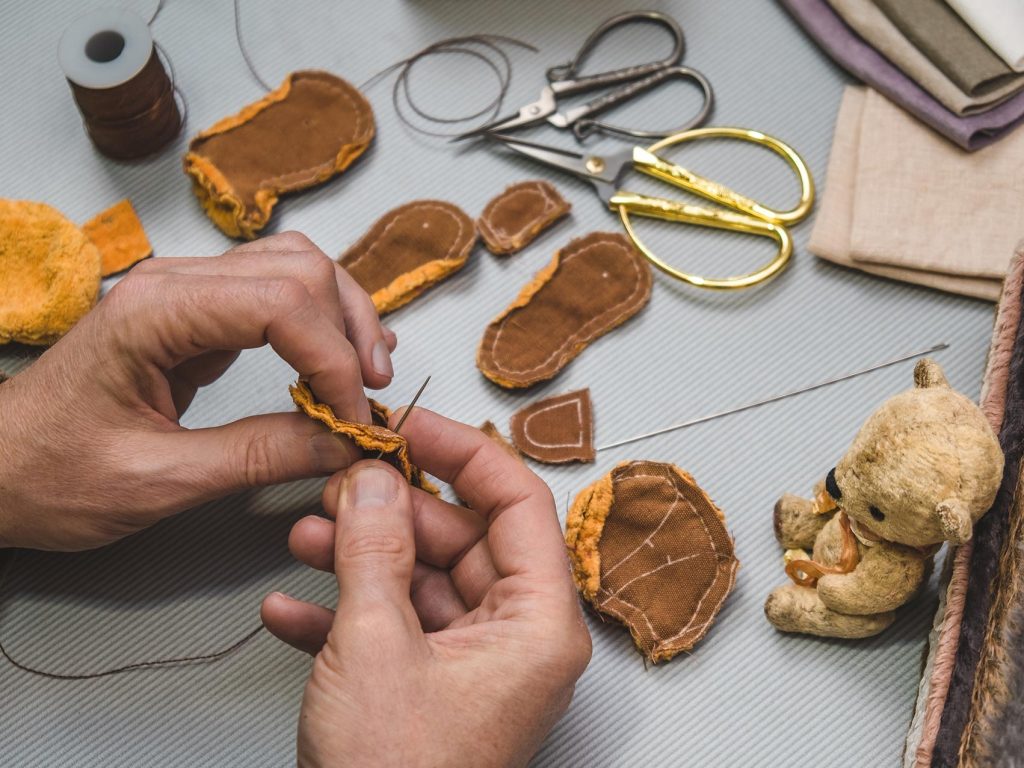
Pattern making translates the approved concept into fabric pieces that can be assembled into a three-dimensional object.
The manufacturer prepares a prototype and checks its proportions, appearance, stitching, and stuffing. More complicated designs may require several rounds of sampling.
A sample should be evaluated under realistic conditions. Buyers should check whether the product resembles the approved artwork, whether the texture feels appropriate, and whether the dimensions and finishing meet expectations.
Material Sourcing and Preparation
After sample approval, the manufacturer sources the specified fabrics, filling, thread, labels, and packaging materials.
Material availability can influence the production schedule. Special colors, unusual fabric textures, and custom accessories may require additional lead time.
To reduce inconsistency, buyers should agree on approved materials and establish procedures for handling substitutions. A factory should not change an important material without authorization when that change affects product quality or compliance.
Cutting and Sewing
Fabric pieces are cut according to the production patterns. Cutting accuracy helps maintain consistent shapes and dimensions across the order.
The pieces are then sewn together, leaving suitable openings for turning and stuffing. Seam quality, alignment, and the handling of complex sections are important at this stage.
Manufacturers should monitor production conditions and identify recurring defects before large quantities are completed.
Stuffing and Assembly
The sewn shell is filled according to the approved construction plan. Workers distribute the stuffing and shape the product to achieve the intended appearance.
Limbs, ears, tails, decorative components, and other parts are assembled as required. The product is then checked for shape consistency and construction problems.
Finishing and Quality Inspection
Finishing may involve trimming threads, cleaning the surface, adjusting the shape, attaching labels, and preparing the toy for packaging.
Quality inspection should examine both appearance and construction. Depending on the product, checks may include dimensions, color consistency, seam integrity, accessory attachment, labeling, and packaging accuracy.
Packaging and Shipment Preparation
After approval, products are packed according to the agreed specifications. Carton quantities, carton dimensions, shipping marks, and export documentation should be confirmed before dispatch.
A China Stuffed Toy Manufacturer for Premium Quality Toys should communicate production progress and identify potential delays early enough for the buyer to respond.
Quality Control Standards That Protect Your Brand
Quality control is essential when purchasing stuffed toys in commercial quantities. Even an attractive approved sample cannot guarantee that every item in a large order will meet the same standard without suitable production controls.
Buyers should establish written specifications that describe the product clearly enough for both parties to evaluate it consistently.
Define Quality Requirements Before Production
A purchase agreement or approved product specification can identify critical characteristics, including:
- Finished dimensions and acceptable tolerances.
- Approved fabric type, color, and texture.
- Filling material and expected firmness.
- Embroidery placement and design accuracy.
- Seam construction and finishing requirements.
- Labels, packaging, and carton specifications.
- Required safety tests and compliance documentation.
These details help prevent disagreements caused by subjective expectations.
Use a Reference Sample
A signed or otherwise formally approved sample can serve as a practical reference during production. It should represent the agreed design, materials, dimensions, and finishing.
If a sample is approved with temporary materials or unfinished details, those differences should be documented so the manufacturer understands the final requirements.
Inspect During Production
An inspection before the entire order is completed can identify problems while corrective action remains possible.
For example, an early inspection may reveal inconsistent fabric colors, incorrect embroidery, uneven stuffing, or a pattern that produces an undesirable shape.
The appropriate inspection schedule depends on order size, product complexity, supplier performance, and commercial risk.
Conduct Final Inspection
Final inspection checks whether the completed order matches the approved specifications. Buyers may use internal quality teams, independent inspection providers, or a combination of approaches.
A written inspection plan should identify the sampling method, defect classifications, acceptance criteria, and actions required if the results are unacceptable.
The following table provides an example of a practical inspection framework.
| Prüfbereich | What to check | Possible corrective action |
|---|---|---|
| Appearance | Shape, color, symmetry, cleanliness | Rework or replace defective items |
| Stitching | Open seams, loose threads, uneven sewing | Repair or reject affected items |
| Stuffing | Firmness, distribution, shape retention | Adjust filling or rework construction |
| Stickerei | Position, design, thread quality | Correct embroidery where feasible |
| Zubehör | Attachment, placement, suitability | Replace or redesign components |
| Dimensions | Height, width, agreed tolerances | Review patterns and cutting controls |
| Etiketten | Required information and placement | Correct labels before shipment |
| Verpackung | Protection, carton quantity, markings | Repack and verify shipment details |
The precise criteria should be tailored to the product. For children’s toys, relevant safety testing and regulatory requirements must be addressed separately from ordinary visual inspection.
Toy Safety and International Market Compliance
Toy safety is one of the most important considerations when selecting a China Stuffed Toy Manufacturer for Premium Quality Toys. A product that looks soft and attractive may still present risks if its construction, materials, labeling, or accessories are unsuitable for its intended users.
Requirements differ by country and product category. Buyers should identify the destination market and applicable rules before finalizing the design.
United States Market
Stuffed toys marketed as children’s toys in the United States may be subject to applicable requirements under the Consumer Product Safety Improvement Act, the Consumer Product Safety Commission’s regulations, and relevant provisions of ASTM F963.
Depending on the product, requirements can involve mechanical and physical properties, flammability, chemical restrictions, testing by an accepted third-party laboratory, and certification documentation.
Importers should verify the exact requirements for their products and confirm which testing and certification obligations apply.
European Union Market
Toys placed on the European Union market must comply with applicable EU toy safety legislation and related requirements. Depending on the product and current legal framework, obligations may include conformity assessment, technical documentation, safety assessments, labeling, traceability, and CE marking.
Requirements should be checked against the legislation applicable when the product is placed on the market, including any transitional provisions that may affect compliance.
Other International Markets
Other markets may have their own requirements for product safety, chemical content, labeling, age grading, and conformity documentation.
Buyers should avoid assuming that a test report for one destination automatically satisfies the requirements of another country.
Documents to Request from the Manufacturer
Depending on the product and destination market, buyers may need to request:
- Material specifications and supplier declarations.
- Relevant laboratory test reports.
- Product safety and conformity documentation.
- Traceability and production records.
- Labeling and packaging details.
- Applicable certificates or declarations of conformity.
- Documentation supporting specific environmental or material claims.
Documents should correspond to the actual product, materials, construction, and intended market. A report for a different design or materially different fabric may not establish compliance for the item being purchased.
A reliable China Stuffed Toy Manufacturer for Premium Quality Toys should be willing to discuss documentation requirements and cooperate with the buyer’s compliance process. However, the importer or brand owner should independently verify the obligations that apply to its business.
How to Evaluate a China Stuffed Toy Manufacturer for Premium Quality Toys
Supplier selection can influence product quality, profitability, delivery reliability, and the long-term success of a brand. A structured evaluation process makes it easier to compare manufacturers fairly.
Manufacturing Experience
Ask about the supplier’s experience with products similar to yours. A factory that regularly produces custom animal plushies may understand pattern development and fabric selection better than a supplier focused mainly on simple promotional items.
Request examples of comparable work and ask how the manufacturer handles complicated designs, sample revisions, and quality problems.
Customization Capability
Evaluate whether the supplier can support your desired level of customization. Some buyers need only a logo added to an existing design, while others require original characters, custom patterns, special fabrics, and unique packaging.
Discuss the full development process, including design files, sample charges, revision limits, tooling or setup costs where applicable, and ownership of custom artwork.
Communication and Project Management
Clear communication reduces misunderstandings about materials, colors, deadlines, and acceptance standards.
A capable supplier should answer technical questions, confirm specifications in writing, and communicate production changes promptly. Buyers should also establish a clear contact person and an agreed schedule for sample approval, production updates, and inspection.
Production Capacity
Ask how the manufacturer schedules orders and manages production peaks. Seasonal products, particularly Christmas plush toys and holiday gift collections, may require earlier planning.
Production capacity should be assessed against the specific order rather than relying only on a supplier’s general claims about factory size.
Quality Management
Ask how the factory checks incoming materials, in-process production, finished products, and packaging. Request examples of inspection records or quality procedures where appropriate.
The supplier’s answers should demonstrate a repeatable process rather than relying exclusively on informal visual checks.
Transparent Commercial Terms
A quotation should clearly identify what is included in the price. Important items include sample development, materials, custom labels, packaging, testing arrangements, shipping terms, and any additional fees.
Comparing quotations is more meaningful when the underlying specifications are identical.
Comparing Suppliers with a Practical Evaluation Table
When evaluating several potential manufacturers, buyers can use a scoring system to organize their findings.
The following example assigns each supplier a score from 1 to 5, where 1 represents poor performance and 5 represents excellent performance. The weights are illustrative and should be adjusted to match your priorities.
| Evaluation criterion | Suggested weight | What to evaluate |
|---|---|---|
| Product quality | 25% | Sample workmanship and consistency |
| Anpassung | 15% | Design, materials, embroidery, packaging |
| Safety and compliance support | 20% | Relevant testing and documentation |
| Kommunikation | 10% | Response quality and technical clarity |
| Delivery reliability | 10% | Scheduling and production planning |
| Commercial value | 10% | Total cost and specification transparency |
| Relevant experience | 10% | Similar products and customer requirements |
| Total | 100% | Overall suitability |
To calculate a weighted score, multiply each criterion’s rating by its weight and add the results. If the ratings use a scale of 1 to 5, the final score will also fall between 1 and 5 when the weights are expressed as proportions.
For example, a supplier with strong sample quality and compliance support may be a better choice than a lower-priced competitor with inconsistent workmanship and unclear documentation.
This method does not replace physical sample evaluation or compliance verification. Instead, it provides a more systematic way to compare suppliers and document purchasing decisions.
Pricing Factors for Premium Stuffed Toy Manufacturing
Pricing is a common concern for importers and retailers. A China Stuffed Toy Manufacturer for Premium Quality Toys can offer competitive pricing, but the final quotation depends on several variables.
Product Size and Complexity
Larger toys generally require more fabric and filling. However, size is not the only cost factor.
A small toy with intricate embroidery, multiple fabric types, and complicated assembly may cost more to produce than a larger product with a simple shape.
Fabric and Filling Specifications
Special fabrics, custom colors, long-pile faux fur, and materials with specific performance requirements may affect costs.
Higher material costs do not automatically guarantee a better finished product. Buyers should evaluate how well the selected materials meet the product’s requirements.
Order Quantity
Larger orders may reduce the per-unit cost of certain production activities, including pattern setup, material purchasing, and packaging preparation.
However, buyers should not order more units than their sales forecasts justify. Excess inventory can create storage costs, tie up working capital, and increase the risk of unsold products.
Customization and Packaging
Unique designs, embroidered logos, special labels, individual boxes, and retail display packaging can add to the total cost.
The supplier should clarify which features are included in the quotation and which are charged separately.
Testing and Logistics
Product testing, inspections, freight, insurance, customs duties, taxes, and local delivery may significantly affect the final landed cost.
For a fair comparison, buyers should distinguish the factory price from the total cost of getting compliant products into their warehouse.
| Cost factor | Potential effect on price | Buyer strategy |
|---|---|---|
| Larger dimensions | More materials and filling | Optimize size for the intended market |
| Complex construction | More labor and development time | Simplify nonessential details |
| Custom fabrics | Higher sourcing or minimum-order costs | Confirm availability early |
| Small order quantity | Higher unit cost in some cases | Compare realistic order scenarios |
| Individuelle Verpackungen | Additional materials and assembly | Select packaging according to sales needs |
| Testing requirements | Additional testing expenses | Confirm requirements before production |
| Freight and duties | Higher landed cost | Compare shipping and delivery options |
A good purchasing strategy balances quality, sales potential, compliance, and total cost instead of focusing on a single price figure.
Minimum Order Quantities and Sample Policies
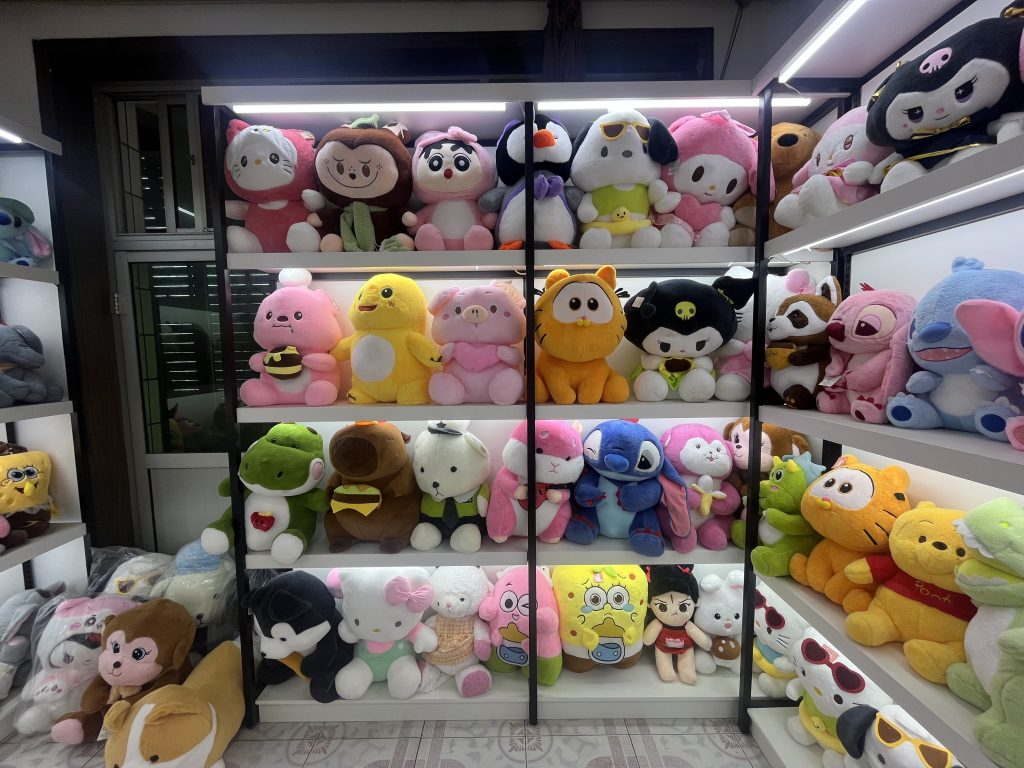
Minimum order quantity, often abbreviated as MOQ, is an important consideration for businesses launching new stuffed toy products.
An MOQ represents the minimum quantity a supplier is willing to produce for a particular order or product configuration. It may vary according to the design, fabric, color, packaging, and manufacturing process.
A China Stuffed Toy Manufacturer for Premium Quality Toys may have different MOQs for standard designs and fully customized products.
Why MOQs Vary
Standard products may be easier to manufacture because their patterns, materials, and production procedures already exist. Customized products may require new patterns, special material purchases, embroidery setup, or individual packaging arrangements.
A manufacturer may therefore set different minimum quantities for different product configurations.
Buyers should clarify whether the MOQ applies to the entire order, each design, each color, or each packaging variation.
Sample Costs and Revisions
Sample development allows buyers to evaluate a product before committing to bulk production. Sample costs may include pattern making, material preparation, sewing, embroidery, and shipping.
The supplier should explain how many revisions are included, whether sample charges can be credited against a future order, and how long each revision may take.
These terms should be confirmed in writing to avoid unexpected costs.
Managing First Orders
Businesses entering a new market may prefer to begin with a manageable quantity and expand after evaluating customer response.
However, the smallest possible order is not always the most economical choice. Buyers should compare sample costs, unit pricing, inventory risk, and expected sales before deciding on an order quantity.
Sustainable Materials and Responsible Manufacturing
Sustainability is becoming an important consideration for some retailers, consumers, and brand owners. Stuffed toy manufacturers may offer materials or processes intended to support environmental goals, but buyers should evaluate claims carefully.
Recycled Materials
Some fabrics and fillings may incorporate recycled polyester. Buyers interested in these materials should request clear specifications identifying the relevant components and the percentage of recycled content.
If a brand intends to make a public sustainability claim, suitable supporting evidence should be available and consistent with applicable advertising and labeling rules.
Material Efficiency
Efficient pattern cutting can reduce fabric waste. Better production planning can also help limit unnecessary material consumption and avoid excessive inventory.
These improvements may support both operational efficiency and environmental objectives.
Durable Product Design
A well-constructed stuffed toy may remain attractive for longer, reducing the likelihood of premature replacement. Durability depends on appropriate materials, sound construction, and use consistent with the product’s intended purpose.
Buyers should not equate sustainability solely with the use of recycled fabric. Product longevity, packaging choices, transportation, and verified sourcing information may also be relevant.
Packaging Choices
Packaging should protect the product while meeting retail, transport, and labeling requirements. Businesses can explore recyclable paper-based packaging or reduced packaging where appropriate.
Any packaging change should be checked for product protection, moisture exposure, storage conditions, and shipping performance.
A responsible China Stuffed Toy Manufacturer for Premium Quality Toys should provide accurate information about available materials and production practices without making unsupported environmental promises.
Building a Long-Term Partnership with Your Manufacturer
Finding a supplier is only the beginning of a successful sourcing relationship. Long-term cooperation can improve communication, streamline repeat orders, and help maintain product consistency.
Create Clear Product Specifications
Every customized product should have a clear specification covering dimensions, materials, colors, construction, decoration, labeling, and packaging.
For repeat orders, the approved specification and reference sample should remain available to both parties. This reduces the risk of gradual changes in materials or appearance.
Establish a Realistic Production Schedule
The schedule should account for sample approval, material sourcing, production, inspection, packaging, and transportation.
Buyers should allow extra time for complicated designs and seasonal launches. A realistic schedule is more useful than an aggressive deadline that does not account for material availability or corrective work.
Maintain Consistent Communication
Regular updates can help identify problems early. Buyers should ask for confirmation when important specifications change and maintain written records of key decisions.
If a production problem occurs, the manufacturer should explain its likely cause, proposed corrective action, and effect on the schedule.
Review Each Completed Order
After receiving a shipment, buyers should compare the products with the approved specifications and record recurring issues.
Feedback can help improve future orders, particularly when the same designs are produced repeatedly.
Protect Intellectual Property
Businesses supplying original characters, artwork, logos, and product concepts should discuss ownership and permitted use before sharing sensitive design files.
Written agreements can clarify whether the manufacturer may produce the design for other customers, use it in marketing materials, or retain the files after the project ends.
Where appropriate, buyers should consider suitable confidentiality and intellectual property protections for their jurisdictions and business relationships.
Common Mistakes to Avoid When Choosing a Manufacturer
Even experienced buyers can encounter problems if they overlook important sourcing details.
Selecting a Supplier Based Only on Price
The cheapest quotation may exclude important services or rely on lower-grade materials. Buyers should compare identical specifications and consider the potential costs of defects, delays, and returns.
Approving Samples Without Detailed Checks
A sample should be evaluated for dimensions, shape, softness, stitching, colors, labels, and packaging. For regulated toys, visual approval is not a substitute for required safety testing.
Changing Specifications During Production
Late changes to colors, materials, or packaging can cause delays and additional expenses. Finalizing key specifications before production helps reduce these risks.
If a change is unavoidable, both parties should document its cost, timeline, and quality implications.
Ignoring Compliance Requirements
Different markets have different rules. Buyers should identify the applicable requirements before placing an order and confirm that testing and documentation relate to the actual product.
Underestimating Seasonal Demand
Holiday and promotional products often have fixed selling periods. Delays can reduce the commercial value of an otherwise acceptable shipment.
Buyers should coordinate forecasts, sampling, production, and transportation early enough to accommodate unexpected problems.
Failing to Plan for Inspection
Waiting until the shipment arrives to identify quality issues can make corrections more expensive. A suitable inspection plan provides earlier opportunities to address defects.
How to Prepare for Your First Order
A structured preparation process helps businesses work more effectively with a China Stuffed Toy Manufacturer for Premium Quality Toys.
Before requesting quotations, buyers should prepare a product brief containing the essential information about the intended toy.
| Information to prepare | Details to include |
|---|---|
| Product concept | Sketches, reference images, or design files |
| Target dimensions | Height, width, depth, and tolerances |
| Materials | Preferred fabric, filling, and decorative components |
| Anpassung | Embroidery, labels, colors, and accessories |
| Target audience | Intended age group and market |
| Compliance needs | Destination country and relevant requirements |
| Bestellmenge | Estimated quantity by design and color |
| Verpackung | Individual packaging, retail boxes, or bulk cartons |
| Target schedule | Sample approval and expected delivery date |
| Budget | Target unit cost and overall project budget |
With this information, manufacturers can provide more meaningful quotations and identify potential production challenges.
Buyers should also ask whether the quotation includes sample development, packaging, testing coordination, and shipping. These details can have a substantial effect on the final project cost.
Once a suitable supplier has been identified, the next step is to approve a sample, finalize the specification, confirm commercial terms, and agree on a production and inspection schedule.
The Future of the China Stuffed Toy Manufacturing Industry
The stuffed toy market continues to evolve as businesses respond to changing consumer preferences, retail trends, and production requirements.
Customization is likely to remain important because brands increasingly seek products that communicate a recognizable identity. Personalized characters, company mascots, themed collections, and original designs can help businesses distinguish themselves from competitors.
Material selection is also receiving attention. Some buyers are exploring recycled fabrics, more transparent sourcing information, and packaging that better matches their sustainability objectives.
At the same time, quality management and compliance documentation remain important for companies selling internationally. Retailers need products that meet their commercial expectations while satisfying the relevant rules for the markets in which they operate.
Digital communication can make collaboration more efficient. Design files, digital mockups, video sample reviews, and documented approvals can reduce misunderstandings, although physical samples remain valuable when assessing texture, color, and construction.
A China Stuffed Toy Manufacturer for Premium Quality Toys that combines manufacturing experience with clear communication, reliable quality controls, and flexible development services can help buyers respond to these changes.
The strongest supplier relationships will be built around shared specifications, realistic planning, transparent commercial terms, and a commitment to continuous improvement.
Wenn Sie Plüschtiere oder andere Dienstleistungen benötigen, wenden Sie sich bitte an uns!
E-Mail: meng@wanroutoy.com
WhatsApp: +86 15227096178
Telefon:+86 15127203823
Facebook: https://www.facebook.com/profile.php?id=61592234474894
Fazit
Choosing the right China Stuffed Toy Manufacturer for Premium Quality Toys is an important decision for importers, wholesalers, retailers, promotional product companies, and private-label brands. A suitable manufacturing partner can help transform an idea into a well-designed stuffed toy that meets customer expectations and supports a consistent brand identity.
The most important considerations include fabric quality, stuffing performance, accurate pattern development, durable construction, reliable finishing, customization capability, and appropriate quality inspection. Buyers should also evaluate manufacturing experience, communication, production capacity, commercial terms, and the supplier’s ability to support applicable safety and compliance requirements.
A structured sourcing process makes these decisions easier. Prepare a clear product brief, request detailed quotations, review physical samples, approve written specifications, and establish inspection criteria before mass production. Compare suppliers based on total value rather than unit price alone.
Businesses should also consider long-term cooperation. Consistent communication, documented product requirements, realistic schedules, and constructive feedback can improve repeat orders and reduce avoidable production problems.
Ultimately, a China Stuffed Toy Manufacturer for Premium Quality Toys should be more than a supplier offering competitive prices. The right partner should understand your product goals, communicate production requirements clearly, maintain consistent manufacturing standards, and work with you to create stuffed toys that customers enjoy.
By choosing carefully and managing the sourcing process professionally, businesses can develop attractive plush toy collections, strengthen customer trust, and build a more reliable foundation for long-term growth in the global toy market.
Häufig gestellte Fragen
What Should I Look for in a China Stuffed Toy Manufacturer for Premium Quality Toys?
Look for relevant manufacturing experience, high-quality samples, suitable customization capabilities, clear communication, consistent quality control, and support for applicable safety documentation. Ask for detailed quotations and confirm materials, dimensions, packaging, production schedules, and inspection requirements before placing an order.
Can a China Stuffed Toy Manufacturer Produce Custom Plush Toys?
Yes, many manufacturers offer customized plush toy development. Depending on their capabilities, services may include custom shapes, fabric selection, embroidery, branded labels, packaging, and original character designs. Provide clear artwork and product specifications, and review a physical sample before approving mass production.
How Can I Ensure the Quality of Stuffed Toys Before Shipment?
Start by approving a sample that matches the intended production specifications. Establish written quality criteria, monitor production where appropriate, and arrange a final inspection before shipment. Check stitching, dimensions, fabric consistency, stuffing, decorative details, labels, and packaging. Complete any required product safety testing separately.
What Affects the Price of Premium Stuffed Toys from China?
Pricing depends on product size, design complexity, fabric and filling materials, order quantity, customization, packaging, sample development, and applicable testing requirements. Shipping, insurance, customs duties, and taxes also affect the final landed cost. Request itemized quotations so that suppliers can be compared on an equivalent basis.
How Do I Start Working with a China Stuffed Toy Manufacturer for Premium Quality Toys?
Prepare a product brief with reference images, dimensions, material preferences, customization details, target quantity, intended market, packaging requirements, and delivery expectations. Contact suitable manufacturers, compare quotations, evaluate samples, verify relevant compliance requirements, and confirm the final specifications and commercial terms before beginning bulk production.